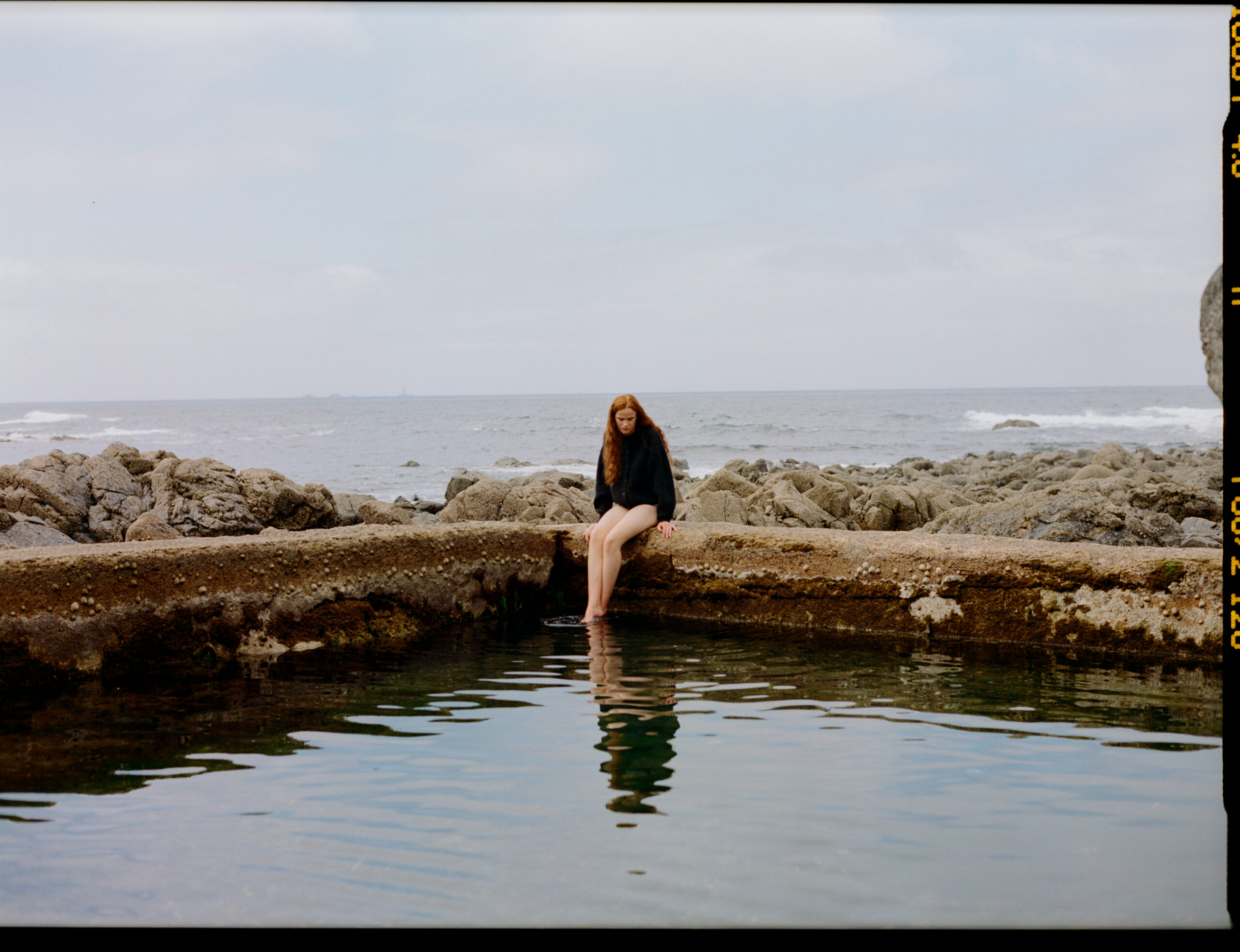
Through her slow fashion brand Casa Nushki, Anushka Shah explores an alternative model of collaboration that views artisans as creative partners — built on trust, integration, and mutual benefit.
Today, more brands than ever are using terms like ‘handcrafted’, ‘handmade’ and ‘artisan’ in their marketing. Craft is experiencing a resurgence, as consumer sentiment continues to shift towards value, and people are searching for something more tangible and timeless.
But as we know, when consumers show an interest, brands quickly co-opt narratives to appear aligned with consumer values. As sentiment shifts towards value-driven purchasing, fashion increasingly employs the language of craft and ‘ethical fashion’. Yet much of this remains performative. Claims to ethics and sustainability cannot be justified exclusively through brands collaborating with artisans. Many brands promote their relationships with artisan communities without fair credit or compensation, invisibilising the people behind their garments.
As more designers collaborate with artisans and position themselves as sustainable brands, we must look beyond surface-level marketing and question what these relationships entail. Are they built on trust, respect, and mutual benefit, and do the artisans have agency, or are they extractive, using artisans only for inspiration?
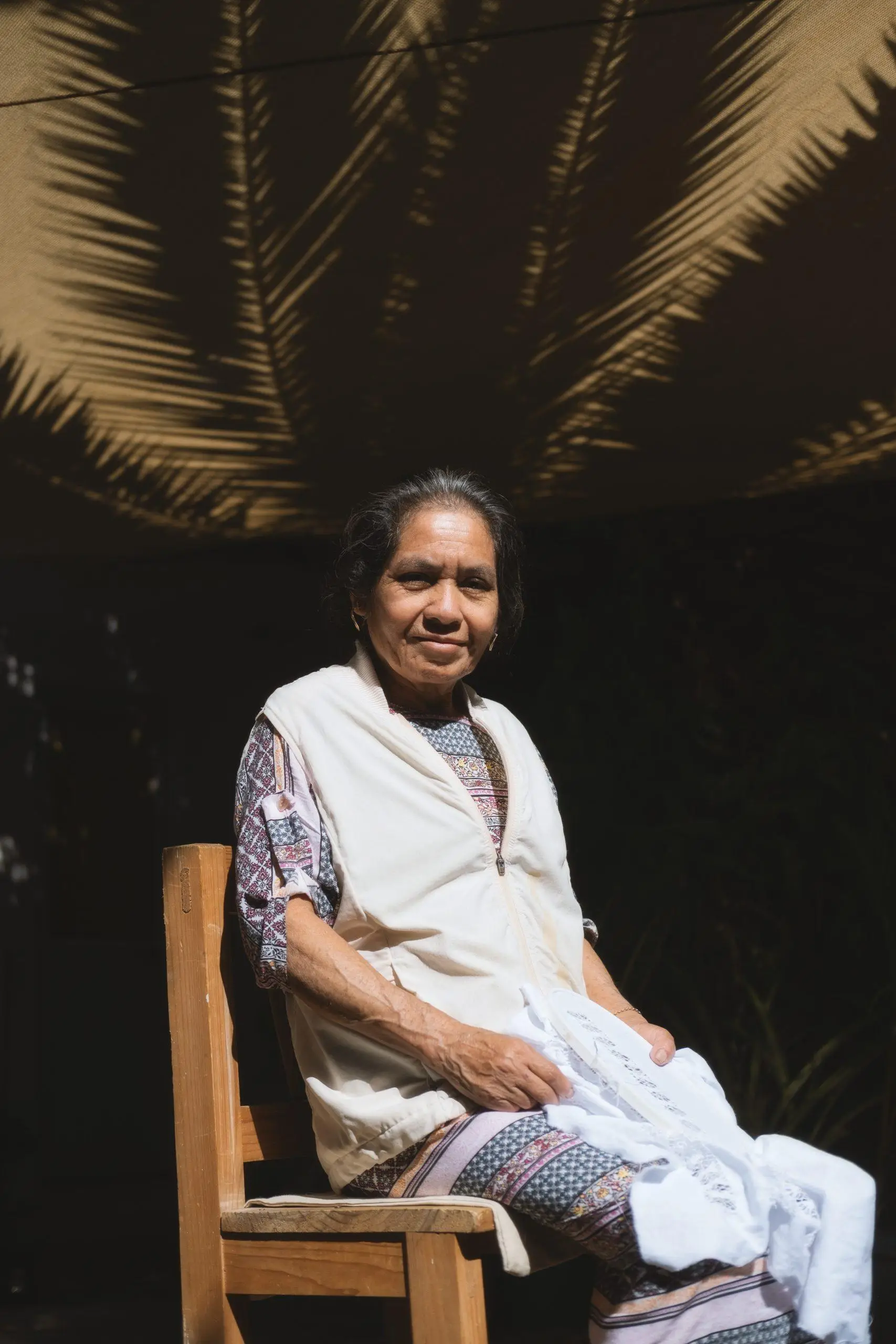
Through her slow fashion brand Casa Nushki, Anushka Shah explores an alternative model of collaboration that views artisans as creative partners. Relationships built on trust and respect come first, while integration allows for a deep understanding of the nuances and complexities of the culture, the community, and the craft. The end result is fashion that is shaped by the context in which it is created. To Lucrecia, an artisan from the Duu’nga’a natural dye and weaving collective who co-creates with Casa Nushki, a successful collaboration is, “when our story is understood, when people make the effort to know the history of our craft, and when there is friendship.”
“Too often, conversations about artisan collaborations frame artisans as passive recipients of opportunity, rather than as active participants with expertise, agency and creative authority. The women I work with are skilled artists, business owners, mothers, teachers and community leaders.” — Anushka Shah
They negotiate prices, make creative decisions, host workshops, manage commissions and have spent decades honing their craft. Meaningful collaboration, she argues, starts by recognising that expertise rather than speaking for it, ensuring all voices are heard, that there is collective care, and that everyone’s needs are met. It also requires an openness to adapting, compromising, and allowing your own ideas to be gently shifted. “It cannot be reduced to an employer-employee dynamic,” she said. “It is an experience of sharing, learning and blending worlds.”
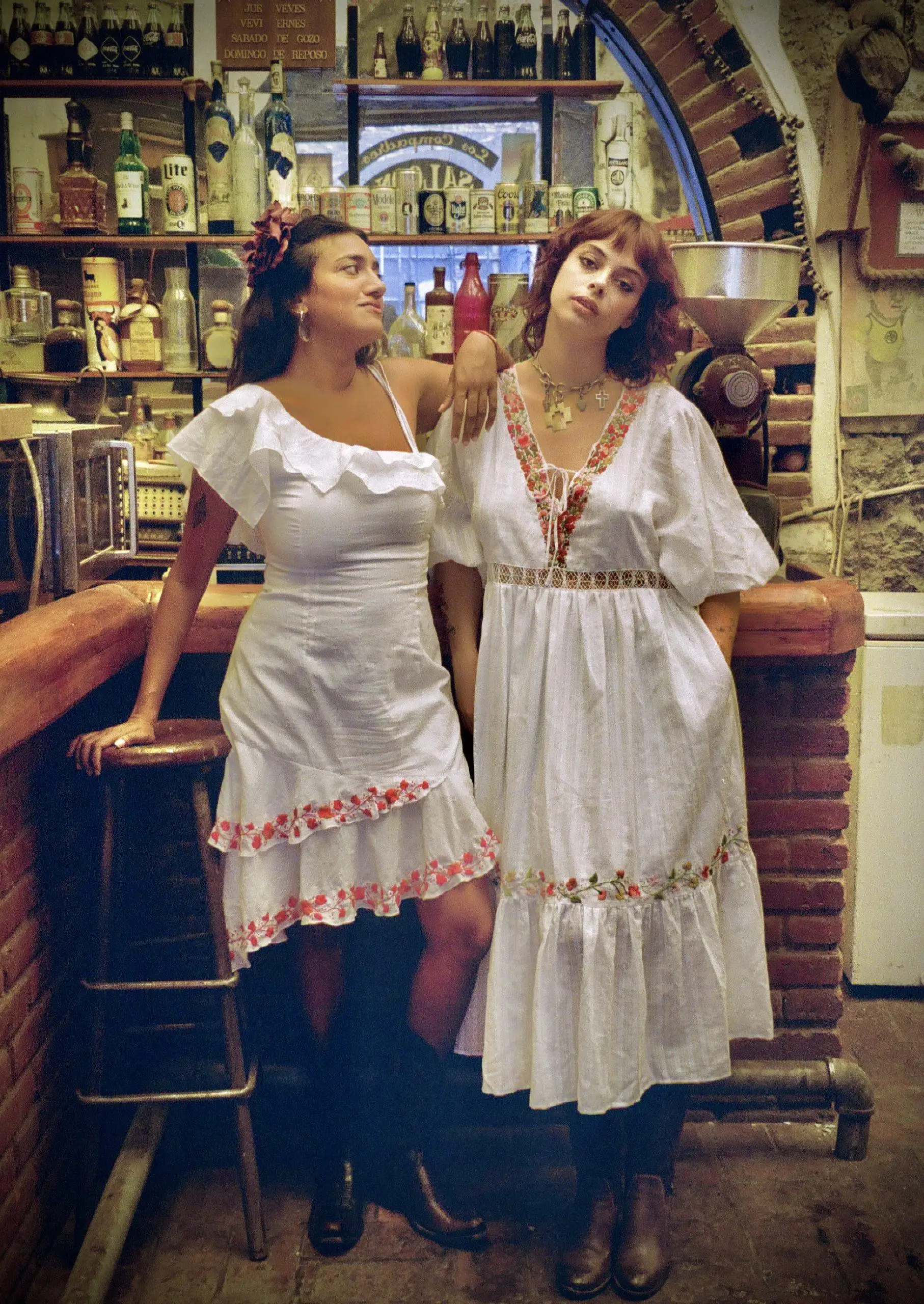
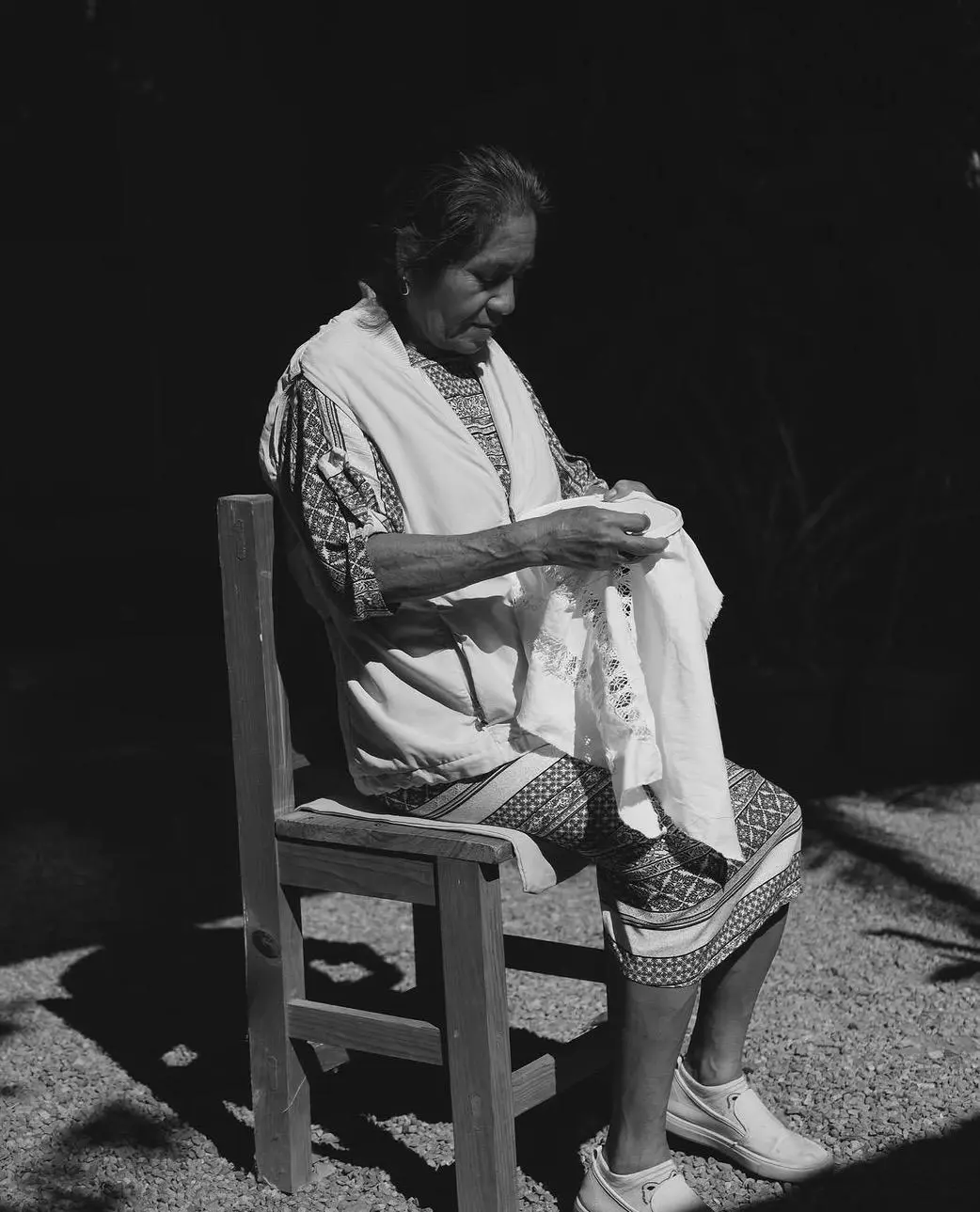
At Casa Nushki, garments are intricately embroidered and naturally dyed by women across Oaxaca, created in long-term collaborations that demonstrate an authentic commitment to artisan communities, their craft, their heritage, and their livelihoods. Through these co-creations, Casa Nushki resists the industry’s obsession with speed and profit, proving that when built on a foundation of mutual benefit, respect, and trust, artisan partnerships can be key to making fashion a force for good. While artisan partnerships alone cannot address the broader economic realities facing craft communities, they can create more equitable and meaningful ways of working.
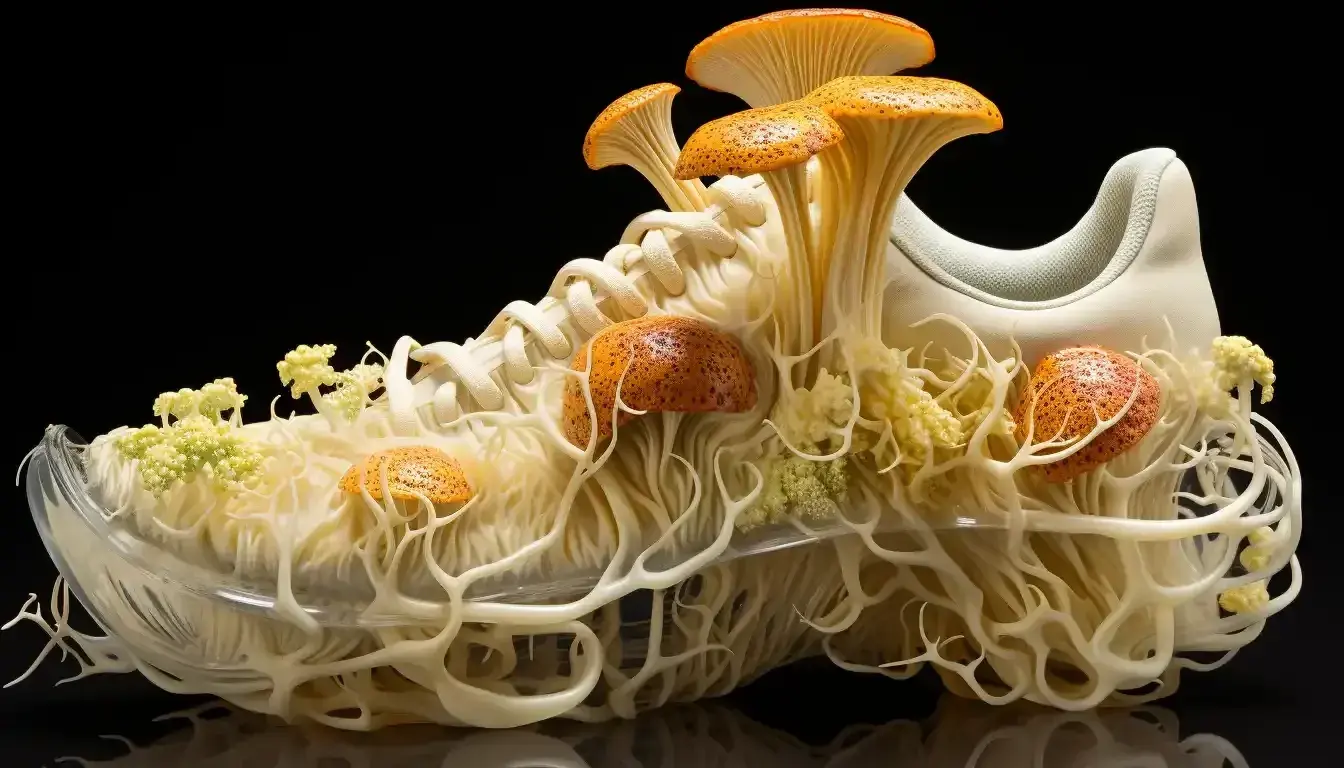
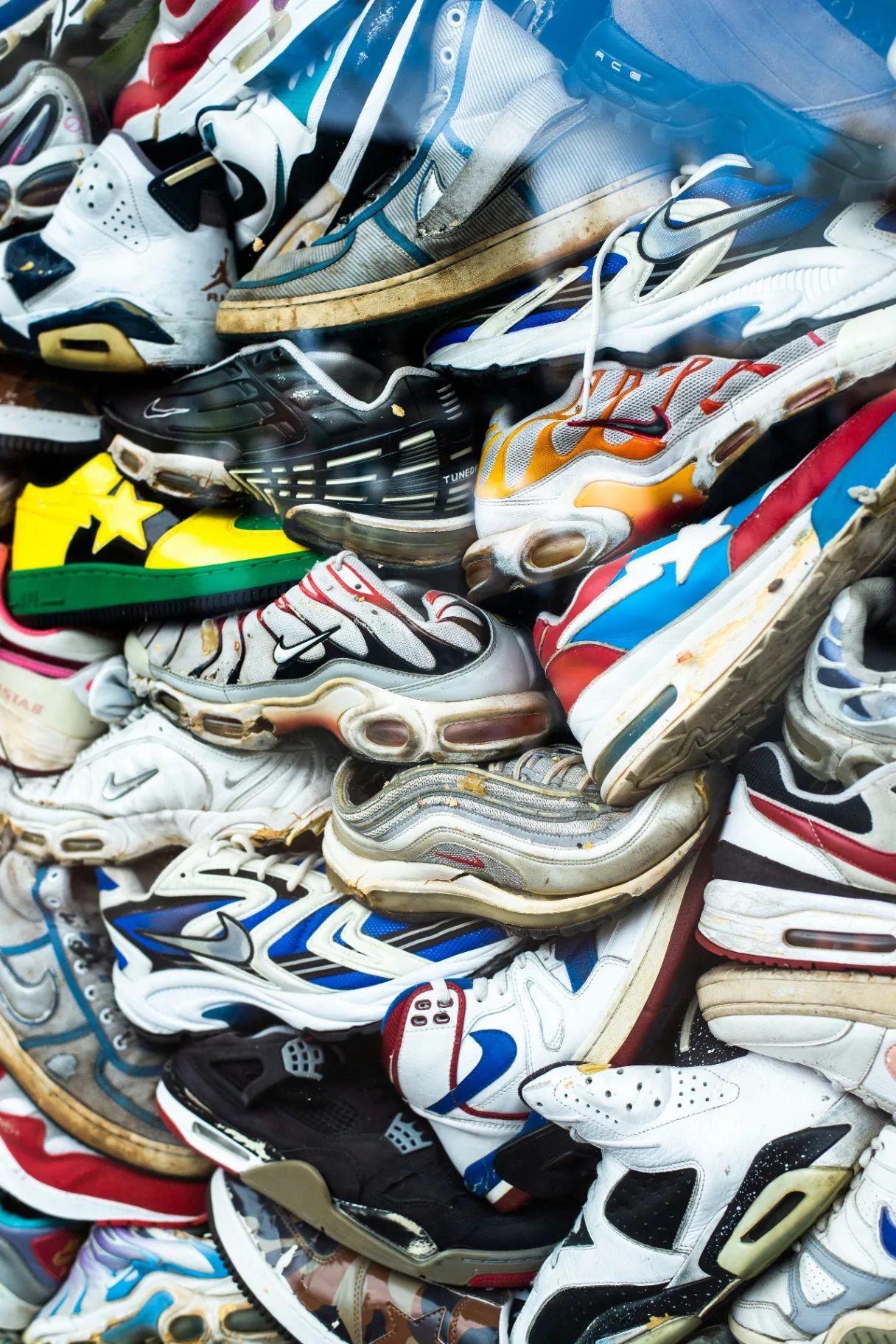
BEEN London X FFG — made from 100% post-consumer footwear
Integration vs inspiration
The fashion industry has a problematic history of taking inspiration from artisan communities, using traditional designs, patterns and motifs, without fairly acknowledging or compensating their origins. From Victoria’s Secret’s appropriation of Native Indigenous designs in 2012 to Prada’s 2025 reworking of the traditional Indian Kolhapuri chappal, the relationship between fashion and craft is too often performative, extractive, and exploitative, invisibilising the very communities behind the work.
“Inspiration is not far from extraction when it comes to Indigenous artisan communities, especially if the people and places behind the work are not named, credited, respected, or allowed to benefit from it. Craftspeople should not be treated as an aesthetic. They carry histories, cosmologies, family lineages, and generations of knowledge.” — Anushka Shah
Craft is one of the fashion industry’s most valuable pathways forward towards a more resilient and responsible future. Rooted in cultural heritage and ancestral wisdom, craft practices sustain local economies, and often have a significantly lower environmental impact, working in harmony with nature. To preserve this, brands must credit the source of their inspiration fairly, looking beyond craft as an aesthetic to be co-opted.
For Shah, cultural immersion is rooted in empathy and a genuine willingness to understand the complex and often conflicting realities of the women she works with. Rather than approaching her collaborations as a voyeur, she has sought to understand the unique realities of their lives. This is something she traces back to her own roots. Growing up in an Indian family shaped by a largely matriarchal lineage, her mother and grandmother, who were raised and educated from Mumbai to Kenya to London, embody the same values she now recognises in the women she collaborates with in Oaxaca: “slowness, connection to nature, and deep spirituality.”
BEEN London X FFG — made from 100% post-consumer footwear
That immersion has also required resisting the tendency to reduce artisans into a single idea or aesthetic. The artisans Casa Nushki collaborates with are not symbols of an ancient way of life, they are, as she puts it, “funny, opinionated, politically engaged, and creative.” Humour, gossip, chaos and joy exist alongside the craft. Seeing whole people, she argues, means understanding that the work is inseparable from the individuals, families and communities behind it. “Indigenous crafts are not just an aesthetic,” she told Eco Age. “They are livelihoods and realities.”
Brands must also understand and appreciate the unique realities of artisan partnerships, which are often imperfect, slower than planned, and shaped by cultural holidays, seasons, and family responsibilities. Craft is not separate from community or culture; it is deeply embedded within it. Shah recalls, “in February there was a two week fiesta in one of the pueblos in the Ocotlán region, so the artisans were not embroidering, and that’s just that – real life comes first.”
This is how active integration differs from passive inspiration. For Casa Nushki’s latest collection, the designer spent months living between Mexico City, Ocotlán de Morelos and Teotitlán del Valle. Each collection is built around long-term friendships forged over time – and nurtured each year – with the women and their families. The relationships Shah has built extend well beyond production. She cooks with the women she works with, attends family birthdays and cultural celebrations, picks up children from school, and talks about “love, politics, work, injustice, family, and life.” But immersion, she stresses, also means discussing uncomfortable topics, confronting the ever-present realities of extraction, gentrification and exploitation, and being honest about what needs to shift on an interpersonal and structural level. True cultural immersion, in her view, means “not glossing over very real injustices,” and adapting to another world with openness, respect, and a genuine desire to participate responsibly.
Still, she identifies the limitations of friendship and immersion, recognising that it does not erase the wider structural inequalities that remain, such as differences in mobility, access to capital, and opportunity. Rather than pretending otherwise, Shah’s aim is to build collaborations that are honest about those gaps, while creating “as much agency, respect and mutual benefit as possible.”
Seeing artisans as co-creators, not just labour
For decades, artisans have been viewed solely as manufacturers, treated as the invisible labour hidden behind the brand label or designer name. Adopting a different approach is key to Casa Nushki. “Too often, the authorship of artisans is stripped away by designers, and their work is folded into someone else’s name,” said Shah, whose approach to slow fashion means recognising artisans as artists, crediting them, paying them fairly with prices that they determine, listening to them and allowing their decisions to shape the final piece. “There can sometimes be uncomfortable saviour energy around the phrase ‘supporting artisans,’ as if artisans need a Western designer or brand to validate their work. While I understand why brands use that language, in my own experience, it has felt much more mutual than that. We are supporting each other. The artisans bring knowledge, technique, memory, taste, and imagination that I could never access alone, and the work becomes richer because of that exchange.”
Artisans are experts in their field, carrying years of generational wisdom and knowledge about their practice, from the meaning behind symbols and motifs to the significance of colour. Lucrecia told Eco Age, “I really enjoy doing this work. It is my culture. It was left to me by my antepasados – my ancestors – and I want to conserve their work because there is a lot of pride in it.”
But for these relationships to have mutual benefit, they must hold space for artisan autonomy and creative agency. For Alejandra, an embroidery artisan from Ocotlán who co-creates with Casa Nushki, she wants brands and designers to “understand and respect all the steps and creative decisions – the thought, the nuance – that go into each piece. Sometimes artisans know better, especially when it comes to colour combinations. We should be respected as artists. I don’t feel like an artist because I haven’t travelled or been out in the world, but my pieces have.”
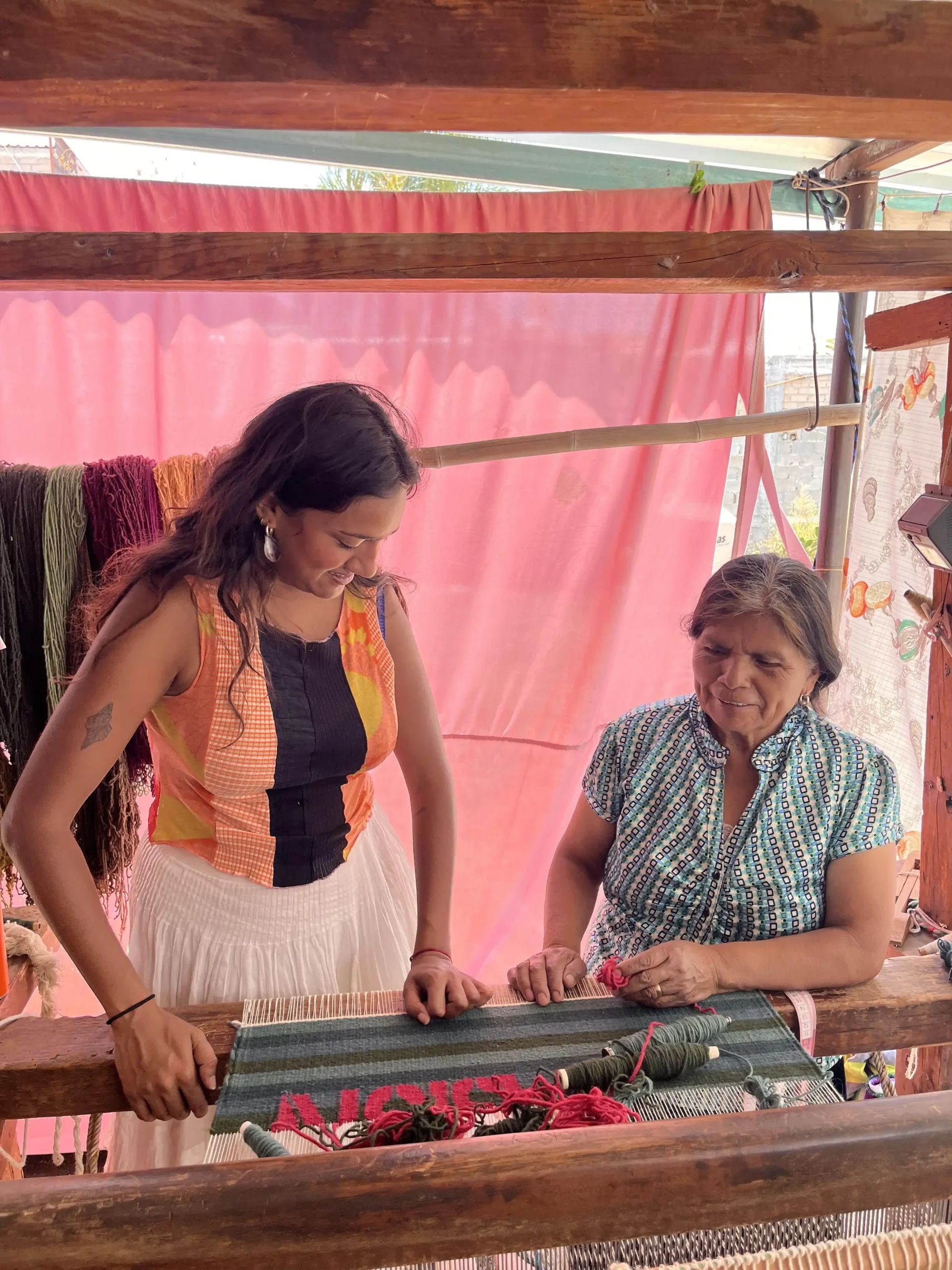
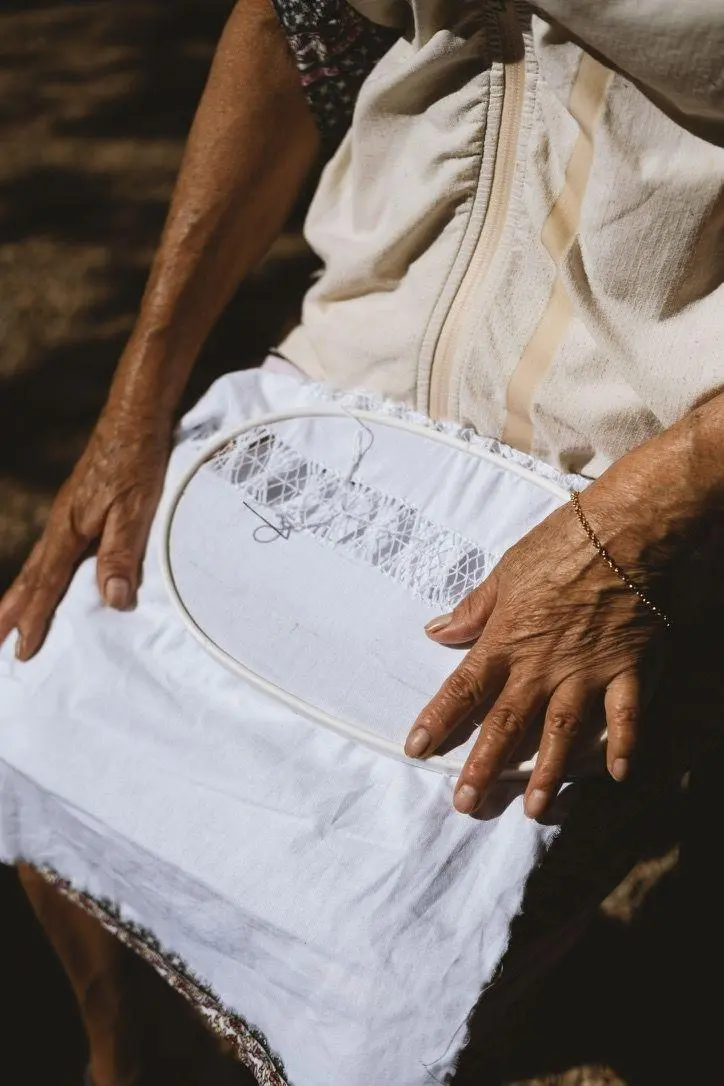
Co-creation is foundational to Casa Nushki’s entire process, from initial ideation through to finished garment. The creative process begins long before a garment reaches Oaxaca. Shah begins with a sketchbook and paper patterns, developing silhouettes over several months alongside an independent pattern cutter in London. From there, she sources deadstock luxury fabrics, from Irish linen to Japanese seersucker, which are then taken to Mexico City. Here, the garments are individually cut and sewn by a women-run atelier in Mexico City before travelling to Oaxaca, where the collaborative process begins. Together, the women select threads, discuss colour combinations, explore embroidery placements, crochet details and natural dyes. The final garment emerges from a fluid design process, evolving through conversation in local dialect, experimentation and knowledge sharing, with the women having a vital role in shaping the final outcome.
The co-creation process at Casa Nushki has always been relational, not transactional. Artisans are not anonymous labour, they are collaborators, artists, and teachers. Central to that dynamic is communication: Shah is fluent in Spanish and tried to learn some Zapotec while in the pueblos, and takes time to understand each woman’s individual relationship to her craft, recognising that “it differs for every woman I work with.” That attentiveness, she said, is the first step toward building something meaningful for both parties. “Without that, closeness can feel like a performance or a façade.”
Slowness over speed, value over volume
Time is a crucial aspect of Casa Nushki’s approach to ethical fashion. The relationships the brand has established with artisan communities are the outcome of a commitment to showing up year after year, with a dedication to sustaining these traditional craft practices. Trust, the foundation to an uplifting collaboration, comes with time and “allowing the relationship to exist beyond the transaction.” Shah said, “the everyday moments from the conversations to the shared meals are what allow the garment to exist with integrity.” The minute speed becomes the priority; these intimate human connections become collateral, which is what we see too often in brand-artisan collaborations.
Time is something the Western fashion system does not truly value. Many brands – fast fashion and luxury alike – still make claims to ethical fashion while putting pressure on the supply chain and upholding structures that lead to worker exploitation, craft erasure, and environmental degradation. The linear model rewards speed above all else. With reciprocity and respect built into the brand’s very foundations, Casa Nushki shows the value of slow, intentional handcrafted co-creations, not rushed overproduction.
For Alejandra, it is this element of time that she hopes brands and consumers will begin to value: “I wish they understood how much time and effort it takes to do everything by hand. I hope they come to value this work. Craft is the past, but it is also the future.”
BEEN London X FFG — made from 100% post-consumer footwear
Alejandra makes a crucial point here: craft is the future. But only if brands work within the boundaries of craft rather than forcing it into existing extractive systems.
We are increasingly seeing fashion trying to force craft to scale, particularly within existing fast-fashion structures. Attempting to integrate craft into a fast-fashion business model is fundamentally contradictory: fast fashion operates through speed and disposability, which are the antithesis of craft. Shah agrees, believing that we fundamentally need the system to move away from incessant overproduction. “Handmade work should not just be absorbed into the same extractive logic of speed, scale, and endless output. What we really need the industry to recognise is that ethical fashion cannot be scaled, because this undermines the very essence of craft.”
The conversation must shift from volume to value. Until then, the system is not designed to help sustain craft or the communities behind it.
Craft as the pathway forward
In an increasingly digitised and disconnected world, there is inherent value in fashion made entirely by hand, enriched with stories of artisans, the land, and their heritage. At a time when consumers seek connection and value, craft offers not only these qualities but also a pathway toward a more responsible fashion industry.
“More than fashion, craft is important for the preservation of community, for connection to the self, and as a quiet rebelling against the attention economy.” — Anushka Shah
Craft is not just a way for the fashion industry to become more responsible and reduce its impact; it is a means of survival for many communities worldwide that work to preserve their cultural heritage and build sustainable livelihoods. Brands and designers need to commit to long-term mutually beneficial relationships with artisans for these reasons, not just to meet sustainability targets.
Casa Nushki is proof that beautiful clothing and ethics can co-exist when relationships with the people making the clothes come first. Still, Shah is clear about the limits of what personal relationships can achieve in the face of structural injustice, not just within the context of the fashion industry but in the broader socioeconomic contexts that threaten the very survival of craft.
Shah identifies a gap in how the sustainability conversation is typically framed, one that accounts for materials, supply chains and carbon footprints, but says far less about “the emotional conditions in which beautiful work is made.” Casa Nushki exists, she said, in the space between garment and relationship, between craft and care. “The goal was never to use craft to make fashion feel more soulful. It was to build fashion from the relational, cultural, and creative conditions that allow craft to stay alive.”