After sixteen months of working as a charity shop volunteer I had to leave. The first reason is public – I volunteered to research my new book and once I had three notebooks full of diary entries it was time to accept that I was creating a snapshot of society, not documenting a never-ending story. It was time to get the actual book down on paper.
The second reason is that those sixteen months broke my wardrobe. I have a tendency to over-consume secondhand clothes – to the extent that my partner once described charity shops as my ‘primary vice’. I knew being exposed to a weekly avalanche of cheap worn clothes was risky, so I nervously asked my new manager in my recruitment interview whether she was tempted to buy things from the shop every day?
“No,” she said. “It’s like working in a bakery – pretty soon you’re sick of the sight of cake.”
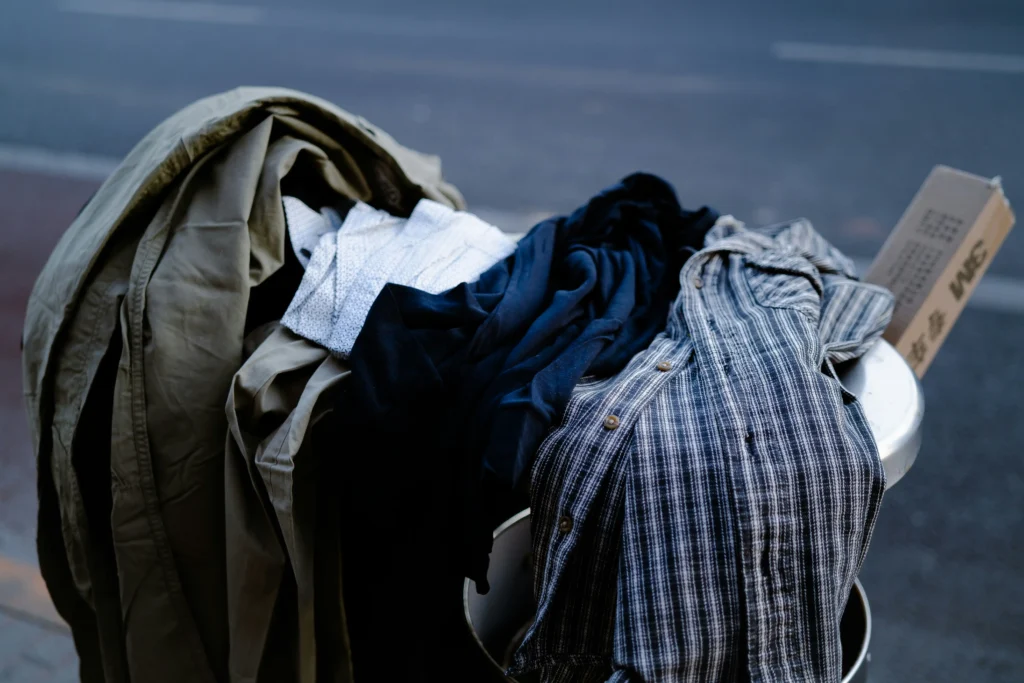
Despite these reassurances, I never got bored of the secondhand clothes that flooded the shop week after week. It is an overwhelming job working in a charity shop – I was not prepared for just how much clothing would come through the door in carrier bags, bin bags, hold-alls, sportsbags and bags-for-life. Charity shops have become the first sorting site in a completely out of control global waste stream and when you are the person unpacking those bags you see absolutely everything and you smell absolutely everything.
The work is physically hard, the bags and sacks that we carry around are heavy. It is also emotionally tiring – I do not particularly like tidying up and working in a charity shop is like constantly tidying that awful ‘junk drawer’ you don’t want to think about. Volunteers also work under pressure, every time you think you’ve sorted the last donation, someone will knock on the door and bring in fifteen more bin bags of stuff.
That said, the work could be a lot of fun. It’s a sociable job with each new bag full of possibilities. You have to find creative solutions for things and imagine the contexts in which they might be salable and there’s a constant spark of hope that the next bag will hold something exciting or precious.
This was the context in which I bought donated clothes week after week: denim dungarees, a bomber jacket, DM boots, a long black dress from Australia, a long green wool coat with a button missing…
As someone who has been reading and writing about clothing consumption for fifteen years, I am so aware that just like shopping new, a lifetime of secondhand shopping can play havoc with your wardrobe and keep you locked into a hyper-consumption cycle. And yet I could not find the off switch.
With hindsight, I can see that the sludgy years of the pandemic left me unhappy both generally and sartorially and that I was trying to fix my mood and my wardrobe by consuming more and more random clothes from the charity shop. A good 75 per cent of those clothes became problem pieces – they did not work well and they did not fit properly, but they were cheap, so available, and I got a brief buzz out of buying them.
My consumption of clothes escalated as my research in the shop deepened and I discovered that the clothes I put in the rag bag as unsellable were being directly exported to countries including Pakistan and Ghana.
The fate of our old clothing exports is becoming common knowledge – the landfill, the burning, the clogging up of rivers and seas. But I still think people delude themselves that it could not possibly be their donations that get exported. That it must be a problem caused by other people’s donated clothes – not theirs.
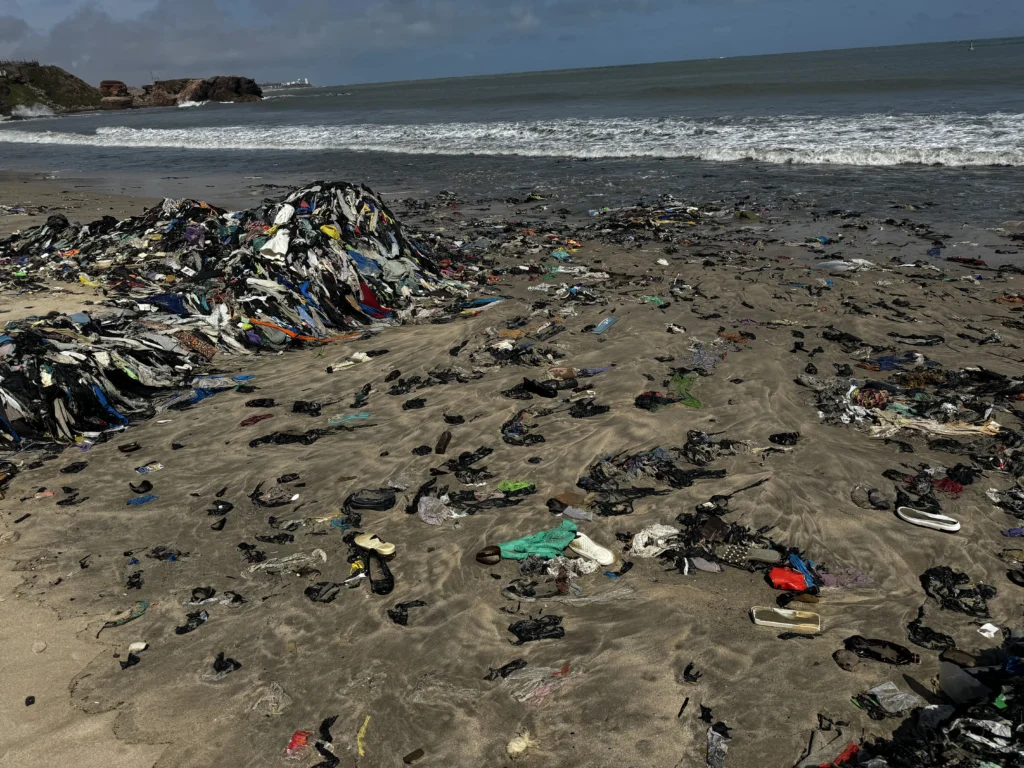
It is very hard to be a socially conscious person and know that the clothes you put in the rag bag are going to Ghana. My utterly hopeless solution was to start taking home more and more clothes in order to ‘save them’ from becoming waste: shoes, coats without belts, sports tops with broken zips, broken jewelry, shirts with stains that I was sure I could wash, bobbled tracksuits…
At the ends of some shifts I would creep into my home, stashing a bag away like a guilty shopper in a rom com. I have since discovered that this is not uncommon – there is a volunteer I know called Gillian whose family jokes that she had an extension built to house all the jeans and stuffed toys she brings home to mend. The result for me was not just a chaotic wardrobe but a chaotic living space. Plus a partner utterly sick of the ‘presents’ I was bringing home for him.
It took a long time for the emotional turmoil to settle. Charity shops have been forced to become the first sorting station for society’s leftovers – a role they were not designed for. It is difficult to be that first sorter and it is very hard to know what to do with all the stuff.
Many charity shops are trying hard to be ethical and green – but I’ve seen with my own eyes how chaotically difficult that is. I believe everyone should go and volunteer in a charity shop and come face to face with the debris that brands are forcing on us. Groups like the Charity Retail Consultancy point out that if charities stop taking worn clothing it might stop the bad press but it won’t make the waste go away. We have to find ways for society to create less waste in the first place.
My route out of the chaos was to start volunteering in a repair cafe and attend clothing repair workshops. When I was ready, I did a full wardrobe audit and made decisions about what to repair and what to responsibly give back to the shop. I also put my energy back into garment worker solidarity campaigns because working to improve the conditions in factories where clothes are made is a crucial part of stopping the fashion industry pumping out 80 billion pieces of clothing each year. What those sixteen months taught me more than anything was that we need to get out of being stuck in a system that creates endless waste at one end and billionaires on super yachts at the other.
Tansy Hoskins is an award-winning journalist and author who investigates the global fashion industry. Her latest book is out now: Charity Shop World – an investigation into community, consumption and waste.