or this LFW season, participation comes with conditions, not pledges, with NEWGEN designers incorporating the full stipulations of Copenhagen Fashion Week’s (CPHFW) sustainability requirements.

Is London Fashion Week ready for mandatory sustainability?
From Autumn/Winter 2026, London Fashion Week will formally adopt Copenhagen Fashion Week’s Sustainability Requirements, starting with the season running from Thursday 19 to Monday 23 February 2026.
The UK capital continues to be a source of experimental and forward-thinking design with initiatives such as the British Fashion Council’s NEWGEN programme, which has launched the likes of Jonathan Anderson and Alexander McQueen, giving young designers resources to scale innovation and tap into new audiences.
From this season, participation comes with conditions, not pledges, with NEWGEN designers incorporating the full stipulations of Copenhagen Fashion Week’s (CPHFW) sustainability requirements.
The BFC announced the roll-out in January 2025, requiring all NEWGEN brands to meet 18 minimum criteria across six areas of the value chain.
Yvie Hutton, Director of Membership & Designer Relations, BFC says: “Together with CPHFW, we are adopting a framework that empowers emerging designer fashion businesses to lead the way and contribute tangibly to a more sustainable and responsible industry.”
As part of the requirements brands must have a formally approved sustainability strategy in place, covering both environmental and social factors, and guidelines and structures in place to provide equal opportunities and hiring processes to promote diversity.
They must also agree that they do not destroy unsold clothes and samples from previous collections, instead following a process in place for leftovers and waste.
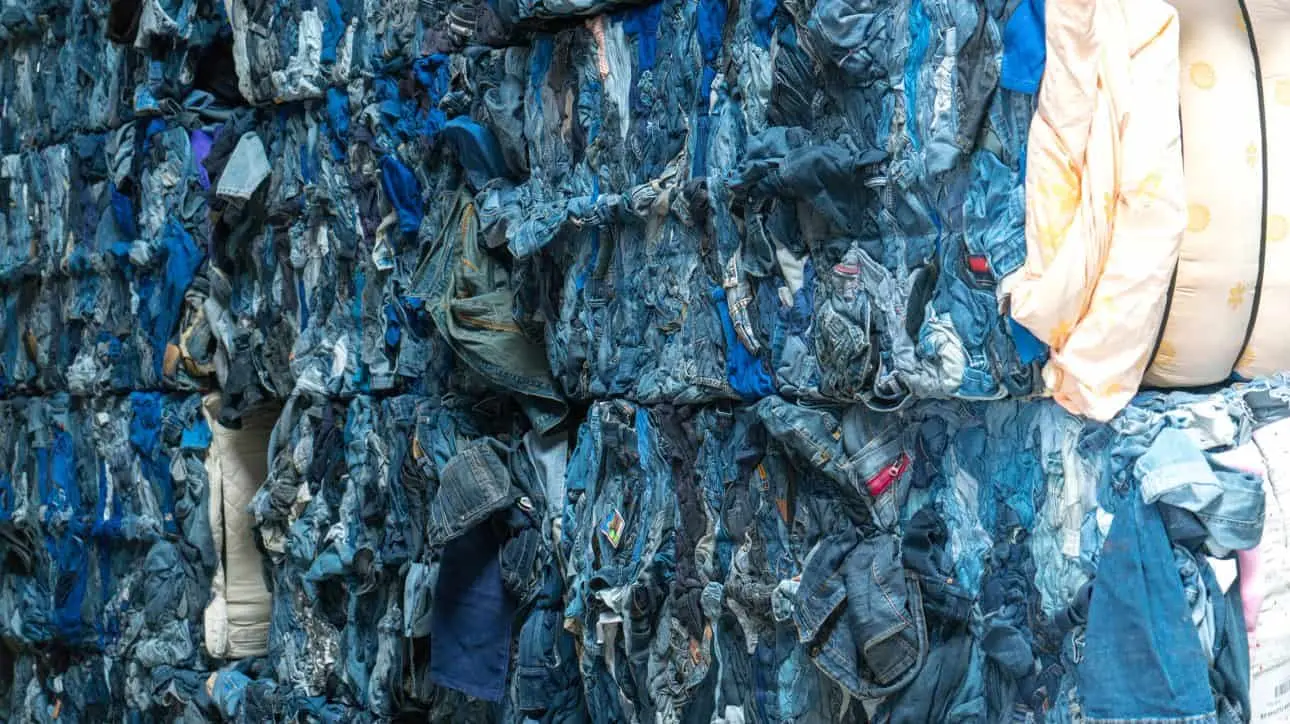
According to the Ellen MacArthur Foundation, 73% of collected textile apparel waste is landfilled or incinerated globally. Meanwhile Textile Exchange has uncovered that of the 124 million metric tonnes of textiles produced in 2023, less than 1% consisted of recycled textile fibres.
CPHFW’s sustainable requirements most notably state at least 60% of a collection is to be certified, made of preferred materials or deadstock fabric, and for the collection to be free of fur, wild animal skins and feathers.
LFW is the first of the ‘big four’ fashion capitals to implement the framework, supported by BFC mentoring and training.
Hutton adds: “We (LFW) are the first Fashion Week to ban fur and exotic animal skins.”
“Sustainability works best when it grows alongside the brand, not as a marketing layer placed on top of it,” says Liza Keane, a London-based designer showcasing at LFW FW26 as part of the NEWGEN cohort.
Keane adopts a multi-level approach to material management. At pattern-cutting stage she “actively designs to minimise waste”. Additionally, her brand up-cycles when possible and treats offcuts as surplus, “often letting the up-cycled pieces inform the shape and logic of the garment”.
Keane’s works with predominantly natural and recycled fibres across her whole product range and plastics used are either recycled or are biodegradable.
Ruined SS25 LIZA KEANE
“Most of our range is manufactured locally with technicians we’ve worked with for years and we pay fairly for their high-level expertise. That continuity allows us to invest in quality and longevity at the construction level as well as in materials.”
In addition to material requirements CPHFW’s sustainability framework includes:
• Consumer education on the critical discussions in the fashion industry around the fast consumption of fashion, clothing, footwear and accessories
• Actively working to reduce the environmental impact of packaging
• No use of single-use props or plastic packaging used in the production of a showcase
LUEDER will also be showcasing at LFW FW26 within the NEWGEN cohort. The London-based label founded by Marie Lueder in 2019 creates garments with organic denim, recycled jersey and regenerated nylon. Lueder also participated in Cambridge University’s accelerator programme for sustainable leadership and has been reported to use fashion design software CLO 3D, which reduces textile waste and fabric consumption throughout the design and production process.
Elsewhere, Tolu Coker, also based in London, creates unisex designs focusing on deconstruction and sustainability. Coker is a British-Nigerian fashion and textile designer and uses her work to influence social change. Aware that much textile waste ends up in the global south, pushed by the industry’s desire of “newness”, Coker likewise uses upcycled and recycled materials, for example, she featured reworked Ugg boots and clogs at LFW FW 2025.
Tolu Coker photographed by Ade Coker
BFC is committed to driving change, through the adoption of not only CPHFW’s sustainability requirements, but also through several other initiatives such as its Institute of Positive Fashion (IPF) and its Low Carbon Transition Programme. However, these initiatives only go so far and the scale of circularity in the UK is far from where it currently needs to be. It is only NEWGEN designers, for example, who must adopt the sustainability requirements in full.
Although there is a persuading case for more considered material in the UK’s fashion and textile sector, with some brands focussing on recycling, re-distributing, repairing and renting, there is no tangible incentive for them to do so. With high costs coming from supply chain changes, recycling and next-generation materials, brands must consider the bottom line.
Incoming regulation such as Extended Producer Responsibility, which will add environmental costs to the market price of products, plus the introducing of Digital Product Passports (DPP) requiring brands and retailers to display transparent and traceable information on products, incentivises BFC to further support its fashion community and ensure the widespread implication of sustainability initiatives.
There is opportunity for BFC to go further in its efforts to educate and provide support for UK designers, brands and retailers. Durability, repairability and recyclability are core aspects of the EU strategy for sustainable and circular textiles, and so brands and businesses need to begin their journey towards compliance now.
CPHFW sustainability requirements go somewhere to bringing sustainable practices, reflecting EU regulation, into focus. London has huge opportunity to showcase this to the wider global fashion industry as the first of the fashion capitals to implement the requirements in full.
Cecile Thorsmark, CEO of Copenhagen Fashion Week said: “With the British Fashion Council, as an influential player in the global fashion landscape, we see a lot of potential to further amplify the impact of our collective commitment to sustainability.”
Hutton adds: “A key part of our ongoing support for designers through the BFC NEWGEN initiative is the Sustainability Standards, which form part of the application process and focus on circular design principles, diversity and inclusion and ESG strategies.”
Elsewhere, London Councils One World Living programme, the Greater London Authority, ReLondon and the Ellen MacArthur Foundation announced the launch of ‘London Textiles Action Plan’, in March 2025, supporting the UK’s compliance with sustainability initiatives and like BFC building circular economies by instigating reuse and recycling of textile waste.
Abi Turner is a fashion and business journalist. She is Features Editor at World Textile Information Network (WTiN), having previously worked at publications including Reach PLC and Daily Mail. She started her career at fashion and beauty directory, DIARY directory after completing her MA at London College of Fashion.