fresh chain of landmark rulings in Bangladesh could soon change the garment industry for good – and not only in the cradle of the world’s garment manufacturing industry, but globally.
Landmark rulings in Bangladesh
For the fashion industry, out of sight too often means out of mind. This means that certain indiscretions can easily fly under the radar. This is true when it comes to emissions and even more so when it comes to the human element of the global supply chain.
A fresh chain of landmark rulings in Bangladesh, however, could soon change all that for the better – and not only in the cradle of the world’s garment manufacturing industry, but globally.
With the country supplying $7.4 billion USD of clothing to the United States and €4.3 billion EUR to the European Union each year – their second- and third-largest suppliers, respectively – it is no exaggeration to say that when the pendulum swings in Bangladesh, it also begins to swing worldwide.
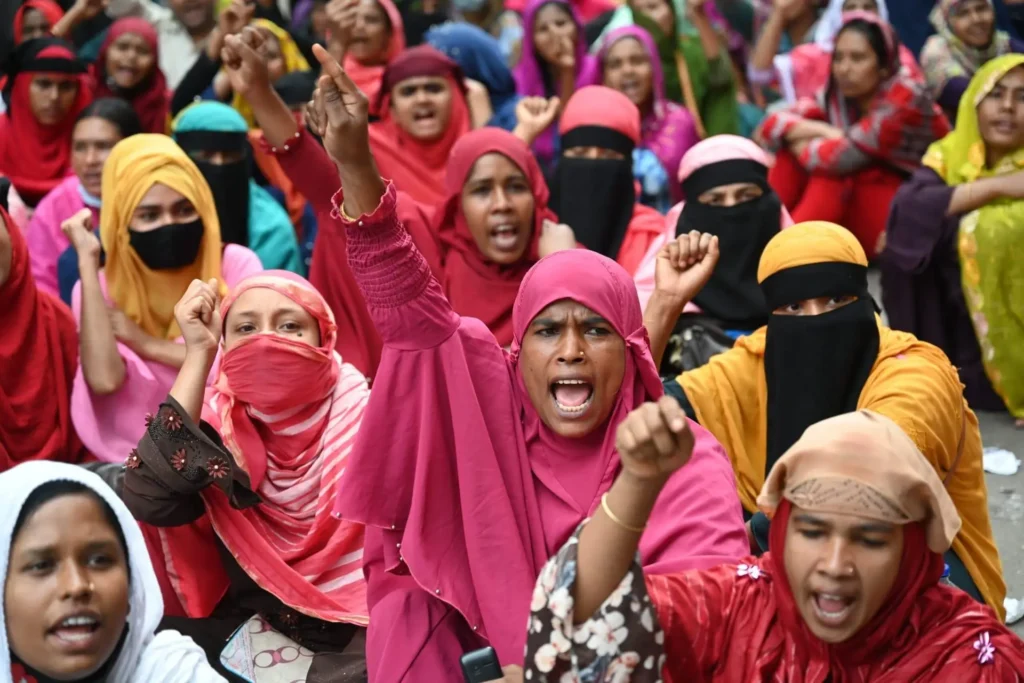
First, the nation’s new interim government officially dropped a cache of criminal cases numbering almost 50,000 – charges which had been levied against garment workers demonstrating egregiously low wages.
Now, that pivot has also ushered in a broader swathe of pro-worker legislation. Rulings which, in making it easier for workers to unionise in smaller numbers, could not only test the garment industry’s opacity but also loosen its once-iron grip on the governments and citizens of manufacturing-driven countries worldwide.
Yes, in Bangladesh it’s a major victory for all those directly involved – the human impact which would have likely accompanied such a reckless slew of prosecutions cannot be understated.
But, crucially, it has become the springboard for something much bigger.
With the cases now dismissed as the acts of a corrupt government in league with (or in thrall to) its largest source of revenue and members of that government facing indictments, manufacturers in Bangladesh will likely think twice before pursuing similar anti-collectivist action again. Particularly with pro-union legislation, making it easier for workers to take action following in the wake of those dropped charges.
Companies elsewhere may well draw a sharp breath and think to steady their own hands: a win for workers in a nation as instrumental to the industry as Bangladesh should, therefore, mean a win for workers worldwide – a positive change in terms of fairer pay and better conditions. Or, at least, in their ability to demand those things.
The world’s eighth-most populous country; not only does Bangladesh’s garment sector account for 60% of the nation’s exports, it also produces nearly 8% of all clothing manufactured worldwide. A figure that puts the developing nation behind only China in those stakes. Those statistics put Bangladesh firmly in a position to set precedent for the entire fashion industry.
It’s a tipping point – one you could argue ought never to have been reached in the first place.
Given that garment workers typically receive less than 1% of the price of each T-shirt they make, €0.18 on a €29 product sold in Europe, the initial protests were no surprise; that the factories themselves only take 4% in the same transaction also means it’s hardly surprising that they would take action against anything – or anyone – impacting their already scant margins.
Organisations like the Clean Clothes Campaign (CCC), however, alleged foul play: that the filing of mass criminal charges against demonstrators asking for just BDT 23,000 ($196) per month were not based on the nature of those protests, but were made (often without evidence) in order to discourage further collective action en masse and with a heavy hand.
Not just in Bangladesh, but as a model for the garment industry as a whole.
With the change in governance, however, there is a change in the prevailing winds. Where the previous, scandal-beleaguered Hasina administration had clearly picked the side of manufacturers and of the fashion industry which near-singlehandedly props up the country’s economy, its successor has now ruled in favour of the workers who hold the entire operation together.
Speaking to Eco Age, Bogu Gojdź, campaign and outreach co-ordinator for the Clean Clothes Campaign says: “Filing of mass criminal cases is a common repression method aimed to freeze protest and intimidate workers away from any form of organising. This victory means that 48,000 workers and families can breathe a sigh of relief knowing that they won’t be facing prosecution for exercising their legal right to protest.”
Kalpona Akhter – union leader and executive director of the Bangladesh Center for Workers Solidarity – echoed Gojdź’s sentiment, positioning the legal win as a precedent for reshaping the wider industry: “This is a massive victory for workers in Bangladesh, for trade unions anywhere in the world and for international solidarity. It shows the strength of workers, of organising and of international solidarity work.”
Gojdź, too, sees the potential for this victory to expand outward and begin a fresh wave of change for workers: “Trade unions and partners in the CCC Network are continuing their collaboration with the interim government.
“A much-needed labour law reform is currently underway, including provisions on the right to organise and the right to strike, as well as several provisions on an improved wage-setting machinery.
“Through the enforcement of these reforms, and the implementation of fair pricing and responsible purchasing practices by international brands, we can break the endless cycle of poverty wages, followed by repression and worker unrest and look towards a brighter turn for the fashion industry in Bangladesh.”
In fact, in the short space of time since Gojdź first made comment to Eco Age, fairer proposals have already come to light: most notably a reported decree to lower the number of required signatories for forming trade unions within Bangladeshi companies – a move which has made significant waves, disquieting garment manufacturers who rely on low wages to keep their profits in line.
The pendulum is indeed swaying.