At this year’s Global Fashion Summit, the theme was Building Resilient Futures. At a time when sustainability is under threat, with budgets being slashed, brand commitments scaled back, and teams disbanded, events like the Global Fashion Summit offer a glimmer of hope. They unite industry leaders, policymakers, innovators, journalists and change makers to evaluate where the industry stands and explore how we can collectively move the needle.
Yet despite these conversations about the future of fashion, something crucial was lacking: the voices of workers across fashion’s global supply chain.
The world is facing unprecedented turmoil, from geopolitical tensions, to inflation, and the greatest challenge of our time: climate change. These global crises are reshaping industries today and now, more than ever, there is a pressing need to build resilience, ensuring the industries we have become reliant on in our everyday lives can adapt, survive and support the people within them. Recent years have made one thing abundantly clear: fashion supply chains sit on the frontlines of these crises, and business as usual is no longer an option.
Throughout the two-day Summit, panels covered pressing intersections of fashion, climate, policy, circularity and legislation. Discussions explored the discriminatory health impacts faced by women in fashion supply chains, the growing threat of heat stress in a warming world, the continued relevance of policy as a lever for change, and the successes and downfalls of initiatives like extended producer responsibility (EPR).
But the overall tone was that sustainability is now a strategic business concern, and brands need to adapt and build resilience not for the sake of people, and the planet, but to reduce financial risks. The urgency was placed on how we can frame sustainability as attractive to investors, because, ultimately “if it’s only good for the planet, investors won’t be interested.”
On the stage, Ami Vitale, National Geographic Explorer, Photographer and Filmmaker, shared a much-needed grounding perspective on the vital role of nature, and our relationship to it. In just 50 years, humanity has wiped out 73% of the world’s wildlife, offering a stark reminder of the urgency to rethink our approach. Vitale emphasised the need for moving away from extractive practices toward relationships grounded in reciprocity and conservation, and the urgency to support frontline communities who are the land stewards, knowledge holders and true conservationists. Vitale challenged brands to look back at their supply chains and consider whether they create value for both people and the land at their point of origin, and if they don’t then something needs to change.
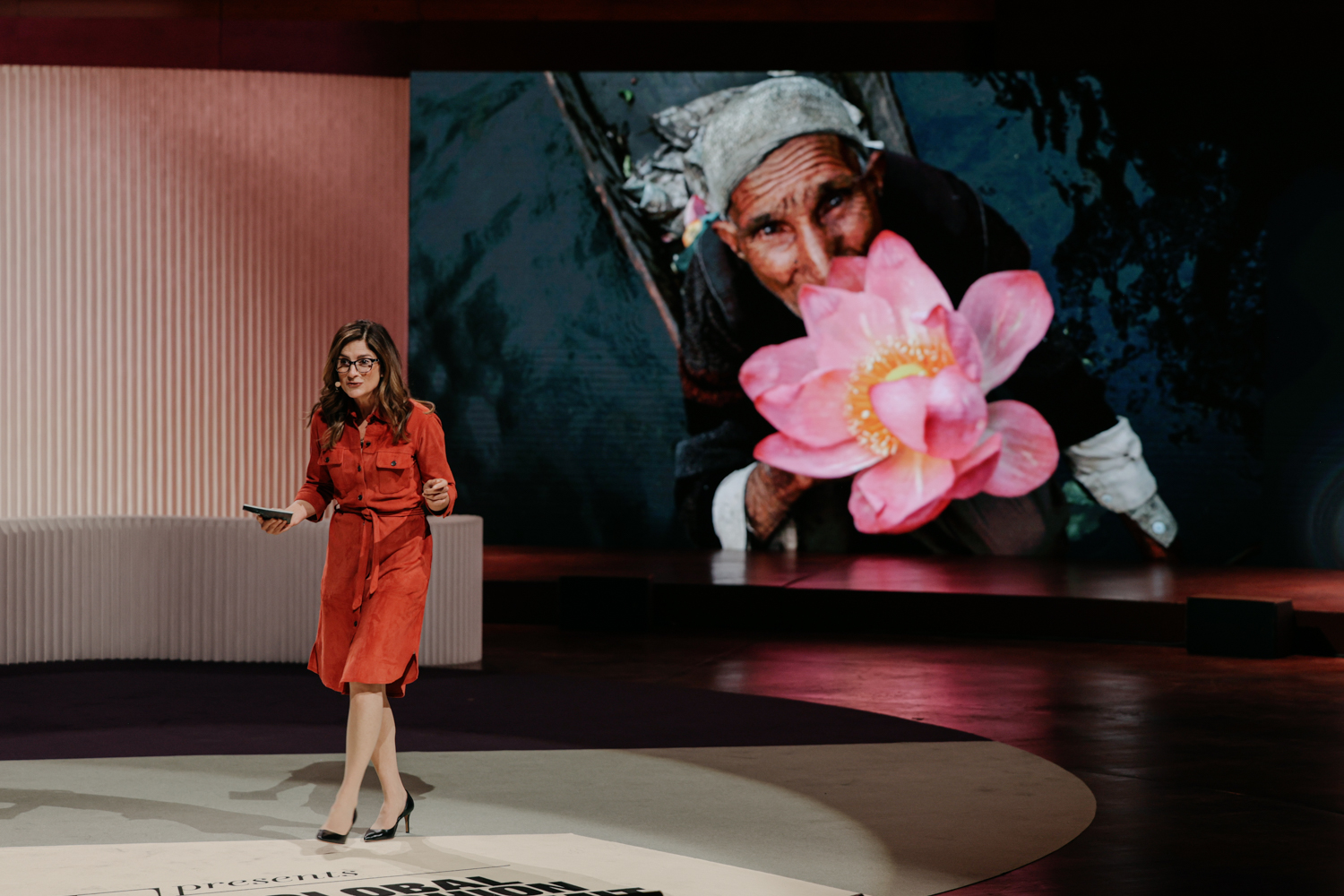
“Fashion is not just about materials, or carbon, or circular systems, though they matter,” said Vitale. “It’s about relationships and whether we see nature as a warehouse of resources, or as a living system to which we all belong…Unlike the other extinctions, this one has a designer. It runs through supply chains, it shows up in how cotton is grown, how leather is tanned, how forests are cleared, and how water is used and discarded.”
Vitale’s presentation captured the sense of urgency that many of us in fashion are already feeling. As the climate crisis accelerates, its impacts are increasingly showing up across supply chains. In 2025 alone, more than 200 climate-related disasters affected more than 87.8 million people worldwide. Fashion’s role in the destruction of nature, our vital ecosystems,and biodiversity can no longer be ignored. “Fashion is not adjacent to the story. It is one of the systems shaping it,” said Vitale.
There are signs of progress, and this was evident throughout the Summit’s Innovation Showcase — from RE&UP’s textile-to-textile recycling technologies, to Haelixa’s DNA-based traceability platform, and Fibe’s natural fibres made from potato harvest waste.
But, is innovation enough if the very structures and foundations the industry stands upon remain exploitative and extractive? Unfortunately, it seems the industry remains divisive as to whether these structures should shift or not. Panels made clear that, ultimately, the new paradigm needs to be profitable, and if it’s only good for the planet, investors won’t be interested. One investor in particular highlighted that they are specifically seeking innovations that are immediately ready to integrate into existing supply chain structures, “without overhauling the industry”. The problem with this is the innovation at hand then risks perpetuating the very same harms as current materials and production systems. Existing supply chains, shaped by a linear business model, reward profit and speed above all else. As a result, innovations introduced within these structures are likely to be pushed to scale rapidly, often at the expense of quality, responsible production, and fair labour conditions.
This concern was raised by Next-Gen Assembly member Kendall Ludwig. “Fashion is not adapting to circularity, circularity is trying to keep up with fashion,” said Ludwig. Currently the industry is not demanding new structures, instead it is asking next-gen materials to scale in existing fast fashion structures. Until we address the entire business model, rather than trying to gloss over it with innovation and circularity initiatives, little will change.

This was echoed by Grace Forrest, Founding Director of Walk Free. “Without discussing a living wage and addressing mass overproduction, but talking about circularity, to me it’s like discussing if the tooth fairy is real. Because mass overproduction is the major issue. We can’t circulate our way out of the problem.” said Forrest. Too often, at sustainability-centred events, the focus is disproportionately placed on the environmental impact of the fashion industry, with the human and social costs still looked to as an afterthought, or treated as a simple tickbox exercise. But innovation and circularity initiatives that exist within supply chains rife with human suffering and exploitation are not truly sustainable. “You cannot squeeze suppliers on price and speed and still claim sustainability. Those pressures are direct drivers of exploitation. Real resilience comes from fair pricing, long-term supplier relationships and realistic production timelines,” said Forrest.
We need the industry to move away from sustainability as a corporate ambition, and towards the people, communities, and ecosystems that sustain the industry itself.
One message stood out the most at the Summit: those closest to the challenges are also closest to the solutions. Garment workers, farmers, and artisans are not passive participants within supply chains; they are land stewards, knowledge holders, and experts in what needs to change for fairer, more equitable systems. Those who sustain the industry through their labour and skills, are also those who bear the brunt of the industry’s impact, and so the frontline communities – who are both within and closest to the fashion supply chain – are the people who should be shaping the conversations around fashion’s future.
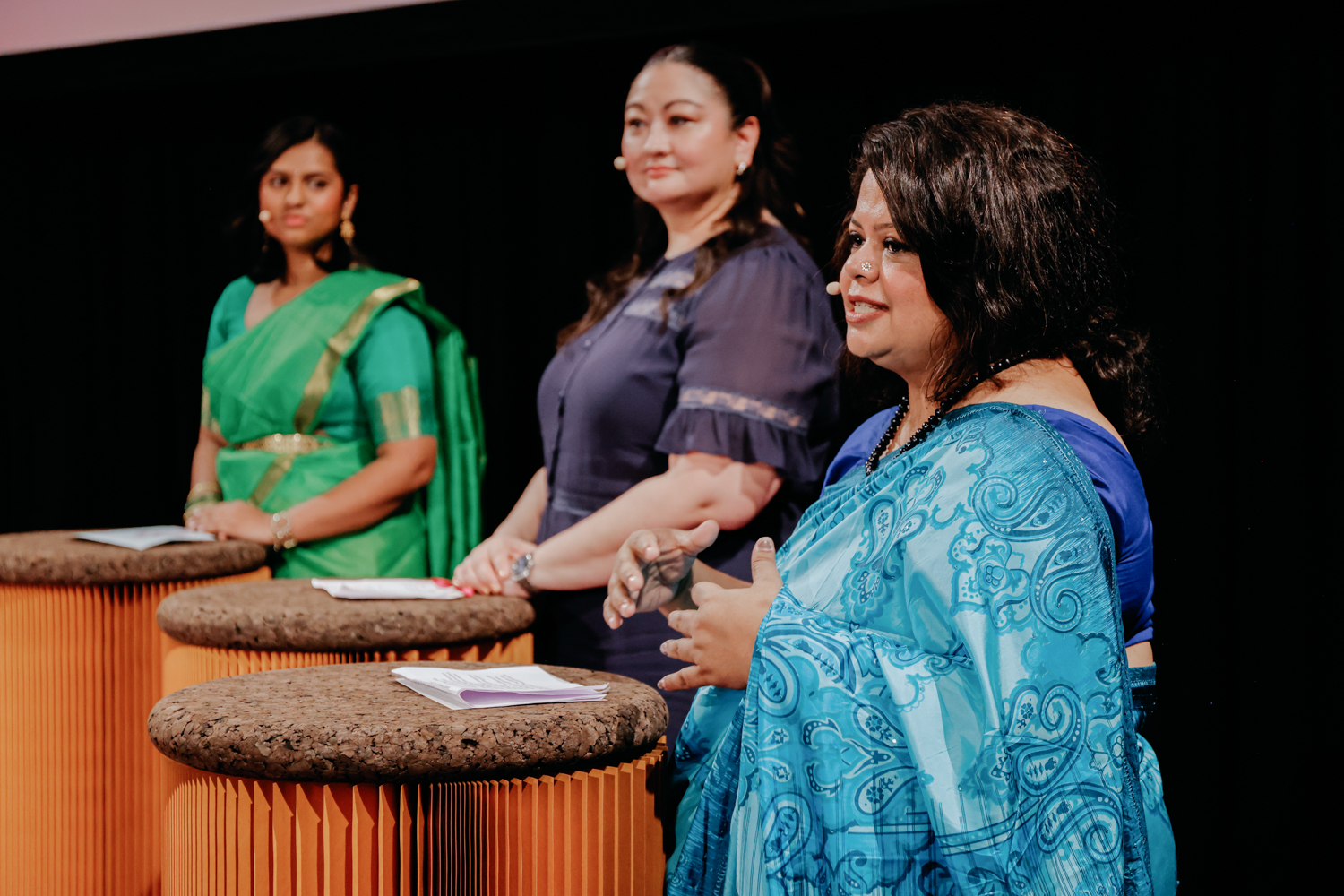
One panel in particular on fashion, climate, and women’s health was a powerful reflection of this. Dr. Harshita Umesh, founder of the Vaada Hope Foundation, Tiffany Rogers of the Fair Labor Association, Rawnak Jahan, Acting Director in Women and Girls’ Empowerment at CARE Bangladesh and Farhana Islam, Quality Inspector at TusukaTrousers Ltd. came together for a critical discussion unpacking the urgent need to prioritise women’s health, ensure access to fair pay and healthcare, and recognise garment workers as active agents of change.
The conversation addressed persistent workplace inequalities, including gender pay gaps, and highlighted the importance of drawing on workers’ lived experiences and on-the-ground insights to shape more equitable systems and just transitions within the fashion industry. These are the conversations we need more of.

Yet conversations like these deserve far greater visibility. They should be platformed on main stages, not scheduled alongside competing sessions that allow audiences to opt out of engaging with these critical issues, especially when worker-led organisations and worker voices are at the heart of the discussion.
When it comes to decarbonisation strategies and emerging optimisation, this is imperative. Aarti Mohan, co-founder of Sattva, reinforced the importance of a “nothing for them without them” approach. Brands’ decarbonisation efforts must be implemented in a way that does not dehumanise workers through over-optimisation. Currently the industry is adopting heavily technical solutions to address human-centric problems. Meaningful progress requires active listening and collaboration with workers themselves, ensuring solutions are rooted in lived realities and adapted to local contexts. “Decarbonisation might solve the climate imperative, but it shouldn’t unlock another crisis in the form of people being left behind,” said Mohan.
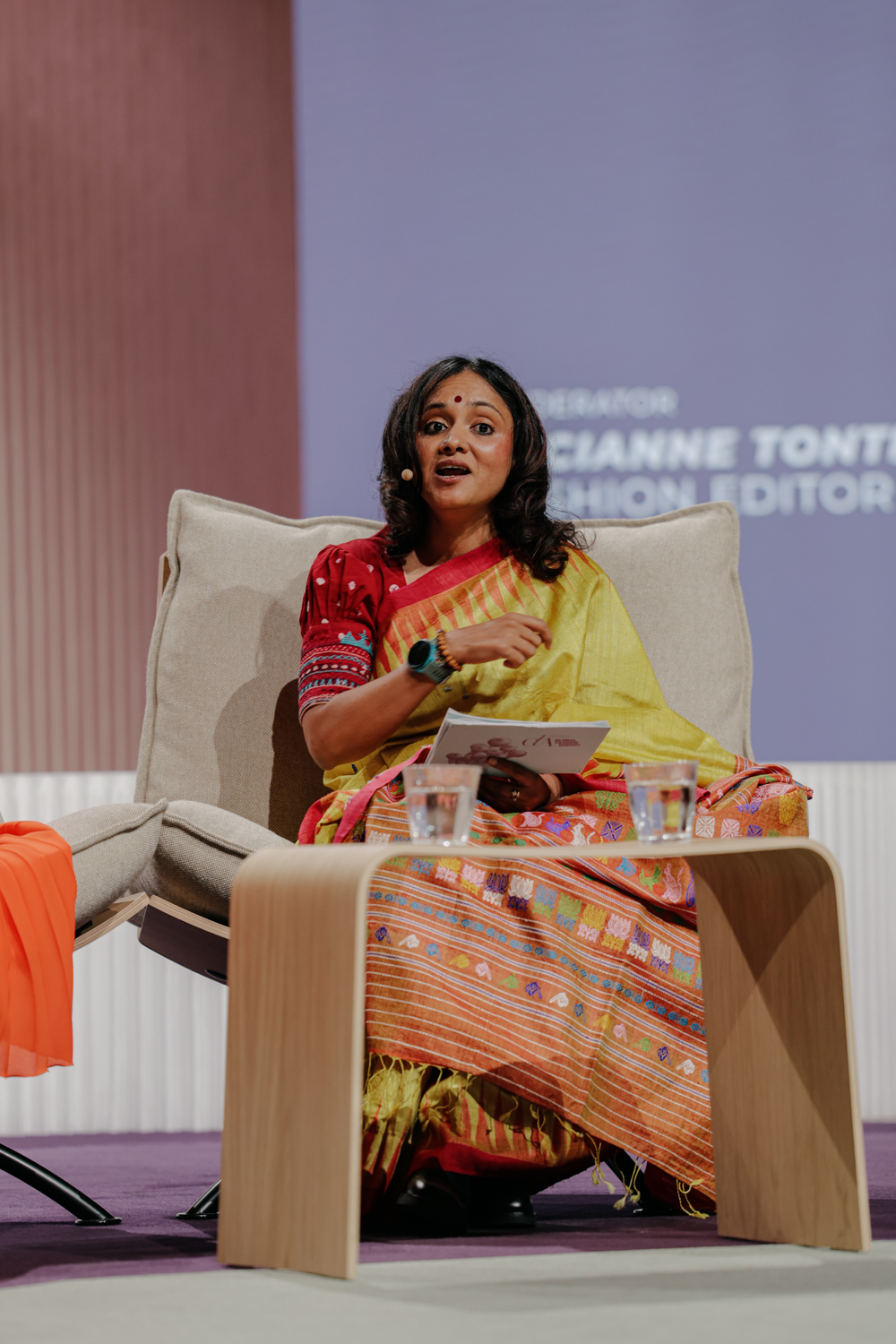
If fashion is serious about transformation, sustainability efforts must centre the voices of frontline communities, who the industry relies most heavily upon, yet too often remain excluded from the conversations shaping its future.
Although this issue was raised across numerous panels, the voices of frontline communities and workers within the global fashion supply chain remained largely absent from the Summit. We need to move beyond simply talking about including workers’ voices and begin ensuring that workers are meaningfully represented in these conversations.”Knowledge has to flow up from workers from the front of supply chains, not just down from board rooms or sustainability teams in Europe.” said Forrest. The harsh reality is that giving space to brands like LVMH is a self-perpetuating cycle that rewards the bare minimum, when still we see continual evidence of supply chain abuses and worker exploitation. The conversation becomes one of who has access (which is largely determined by financial power), rather than who has the genuine answers and solutions. “What is lacking from events like the Global Fashion Summit is the voice of frontline workers and the voice of the people who make our clothes…sustainability isn’t real without the human rights of the people behind these products. I would like to see worker voices represented and the people behind these products at every level of the supply chain.” said Forrest.
The fashion industry is at a critical turning point. We need conversations to lead to commitments, and commitment to lead to action. These conversations cannot belong solely to brands, CEOs, and innovators. The future of fashion must be shaped by the workers in the global fashion supply chain whose labour, skill, knowledge, and craftsmanship underpin the entire system. Without them in the room, little changes.
Fashion industry summits and conferences shaping the future of the sector should commit to measurable targets: at least half of all speakers and panellists should come from frontline worker communities, with funded participation for workers across all stages of the supply chain and dedicated sessions on critical issues such as fair wages, heat stress, and creating safe and healthy working environments. Workers, not brands, should be setting the agenda and leading the conversation. Resilience cannot be built in rooms that exclude the very people sustaining the industry.
Sacha Daly is the Digital Editor at Eco Age.