
Not too long ago, the idea of throwing away a garment simply because it was well-worn or needed a bit of mending was as ludicrous as disposing of a diamond ring because it needed a good polish. Over the last fifty years, however, the rise of throwaway culture and fast fashion have conditioned consumers to forgo mending in favour of binning.
Globally, 120 million tonnes of clothing were discarded in 2024. The EU alone generates 12.6 million tonnes of textile waste annually, including 5.2 million tonnes of clothing and footwear, and roughly 78% of it winds up in a landfill site or is incinerated.
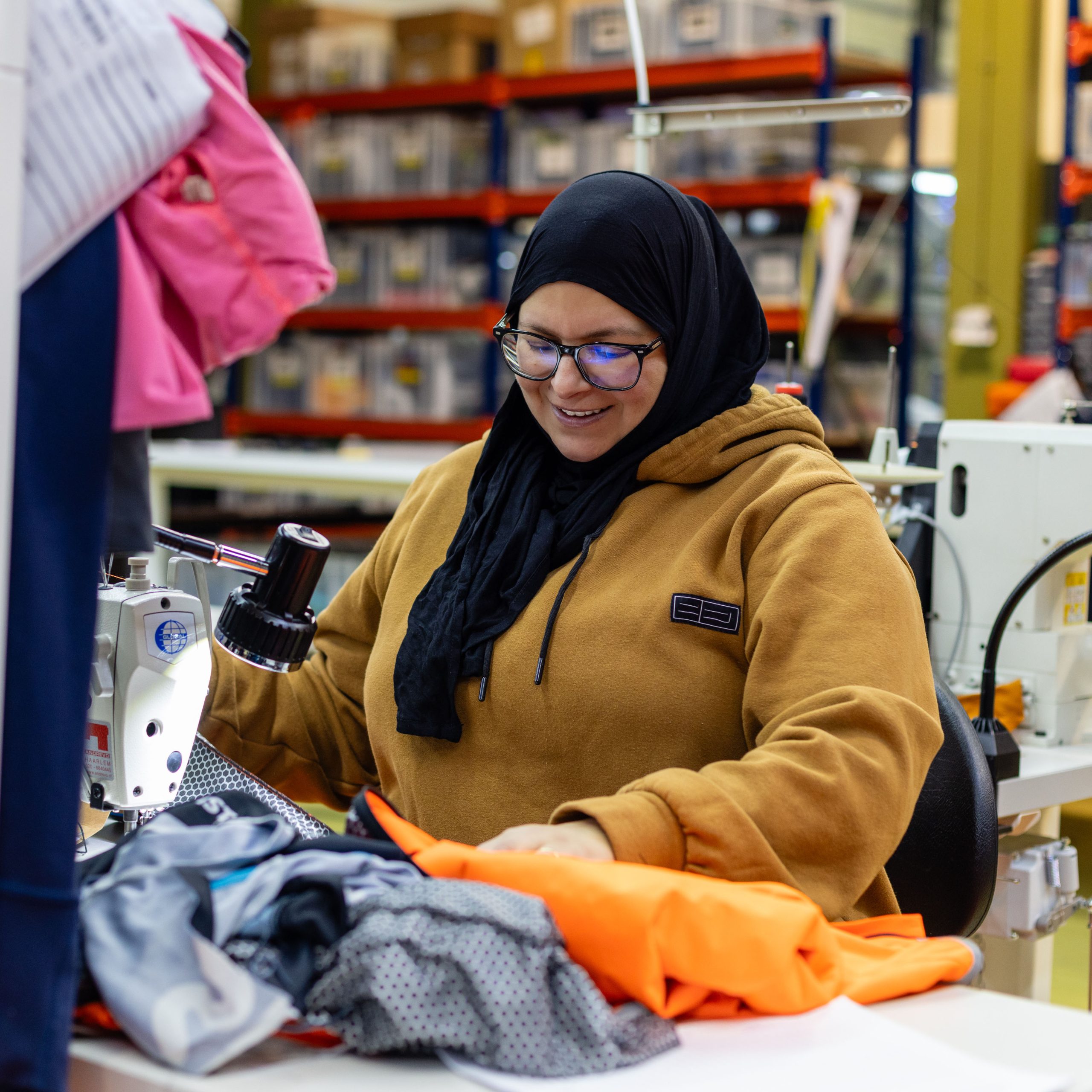
But on a tree-lined street in Amsterdam, a few dozen men and women are working to reduce the amount of clothing that is tossed – one garment at a time. They are tailors at United Repair Centre (URC), a B2B clothing repair company that is equally dedicated to helping clothing and people reach their full potential “Our mission is to repair the clothing industry by putting people first,” says Thami Schweichler, the founder and CEO of URC.
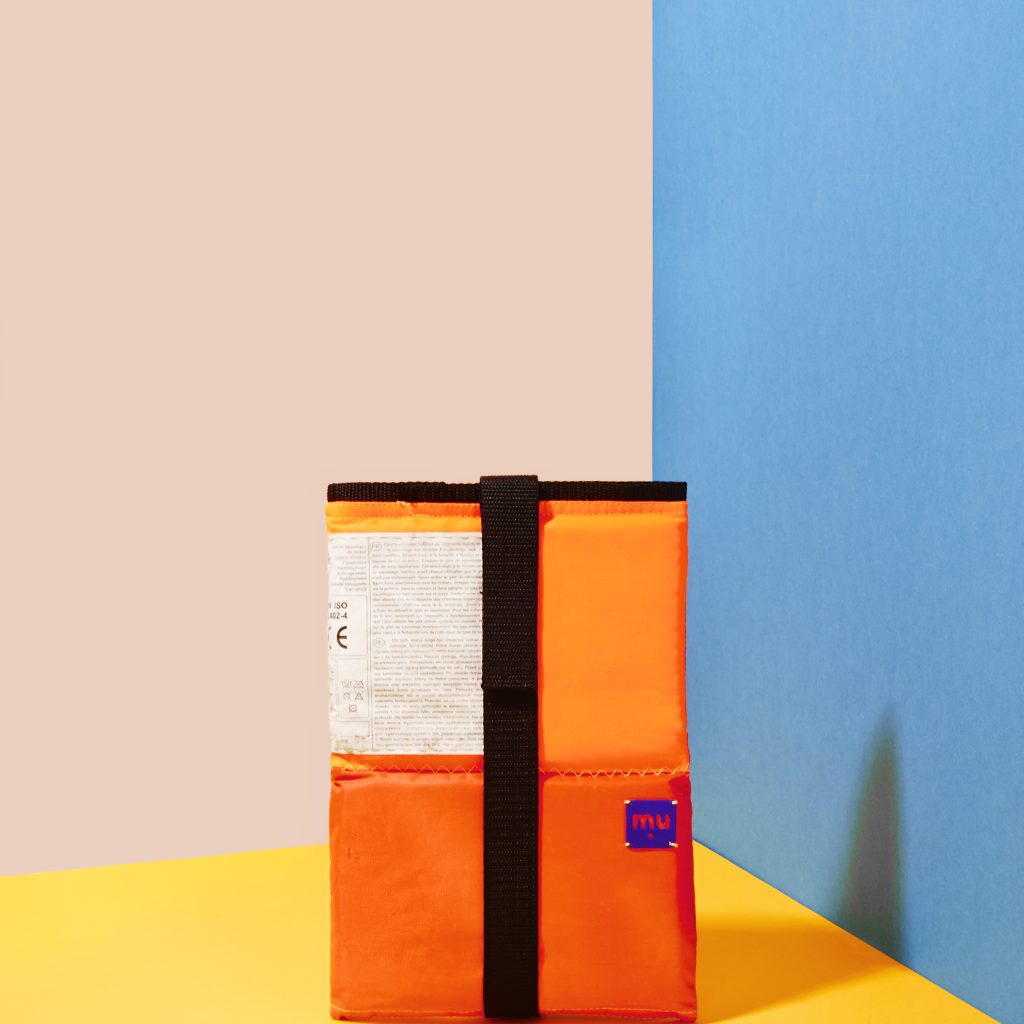
Though the company was founded in 2022, its ethos and mission can be traced back to 2015, when Schweichler founded Makers Unite. That year, over 800,000 refugees and migrants arrived in Greece via the Aegean Sea, leaving hundreds of thousands of life vests on Greek beaches. Schweichler, together with a collective, gave the bright orange vests and some of those who wore them a second chance by employing refugees in the Netherlands to create upcycled travel products.
Ultimately, nearly 10,000 vests were turned into tote bags, laptop covers and travel pouches by 71 refugees who went through a coaching programme to help them train for employment in the Netherlands. The products were sold online and in museum shops throughout Europe. By 2017, companies such as Tommy Hilfiger and C&A were asking for bespoke upcycled goods for the European market.
In 2020, the City of Amsterdam organised a series of working groups to discuss various government initiatives, one of which is for the city to become fully circular by 2050. Representing Makers Unite, Schweichler joined the textile working group, which also included Patagonia, whose European headquarters is in Amsterdam. When the luxury outdoor brand suggested creating a shared repair service to reduce the amount of textile waste, the idea immediately resonated with Schweichler, who says that migration brings deep and diverse skillsets to Europe, particularly in the textile industry, which has declined over the past decades.
“I realised that there was a lot of possible job creation in the sector and wanted to connect it with the skillset of migrants. It was a gigantic economic opportunity actually,” Schweichler says.
Brands needed to provide repair services – for warranty, as part of their business model and in anticipation of EPR legislation – but there was a fragmented, outdated and decreasing repairability sector in Europe.
Schweichler went back to Patagonia and said he wanted to become a repair provider for them under two conditions: that he could share their group lens with other brands and use their expertise to help repair products at large scale; and that he could connect the repair programme with a social inclusion programme.
Two years later, URC was launched as a collaborative partnership between the Amsterdam Economic Board, Makers Unite and Patagonia, funded by private investment.
Schweichler applied his proven model of training migrants and refugees to the new venture and Patagonia provided its technical expertise and network. Schweichler’s mentor Paul Kerssens became a co-founder, bringing expertise in commercial scalability.
Today URC works with more than 30 global brands including Patagonia, Lululemon, Levi’s, The North Face, Arc’teryx and Jansport, handling repairs for Europe and the UK.
Roughly two-thirds of the brands use URC’s streamlined platform, so customers requesting repairs communicate directly with the repair centre, which has workrooms in Amsterdam and London (with Paris and Germany coming in 2026). URC’s operations in Amsterdam and London are already profitable and to date, have repaired more than 75,000 garments, reducing 404 tonnes of CO2.
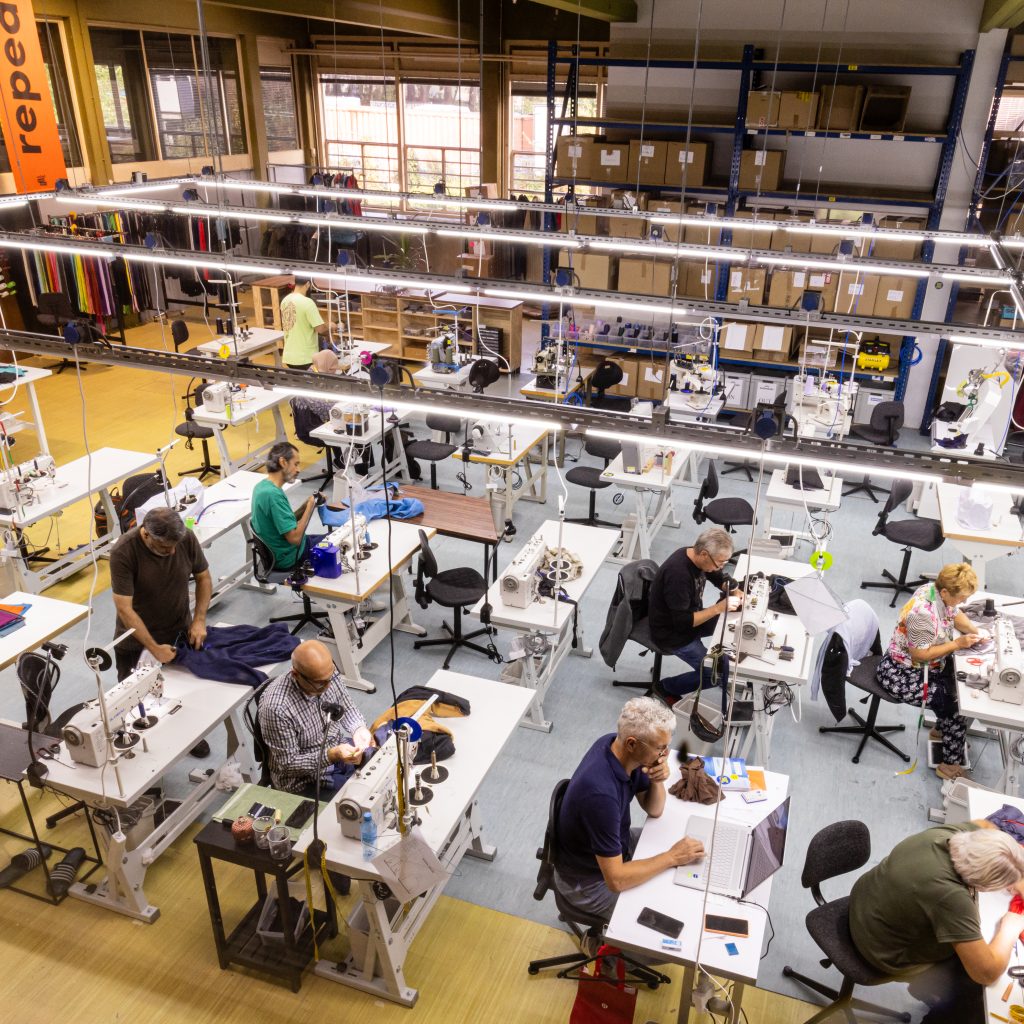
Equally importantly, the Certified B Corporation employs 60 refugees and migrants representing 21 nationalities. Though the majority were already trained tailors in their home countries, many have gone through URC’s training academy. Those who complete the free one year course and achieve the required productivity level are guaranteed a job at URC, but the job is really the beginning.
Many of the tailors come from terrible backgrounds, having lost their homes and families. United Repair Centre focuses on creating an inclusive community to build a new future together. Schweichler says “It’s amazing. People say, ‘I didn’t know I could do anything. Now I know I can be a tailor and I have value’,” adding that it’s not about integrating people into societies. “It’s making sure that they are included, and I think there’s a big difference. They’re part of something bigger.”
Jaimie Seaton has been a journalist and writer for more than 20 years.