
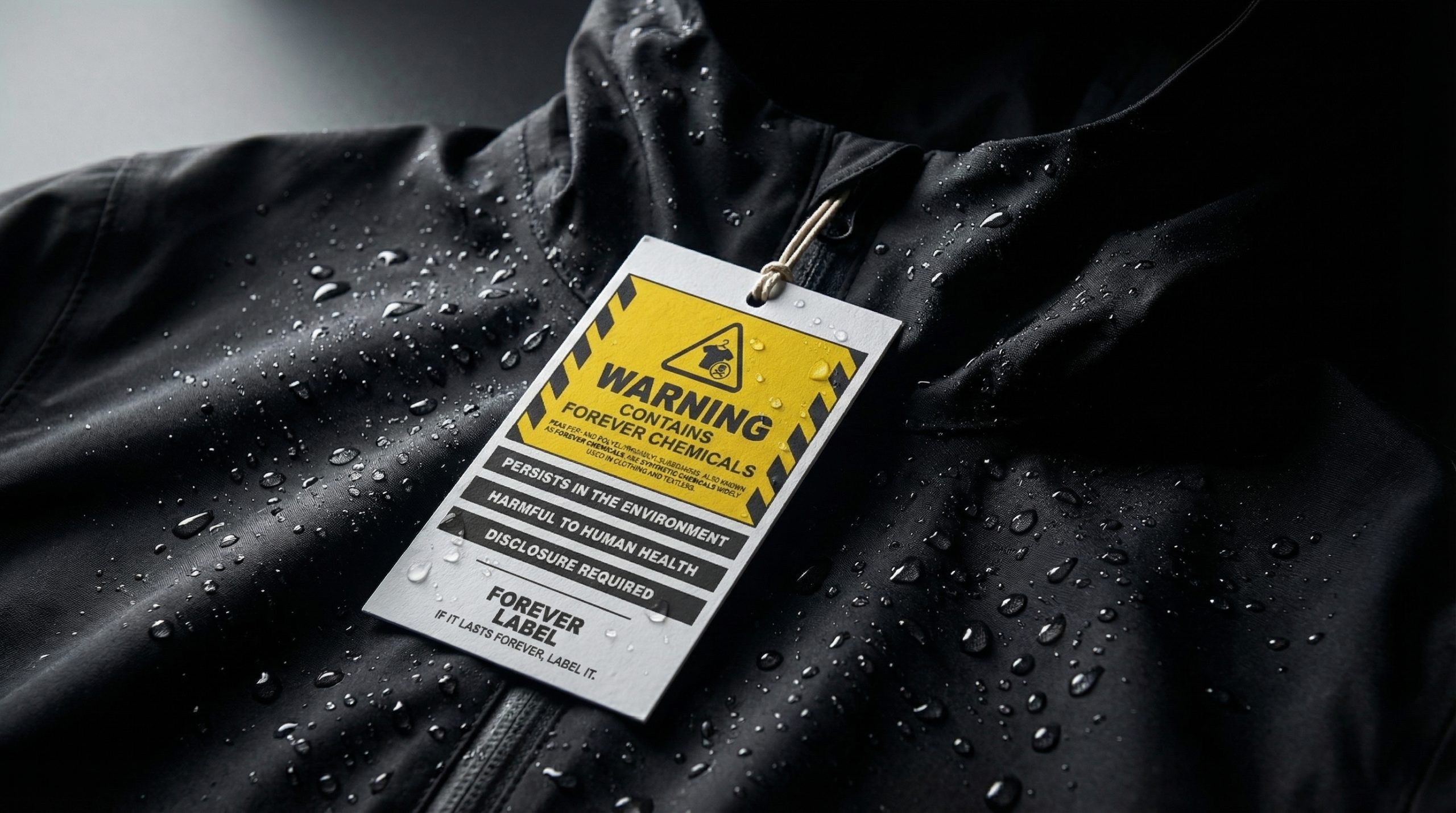
PFAS (per- and polyfluoroalkyl substances) are a group of synthetic chemicals used across the textile industry for water resistance, stain resistance, and durability.
They are commonly known as “forever chemicals” for a reason: they do not break down in the environment and accumulate in the human body over time.
But this information on chemical ingredients does not reach the consumer at point of purchase.
Our solution is simple.
If it lasts forever, label it.
Join us as we demand transparency with the Forever Label.
What is the Forever Label?
Consumers are unable to make informed choices about the clothing they buy without access to transparent information.
The Forever Label will provide consumers with the information they need to understand the chemical ingredients in their clothing.
We are asking for transparency.
The same basic standard of disclosure that already exists for allergens in food, financial risk in investment products and ingredients in cosmetics.
We are calling for mandatory disclosure of PFAS on all clothing and textile products sold in the EU.
- On a physical hang tag.
- On the website listing.
Everywhere a consumer encounters a product they should clearly see whether PFAS has been used.
The label forces brands to take accountability for harmful chemicals while encouraging consumers to consider the environmental impact before purchase.
Why now?
France and Denmark are at the forefront of regulating toxic chemicals in the fashion and textile industry with targeted bans on clothing, footwear and cosmetic products.
In Denmark, from July 1st 2026, the import and sale of clothing, footwear and waterproofing agents containing PFAS are prohibited.
In February 2026, the UK released its first ever PFAS Plan to protect people and the environment from harmful “forever chemicals”.
But consumers still cannot identify the presence of these chemicals in their garments because brands do not disclose them.
While regulation continues to develop, disclosure is still necessary so consumers understand where PFAS is present.
Consumers deserve to know what’s in their clothes.