Author: Karl Smith-Eloise

  • A Colour to Dye For

    A Colour to Dye For

    Colour isn’t just a matter of taste – it’s a matter of toxicity. Synthetic, carcinogenic colour is killing us, and it’s killing the planet too. 

    Nowhere is this more relevant than fashion, where 800,000 tonnes of dye is used every single year and 90% of all clothing is dyed synthetically, using around two thirds of all dye produced. 

    In just one example, synthesised indigo contains formaldehyde, aniline and hydrogen cyanide. All chemicals which, in any other context, we would know to stay well away from. Yet we put them on our skin. 

    Why?  

    Dr Benjamin Droguet, Founder & CEO of next-gen pigment innovator Sparxell, speaking exclusively to Eco Age, explained: “The fundamental chemistry behind the colours in our daily lives hasn’t evolved since the 19th century. We’re still relying on the same toxic dyes, mined metals, and mineral-based pigments that were developed at the beginning of the Industrial Revolution,

    The talk of London’s recent Future Fabrics Expo, Droguet’s company isn’t just opining on the problem – it’s producing the solution. 

    Sparxell’s collaboration with designer Patrick McDowell is proof not only that plant-based pigments are effective, but also that they’re beautiful and desirable on an aesthetic level. 
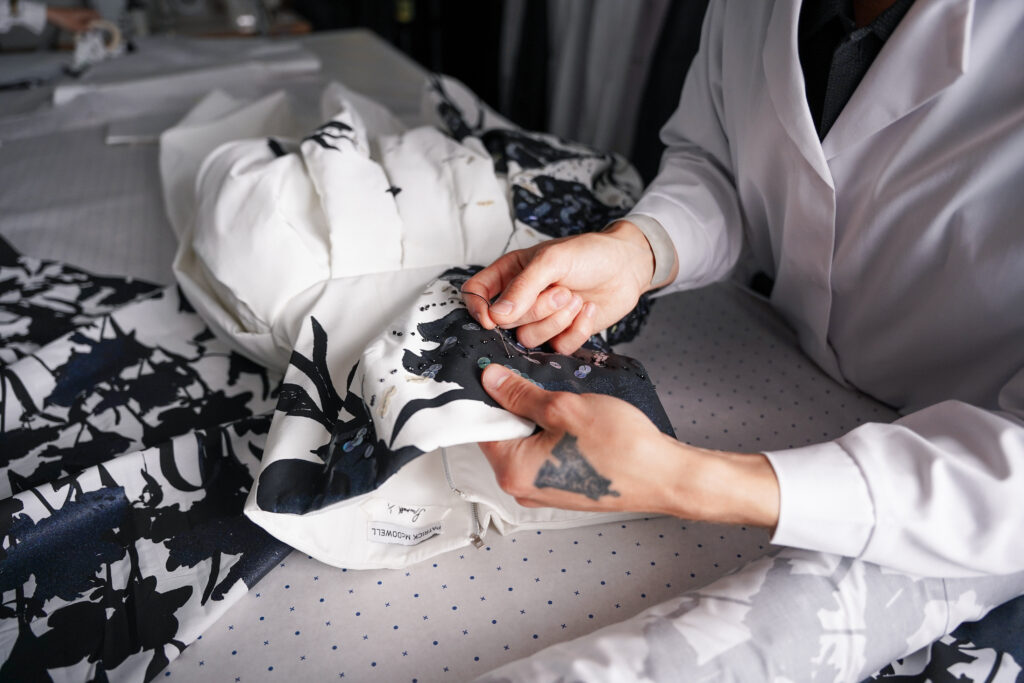
    Patrick McDowell’s collaboration with planet-based pigment innovator Sparxell, showcased at London’s Future Fabrics Expo 2025.

    “Pigments and dyes are foundational to fashion,” notes Julie Verdich, Director of Partnerships and Product at Octarine Bio, a Danish innovator in the space. “They shape aesthetics, identity, and desirability — but the way we produce and use them hasn’t meaningfully changed in over a century.” 

    It’s a familiar story where fashion is concerned, petrochemical materials having become the industry standard and a sustainability scourge. 

    When it comes to pigment, however, the problem is much less widely discussed. And, on the rare occasions that the issue is given airtime, the focus is often on the ultra-pervasive Carbon Black. 

    “Carbon Black is a heavy petroleum burned at really high temperatures. It’s essentially soot from oil. “It’s a great colorant for things like paints, plastics, inks and cosmetics.” explains Scott Fulbright, CEO and Founder of algae dye innovator Living Ink. 

    It is also a known carcinogen and the result of a resource-intensive and environmentally destructive process.

    “Synthetic dyes are cheap, predictable, and industrial, which works if you’re trying to make hundreds of thousands of identical products.” – Saeed Al-Rubeyi, Story mfg. Co-Founder

    By comparison, we rarely hear about how water from garment production is “returned” to nature, filled with heavy metals, powerful chemicals and microfibers. These polluted waters impact soil health, infiltrate and decimate waterways and are known to seriously harm wildlife. 

    “The global textiles and apparel sector utilises approximately a quarter of global chemical output, and upwards of 8,000 synthetic chemicals, across fibre, yarn, dyes, washes, finishes, and other upstream processes. Dyes themselves account for approximately one third of fashion’s upstream negative impact.”

    For every tonne of textiles produced, 200 tonnes of water is used. Even after treatment, 90% of discharged dye reportedly remains chemically unchanged. “The textile industry,” Droguet adds, “uses over 10,000 different chemicals in colouration processes, releasing 1.5 million tonnes of toxic dyes into the environment annually.”

    That’s poisoned water, coming right back to the planet and back to people. So, why isn’t it a priority? 

    “When people hear ‘plastic pollution,’ they immediately visualise tangible objects like bottles and bags,” Droguet agrees, “But people don’t think about what goes into creating that beautiful pair of blue trousers or that attractive gold and glossy wrapping. They see the end result, commoditised and standardised, not the chemical process behind it.”
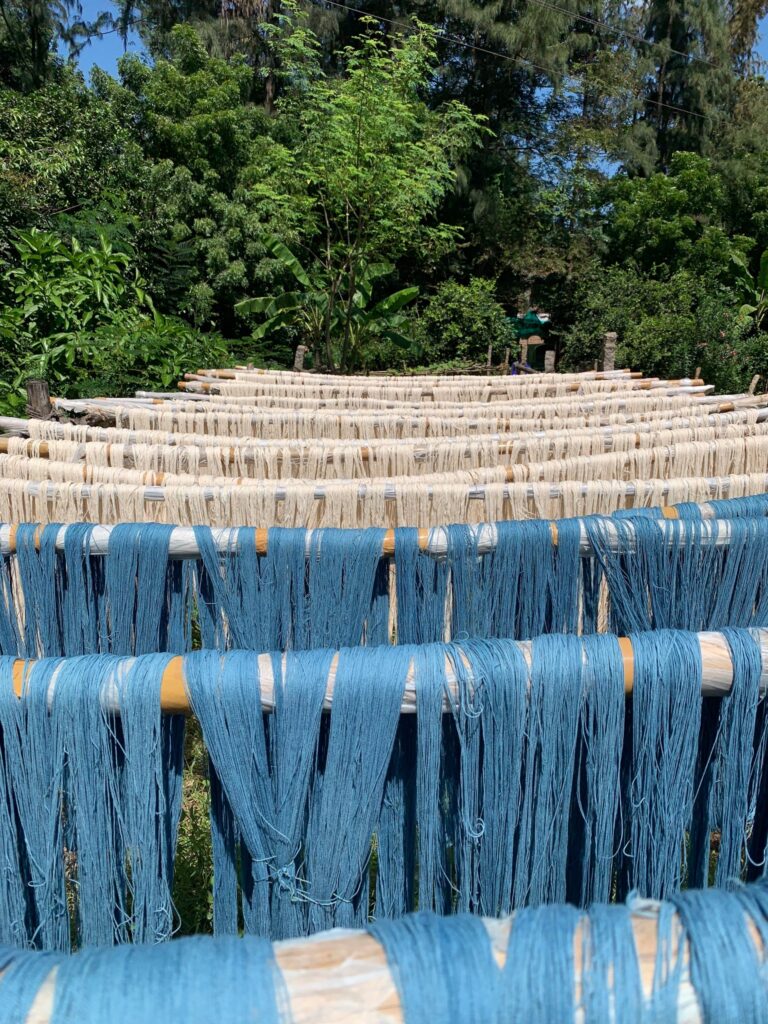
    An insight into Story mfg.’s natural dyeing processes – a far cry from the mass-produced, synthetic standard for the fashion industry.

    Consumers, however, are just the final part of a long chain. Asked why switching up the pigment process in favour of more natural elements isn’t a fashion industry priority, Story mfg. co-founder Saeed Al-Rubeyi points to a systemic issue: “Because it’s hard, expensive, and slow. That’s everything most brands try to avoid. Synthetic dyes are cheap, predictable, and industrial, which works if you’re trying to make hundreds of thousands of identical products.” 

    Known for their “slow fashion” approach and a preference for working with what the planet has to offer, Story mfg. is committed to not following that same pattern: “We use natural dyes because they make sense: ethically, environmentally, and aesthetically.”

    This same mentality led London-based Patrick McDowell to his collaboration with Sparxell: “We wanted to showcase the pigments in the most beautiful and compelling way so we created a beautiful one-off gown with a special floral placement highlighting the pigments link to the natural world.” 

    Droguet adds: “We’re replacing this outdated chemistry with bio-inspired solutions that work with nature rather than against it. Our bio-inspired approach harnesses the same structural colour principles found in nature (think butterfly wings and peacock feathers) – brilliant, vibrant colours that are completely non-toxic and biodegradable. It’s time the colour industry caught up with what nature perfected millions of years ago.”

    For McDowell, though, it was most vital to “show the world that this innovation is available and accessible to the industry,” he says, highlighting the fact that meaningful change almost always comes from within. 

    “Pigments and dyes are foundational to fashion… They shape aesthetics, identity, and desirability — but the way we produce and use them hasn’t meaningfully changed in over a century.” – Julie Verdich, Director of Partnerships and Product, Octarine Bio

    Designer and director Jeff Garner is well-versed in the problem of pigment. His documentary film, “Let Them Be Naked,” is a deep dive on this complex issue and one of very few such reports intended for the broad audience which most needs to hear it. 

    He told Eco Age: “There is a war at hand between the balance of the needs of the individual and the needs of the community, between selfish desires and stewardship – short term versus long term.” 

    Considering the potential for a more conscious framework, Garner adds: “Regulators of our fashion industry have applied the end-of-pipe solution, attempting to require the manufacturers to follow protocol… but this does not work. We need a solution on the front end: to reward companies for working to resolve and implement change themselves. Regulations are too hard to enforce and susceptible to corruption. If the design of the system was good, regulations wouldn’t be necessary. A new system needs to be put in place!”

    In shifting the pressure onto the system and onto their peers this way, Garner, McDowell and their collaborators are setting both a precedent and a challenge. 

     The only question now is will they accept? 


    Karl Smith-Eloise is Features Director for Eco Age. He has worked as the EMEA Editorial Lead for HYPEBEAST and Editorial Director of FUTUREVVORLD, as a contributing editor to Highsnobiety, and for the fashion house FENDI. He now focuses exclusively on Earth-forward and ethical avenues in fashion, footwear and the broader culture.

  • Your Shoes are Killing the Planet

    Your Shoes are Killing the Planet

    Footwear Is Designed to Fail. And It’s Failing the Planet, too.  

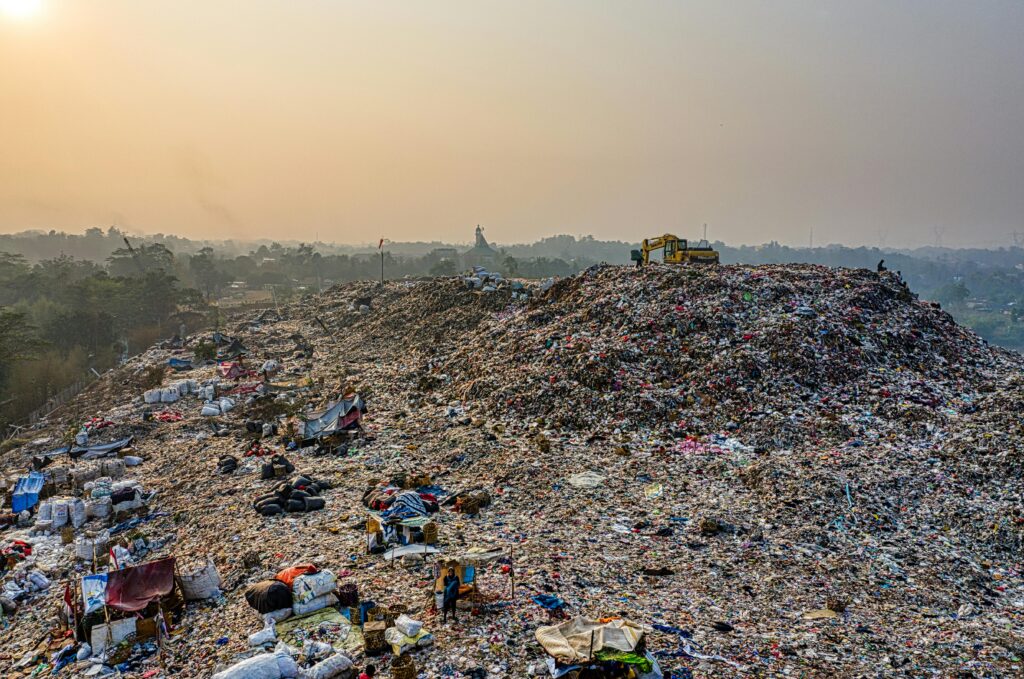
    Every single year a shocking 24 billion pairs of shoes are produced globally. That’s enough, give or take the odd million, for every person on the planet. Three times over.  

    More shocking still, however, is the fact that in the same twelve-month period 22 billion pairs are discarded – mostly to landfill – because they quickly start to fall apart.  

    Now footwear designer Alan Lugo reveals exclusively to Eco Age that shoes are not designed to last, they are designed to fail. 

    Industry leaders are slow to make more sustainable changes while their products are selling. While apparel fashion embraces natural and next-gen materials to positive effect, it seems footwear is lagging behind

    Stepping up to address the problem is the Footwear Innovation Foundation. Established in April, with backing from brands like Michael Kors, the Deckers group and Genesco, the FIF aims to tackle “pervasive industry-wide challenges.”  

    In 2023, Nike alone is reported to have produced 800 million pairs of shoes – up 2.6% from 2022. adidas produced around half that number. That’s over a billion shoes just from two brands in the same category.  

    It’s not hard to see how these impossible-seeming numbers start to stack up in real terms.  

    The Unsustainable Status Quo

    Andy Polk – a key member of the FIF’s founding board and Senior Vice President of the Footwear Distributors and Retailers of America believes businesses feel they are too busy to innovate. 

    “Footwear leaders are increasingly preoccupied with addressing immediate challenges, leaving little time to consider how to innovate towards latent demand and develop new models. 

    “Basically, we are so busy putting out today’s fires that many cannot pick up their head to look at what’s next.” Polk says. 

    What damage is this doing to the Planet?  

    Shoes are, for the most part, made from either animal leather or petro-based plastics. The toxic effects of leather tanneries and the industry’s contribution to global emissions are well documented. The problem of fossil fuels is common knowledge too. And, while the proliferation of microplastics (from our oceans to our brains) is a relatively new item on the agenda, it’s one with considerable traction.  

    Production Over Progress

    Lugo, a member of the FIF’s Innovation Advisory Council, with time spent at major player Wolverine Worldwide and next-gen outfit Natural Fiber Welding, is convinced shoes are being intentionally produced with design flaws. 

    He says: “What fails first and leads to repurchase is either the sole wearing out, or the lining in the heel wearing out.  

    “Most designers don’t get feedback from the end consumer about what failed in their shoe.  

    “That’s mostly fielded by customer service, who will usually just offer a replacement pair or a discount. It’s siloed, especially at the large brands, because without good, rich, organised data – it’s just a distraction.”  

    So, if you’re constantly finding a hole in the heel of your shoes, just know it isn’t how you’re walking – it’s what you’re wearing. At this point, it isn’t so much a design fault as it is a design feature; part and parcel of the final product.  

    Is it not that these problems can’t be fixed, then, but rather that they’re ignored in favour of keeping the sales flow unbroken? 

    “Yes,” Lugo continues: “There is a fix but brands don’t care enough. They don’t care because people – consumers – don’t care enough, either. The underlying social issue here, the one that fights progress, is that people like buying shoes. 

    “I think most brands realise it’s not worth the resources to be a leader in this space,” Lugo concludes: “Good enough is good enough.” 

    FIF Chairman Andy Gilbert is also acutely aware of this problem and remains sympathetic to the industry’s difficulties. 

    He explains, “We find a consistent response from companies across the industry, from retail outfits to the brands, which points to the idea that innovation is a nice idea, but the rigors of managing the day-to-day process get in the way of addressing true innovation.” 

    If we want to see fewer pairs of shoes festering in footwear landfill every year, we need change from the sole up – not just the laces. Only a full-scale reimagining of how footwear is produced and consumed can hope to break the cycle of world-destroying waste.  

    Header image courtesy of Nicholas Rapagnani


    Karl Smith-Eloise is Features Director for Eco Age. He has worked as the EMEA Editorial Lead for HYPEBEAST and Editorial Director of FUTUREVVORLD, as a contributing editor to Highsnobiety, and for the fashion house FENDI. He now focuses exclusively on Earth-forward and ethical avenues in fashion, footwear and the broader culture.
  • Fashion is rejecting Trumpist opulence.


    • Gucci, Margiela and Versace all move away from gaudy styles.
    • ‘No-nonsense craft’, ‘rough-edged tailoring’ and ‘handmade imperfection’ all back in.
    • ‘Dressing like you vacation at Mar-a-Lago doesn’t feel aspirational anymore,’ says trend analyst J’Nae Phillips 

    Late last week it was announced that Donald Trump had accepted a gift from the Emir of Qatar. A small token of the petrostate’s affection, the 47th president received not a classic tie pin or an object of Qatari cultural value, but a brand new private jet reportedly worth $400 million dollars.

    Decked out in such lavish still that it could take years to be retrofitted for official use, the plane is an apt symbol for not just Trump’s own garish style but for the gaudy world his influence has helped to create: an aesthetic exceptionalism that has permeated fashion and design, moving the overton window on what’s considered stylistically acceptable. 

    That world, though, may be about to change. In fashion, the pendulum is swinging once again. And it’s swinging hard. 

    Like any art form, fashion is a product of the times – a response to the conditions we’re living in at any given moment. That response can sometimes be positive, but it can just as often go the other way. Over the last year or so we have seen a slew of articles heralding the return of a gaudier, sleazier, and more opulent way of dressing. 

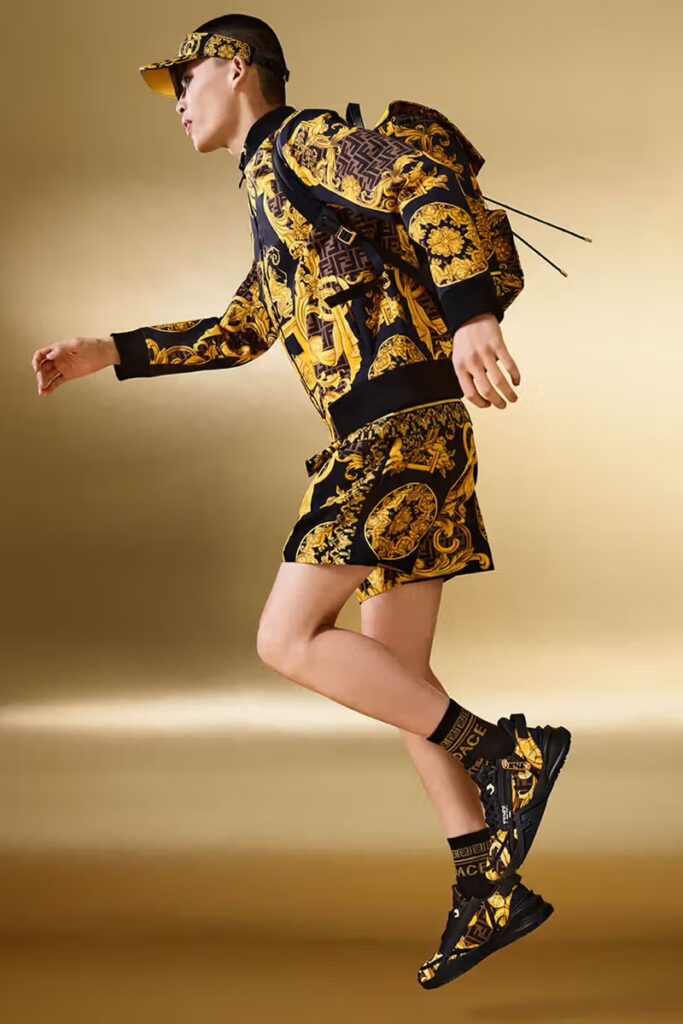
    This shift has been connected to Trump’s rise. A reflection of the president’s penchant for unabashed excess: gold everything, more is more as a prevailing philosophy. Aesthetically, the result has been a trend for something we might call “greed as garb.” Wealth unashamedly worn on one’s sleeve – sometimes very literally. 

    Luxury Letting Go of Vulgarity 

    But, just as there is backlash to Trumpian politics, there is also a noticeable kick against the sartorial tendencies which ride in tandem. 

    Demna has replaced Sabato De Sarno at the helm of Gucci, continuing the brand’s turn from the flamboyant maximalism of Alessandro Michele to a darker, more worldly outlook. John Galliano and his theatrics have departed Margiela, replaced by Glen Martens’ sardonic sense of humour and deconstructionist approach to design. Even Donatella Versace has abdicated her gilded throne, appointing Dario Vitale – better known for his work at chicer, younger Miu Miu – and seeing the company sold to ever-elegant Prada. 

    This is a vibe shift. Not a sudden one, admittedly, but a slow creep across uncertain ground. 

    “It’s a quiet rebellion against the garish, overblown aesthetics that have dominated the past decade, often tied culturally and visually to excess.” – J’Nae Phillips

    Fendi/Versace, “FENDACE” (2022)

    Goodbye to Quiet Luxury

    Back in the early 2020s, as the ripples of the first Trump presidency began to peter out, we saw the rise of Quiet Luxury. An understated aesthetic based on quality, subtlety, and minimalist proclivities, the trend was exemplified by brands like The Row, Lori Piana, and Jil Sander. 

    By 2023 it was the dominant aesthetic. But, by the end of ‘24, the epoch was over and the Boom Boom era was already declared by bellwether outlets such as SSENSE and The Cut to already be in full swing. A new gilded age, carried in on the hot and unsteady air of political turbulence, which led journalist Dora Boras to conclude, “In an atmosphere of uncertainty, style takes a plunge towards paradox. When markets are uncertain, glamour is definite.”

    Already, though, the climate is cooling. 

    “I’ve been watching the trend pendulum alternate between ever-evolving variations of minimalism and maximalism for decades, but this moment of flux feels particularly confused,” says Steve Salter, editor-at-large for LN-CC and former fashion features editor at style bible i-D, in conversation with Eco Age

    This isn’t just about the fashion industry’s internal dynamics, however. It’s part of a larger picture of outside influence. “With creative director job security at its lowest and financial results struggling against a backdrop of socio-political woes, there’s a widespread indecisiveness of vision and growing sense of brand introspection,” Salter, who also founded the grassroots-level fashion zine This Is Ours, continues.

    Amongst this uncertainty, Salter suggests, “One of the most persuasive responses has been a retreat into, and celebration, of no-nonsense craft.”

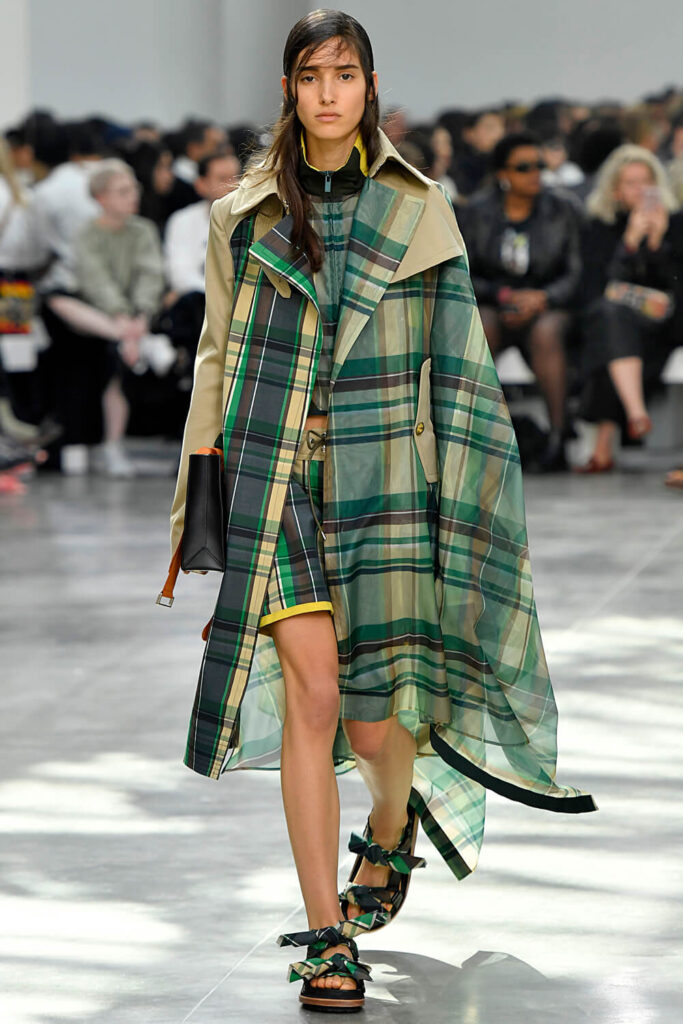
    Sacai

    Opulence at Saturation Point

    It’s a clear through-line; a shift from palatial detachment to a more tactile, hands-on way of creating and wearing clothing. 

    “There’s a perceptible shift brewing,” journalist, trend analyst and cultural researcher J’Nae Philliips tells Eco Age. “It’s a quiet rebellion against the garish, overblown aesthetics that have dominated the past decade, often tied culturally and visually to excess. What once read as camp, ironic, or anarchic now risks feeling complicit in the very systems it once critiqued. The saturation of opulence — logomania, gold-plated everything, “rich bitch” irony, and designer nihilism — has reached a kind of cultural fatigue point. The visual overstimulation that once felt liberating now comes off as tone-deaf, even grotesque, in an age of escalating crises.”

    This lurch toward lo-fi isn’t confined to the big leagues, however. It can be seen at labels in fashion’s upper echelons and in the scrappier work of true upstarts. 

    “Among smaller, more emergent labels, there’s a visible pivot toward anti-gaudiness — not necessarily minimalism, but something quieter, humbler, more emotionally resonant,” Phillips confirms, “Think rough-edged tailoring, handmade imperfection, or garments that reference workwear and domesticity over nightlife and spectacle. There’s a sort of lo-fi sincerity seeping back into the seams — designs that feel more about living than performing.” 

    Speaking with Eco Age, an industry insider who has worked for brands as revered as Gucci and labels as well-worn as Gap, offered an anonymous opinion that backs up Phillips’ thinking. “Stitched together, lo-fi, is very popular these days – brands such as [the conscious-focused and craft-oriented] Marfa Stance. And, of course, [Japanese cult favourite] Sacai has been doing that for a long time now.” 

    Having now moved out of fashion and into the wellness sector, this source offers a final thought – less about the present trend itself than about the state of the industry as a whole. “I’ve become somewhat cynical,” they say, “I’ve been in it too long and observing it for too long… I think it’s very much devoid of any meaning these days.”

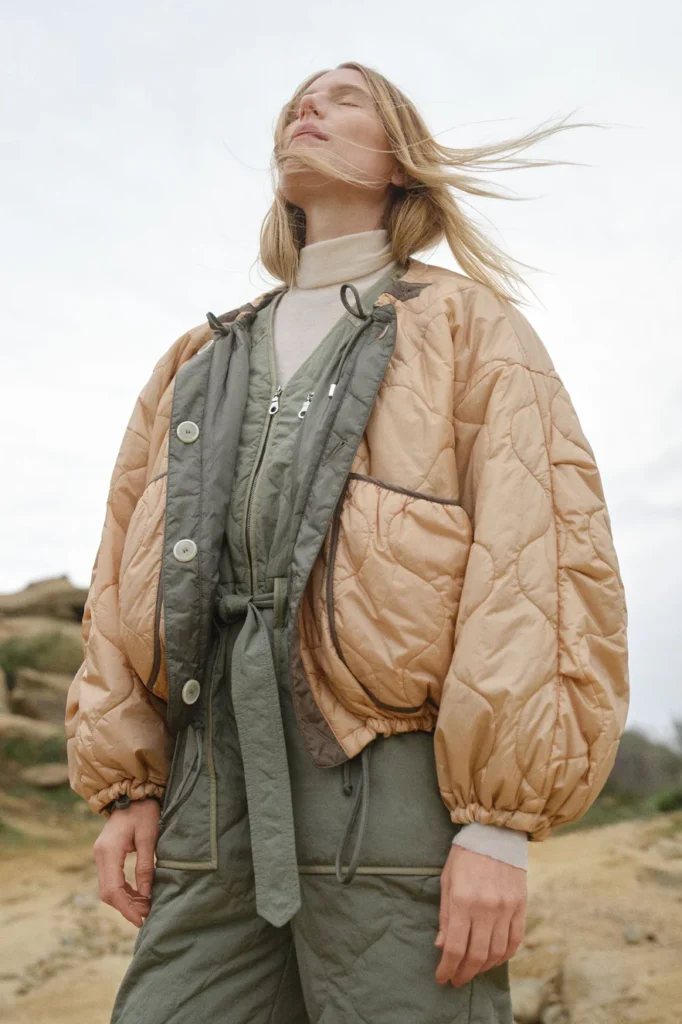
    Marfa Stance

    It’s a bleak assessment, certainly, but it isn’t anywhere near as obtuse as it might seem. In fact, this sombre summary encapsulates exactly where we’re at right now. Post-Boom Boom, fashion houses are responding to a need for something real – a demand for fashion that reflects not just listless uncertainty, but reality. An aesthetic that recoils against shameless greed and wanton disregard, embracing hard truths. 

    “This isn’t nostalgia for normcore or an ascetic redux of ‘90s minimalism, it’s more of an aesthetic revulsion,” Phillips concludes, “Not just against “sleaze” but against the performative irony that enabled it. The pendulum is swinging, not toward purity, but toward authenticity — however fractured, however stitched together. If maximalism was the visual language of denial, maybe this new anti-gaudiness is its antidote: a way of dressing that acknowledges vulnerability, exhaustion, and the need to find meaning in the ruins.”

    The age of Boom Boom Exceptionalism is over. “Dressing like you vacation at Mar-a-Lago doesn’t feel aspirational anymore,” says Phillips, “It feels out of step, even for those who voted for him in the first place.” 

    This is the epoch of Realaesthetik. 


    Karl Smith-Eloise is a freelance writer for Eco Age. He has worked as the EMEA Editorial Lead for HYPEBEAST and Editorial Director of FUTUREVVORLD, as a contributing editor to Highsnobiety, and for the fashion house FENDI. He now focuses exclusively on Earth-forward and ethical avenues in fashion, footwear and the broader culture.