Author: Karl Smith-Eloise

  • Landmark rulings in Bangladesh could transform the garment industry.

    Landmark rulings in Bangladesh could transform the garment industry.

    For the fashion industry, out of sight too often means out of mind. This means that certain indiscretions can easily fly under the radar. This is true when it comes to emissions and even more so when it comes to the human element of the global supply chain. 

    A fresh chain of landmark rulings in Bangladesh, however, could soon change all that for the better – and not only in the cradle of the world’s garment manufacturing industry, but globally. 

    With the country supplying $7.4 billion USD of clothing to the United States and €4.3 billion EUR to the European Union each year – their second- and third-largest suppliers, respectively – it is no exaggeration to say that when the pendulum swings in Bangladesh, it also begins to swing worldwide. 

    First, the nation’s new interim government officially dropped a cache of criminal cases numbering almost 50,000 – charges which had been levied against garment workers demonstrating egregiously low wages.

    Now, that pivot has also ushered in a broader swathe of pro-worker legislation. Rulings which, in making it easier for workers to unionise in smaller numbers, could not only test the garment industry’s opacity but also loosen its once-iron grip on the governments and citizens of manufacturing-driven countries worldwide. 

    Yes, in Bangladesh it’s a major victory for all those directly involved – the human impact which would have likely accompanied such a reckless slew of prosecutions cannot be understated.

    But, crucially, it has become the springboard for something much bigger. 

    With the cases now dismissed as the acts of a corrupt government in league with (or in thrall to) its largest source of revenue and members of that government facing indictments,  manufacturers in Bangladesh will likely think twice before pursuing similar anti-collectivist action again. Particularly with pro-union legislation, making it easier for workers to take action following in the wake of those dropped charges. 

    Companies elsewhere may well draw a sharp breath and think to steady their own hands: a win for workers in a nation as instrumental to the industry as Bangladesh should, therefore, mean a win for workers worldwide – a positive change in terms of fairer pay and better conditions. Or, at least, in their ability to demand those things. 

    The world’s eighth-most populous country; not only does Bangladesh’s garment sector account for 60% of the nation’s exports, it also produces nearly 8% of all clothing manufactured worldwide. A figure that puts the developing nation behind only China in those stakes. Those statistics put Bangladesh firmly in a position to set precedent for the entire fashion industry. 

    It’s a tipping point – one you could argue ought never to have been reached in the first place.

    Given that garment workers typically receive less than 1% of the price of each T-shirt they make, €0.18 on a €29 product sold in Europe, the initial protests were no surprise; that the factories themselves only take 4% in the same transaction also means it’s hardly surprising that they would take action against anything – or anyone – impacting their already scant margins. 

    Organisations like the Clean Clothes Campaign (CCC), however, alleged foul play: that the filing of mass criminal charges against demonstrators asking for just BDT 23,000 ($196) per month were not based on the nature of those protests, but were made (often without evidence) in order to discourage further collective action en masse and with a heavy hand. 

    Not just in Bangladesh, but as a model for the garment industry as a whole. 

    With the change in governance, however, there is a change in the prevailing winds. Where the previous, scandal-beleaguered Hasina administration had clearly picked the side of manufacturers and of the fashion industry which near-singlehandedly props up the country’s economy, its successor has now ruled in favour of the workers who hold the entire operation together. 

    Speaking to Eco Age, Bogu Gojdź, campaign and outreach co-ordinator for the Clean Clothes Campaign says: “Filing of mass criminal cases is a common repression method aimed to freeze protest and intimidate workers away from any form of organising. This victory means that 48,000 workers and families can breathe a sigh of relief knowing that they won’t be facing prosecution for exercising their legal right to protest.”

    Kalpona Akhter – union leader and executive director of the Bangladesh Center for Workers Solidarity – echoed Gojdź’s sentiment, positioning the legal win as a precedent for reshaping the wider industry: “This is a massive victory for workers in Bangladesh, for trade unions anywhere in the world and for international solidarity. It shows the strength of workers, of organising and of international solidarity work.”

    Gojdź, too, sees the potential for this victory to expand outward and begin a fresh wave of change for workers: “Trade unions and partners in the CCC Network are continuing their collaboration with the interim government.

    “A much-needed labour law reform is currently underway, including provisions on the right to organise and the right to strike, as well as several provisions on an improved wage-setting machinery.

    “Through the enforcement of these reforms, and the implementation of fair pricing and responsible purchasing practices by international brands, we can break the endless cycle of poverty wages, followed by repression and worker unrest and look towards a brighter turn for the fashion industry in Bangladesh.”

    In fact, in the short space of time since Gojdź first made comment to Eco Age, fairer proposals have already come to light: most notably a reported decree to lower the number of required signatories for forming trade unions within Bangladeshi companies – a move which has made significant waves, disquieting garment manufacturers who rely on low wages to keep their profits in line. 

    The pendulum is indeed swaying.


    Karl Smith-Eloise is Features Director for Eco Age. He has worked as the EMEA Editorial Lead for HYPEBEAST and Editorial Director of FUTUREVVORLD, as a contributing editor to Highsnobiety, and for the fashion house FENDI. He now focuses exclusively on Earth-forward and ethical avenues in fashion, footwear and the broader culture.

  • Don’t Feed the Black Friday Beast

    Don’t Feed the Black Friday Beast

    On Friday November 29 last year, consumers in the United States spent $11.3 million USD per minute between the hours of 10am and 2pm. With a 5% year-on-year increase, global sales reached $74.4 billion USD. As a category, versus daily average, apparel sales saw a 374% increase. 

    In every sense of the word, the Black Friday binge is unsustainable. But it didn’t happen overnight.

    So, how did we get here? Despite the phrase first being used to describe the US gold market crash of 1869, now more than a century ago, it was most recently hijacked by corporations – companies who, off the back of the United States’ holiday weekend, claimed it as the day they ‘went into the black’ and made a profit.

    Back in 2020, etailer ASOS sold a black dress every single second of Black Friday trading. Five years ago, those numbers seemed astronomical. They still should. But, half a decade down the line, festivities for the Christmas of consumerism have only escalated further. 

    We now have not only Black Friday, but what’s come – somewhat unimaginatively – to be called Black Week: an extension of the sales that span the week before and end, more or less, with Cyber Monday. For consumers, whose wallets are thinner than ever in a dire economic landscape, this feels like a boon: a reward. 

    But Black Friday isn’t an act of generosity for loyalty to your favourite brand over the past year.

    “Black Friday is just one way for brands to artificially stimulate demand for excess inventory that, in many cases, already exists,” says Elizabeth Pulos, Program Director, M.S. in Business for Social Impact & Sustainability at IE New York College and former Director of Global Sustainability at Nike-owned footwear brand Converse.

    Pulos continues: “Most retailers overproduce by 10-40% as a matter of course, and with tariffs hitting earlier this year, they stockpiled even more inventory than usual to avoid the additional costs. Demand planning is notoriously difficult, so most companies simply use previous years’ sales to project forward, adding that additional 10-40% in as an inventory buffer.”

    Black Friday, then, is built into the system: to move the kind of units that are sold, more products are manufactured than otherwise would be. And herein lies the problem: especially where apparel, footwear and accessories are concerned, extra volume doesn’t often add up to high-quality merchandise.

    The frantic, first-come-first-served nature of Black Friday, too – where the illusion of scarcity drives sales even higher – pushes consumers to make choices they’d otherwise likely spend more time on and ultimately decide against. 

    It’s no wonder that 80% of Black Friday purchases make their way to landfill after only minimal use, generating an extra 1.5 million tonnes of waste in the UK alone. 

    And then, of course, there’s the question of logistics: those products that “fly off the shelves” neither get there by magic nor appear on consumer doorsteps by some act of sorcery. Last year, 1.2 million tonnes CO2 were released from transport during Black Friday week in Europe. In the UK, deliveries from Black Friday sales created 435 London to New York flight’s worth of CO2 emissions. 

    It doesn’t have to be this way, though: supply and demand relies heavily on the latter for justification. Consumers may feel powerless, held to ransom by corporations who know budgets are stretched to the point of breaking and peddle false economy as an answer, but that isn’t entirely true. 

    The success of Black Friday is taken by the fast-consumption industries as an endorsement – licence to not only keep doing what they’re doing, but to keep escalating. But consumers aren’t voting with their wallets in favour of that system, they’re voting by default; for lack of choice, for lack of an alternative. 

    Times are hard. Deals are good. What choice is there? 

    The Black Friday model relies on participation; margins rely on volume – withdraw that, and the whole house of cards comes tumbling down. 

    “Consumers absolutely have the ability to slow over-consumption, and brands will listen,” Pulos agrees. “Prioritising quality over quantity, seeking out natural materials and handcrafted products, buying second hand, developing their own person style. While brands won’t immediately register the shift, they will eventually see the results and shift their production behaviour.”

    It’s understandable that rallying against something like Black Friday, which is really just an extension of a system entirely unfit for purpose, might feel futile. But it isn’t – and we shouldn’t let ourselves be browbeaten into believing things can’t change for the better. 

    Consumers aren’t to blame for the environmental havoc that Black Friday wreaks on our planet any more than they’re to blame for the astronomical emissions pumped out by corporations all year round just because someone accidentally left a light on or the fridge door open.

    The blame lies, as it should, with the companies who pollute and profit from practices they know to be harmful to the Earth. 

    Black Friday, though, presents a rare opportunity: a chance to stand up and stand against spiralling rates of consumption, of profligacy and of waste. A chance to opt out – to shop from local, independent, sustainable and ethical businesses who prioritise better ways of working. A chance to show brands who work with rather than against the planet that what they do matters. 

    Black Friday has become a beast. By that logic, it may seem best to simply give it what it wants and watch it slink away until next year. But feeding the beast only brings it back – earlier, more ravenous, more demanding than ever.

    Do not capitulate. Hold out. Let the monster starve.


    Karl Smith-Eloise is Features Director for Eco Age. He has worked as the EMEA Editorial Lead for HYPEBEAST and Editorial Director of FUTUREVVORLD, as a contributing editor to Highsnobiety, and for the fashion house FENDI. He now focuses exclusively on Earth-forward and ethical avenues in fashion, footwear and the broader culture.

  • The Value-Action Gap: Why consumers aren’t buying into sustainable fashion

    The Value-Action Gap: Why consumers aren’t buying into sustainable fashion

    Despite innovations, legislation, and initiatives, the fashion industry’s sustainability crisis isn’t improving. The reason? A stark disconnect between what consumers say they want and what they actually do.

    In a recent presentation at Lisbon’s Textile Exchange conference, Kantar’s Jonathan Hall addressed this critical gap. “Our latest Kantar data shows that 85% of people globally want to make better choices,” Hall tells Eco Age. “Only 29% say they are actively changing their behaviours.”

    The numbers are staggering. Between 2000 and 2015, fashion industry production doubled. Waste now stands at 92 million tonnes annually, projected to reach 148 million tonnes by 2030. Of today’s 92 million tonnes, only 20% is recycled – the rest goes to landfill, producing methane and poisoning earth and water with toxic chemicals.

    This dramatic gap isn’t simply about consumer hypocrisy. “Now, some will say people are over-claiming and others will talk about virtue signalling – and sure, there’s some of that,” Hall says.

    “But businesses have to recognise that people feel very concrete barriers to living the lives and making the purchases they want: typically, these are to do with quality, performance, design style, affordability, accessibility and convenience. Too often people feel they would have to compromise in order to choose a sustainable option.”

    Consumers don’t believe sustainable clothing delivers on quality or that brands follow through on promises. They want to buy sustainably – they just don’t trust it’s worth the investment.

    What’s strange isn’t the consumer position but the fashion industry’s lack of response. Sustainability isn’t just an ethical imperative – it’s an untapped economic opportunity.

    “Taking a step back: on the one hand, the Value-Action Gap reflects the significant economic opportunity in helping people transform their consumption. On the other hand, it can feel intractable. But for brands that do act and communicate, sustainability can drive preference and brand growth,” Hall explains.

    However, authenticity matters. “It needs to be relevant, connected to core category purchase drivers and authentic to the brand to deliver added value,” Hall notes. Greenwashing is a turnoff for consumers seeking genuine change.

    The data supports this approach. “Evidence from Kantar’s Brand Sustainability report shows brands that drive positive perceptions on sustainability build brand equity, predisposing more people to their brand,” says Hall. “And shorter term, NYU Stern data shows evidence that products marketed as sustainable continue to grow faster than products not marketed as sustainable: they grew 2.3X faster and achieved a five-year compound annual growth of 12.4% vs 5.4% for their conventional counterparts.”

    The foundation of consumer concern remains ideological rather than financial. “Although there has been a slight softening in concern for the environment as other concerns have increased, 67% of people still believe environmentalism is extremely important – because of the increasing frequency, intensity – and critically, proximity – of climate change impacts.

    Two thirds of people now feel personally impacted by environmental issues from heatwaves and droughts to wildfires, floods and storms,” Hall says.

    Sustainability is no longer abstract – it’s a lived reality. “Issues of climate, social impact and health & wellbeing are no longer distant or abstract concepts – it’s more personal,” Hall agrees. “The lived experience of poverty, inequality, pollution, extreme weather, and health, combined with growing expectations for brands to demonstrate how their actions directly improve individual and community wellbeing.”

    Younger generations are leading the charge. “Kantar data shows that almost three-quarters of people around the world believe businesses have a responsibility to make society fairer, while two-thirds say it’s the responsibility of corporations to solve climate and environmental issues,” explains Hall.

    The generational divide is striking. “While over half of people globally agree with the statement, ‘I consider myself an environmentalist,’ the figure rises to 57% among Gen Z and 64% among Millennials.” Hall adds: “The spike is significantly higher among younger Millennials, they are the trailblazers, pulling Gen Z along behind them.”

    For these consumers, sustainability is identity. “For Gen Z and Millennial consumers, sustainability is a core part of their identity. Over half of both cohorts agree that ‘buying sustainable products or choosing environmental and socially conscious services shows others who I am and what I believe in.’

    But social and environmental issues also shape who they are as employees. They look at a company’s sustainability strategy when considering where to work and want to work for organisations whose values align with their own.”

    The fashion industry’s need for change isn’t news. What’s different now is that the power to make change happen is in the hands of those most driven to see it through. The question is whether the industry will seize the economic opportunity and meet the demand – or continue to let the value-action gap widen


    Karl Smith-Eloise is Features Director for Eco Age. He has worked as the EMEA Editorial Lead for HYPEBEAST and Editorial Director of FUTUREVVORLD, as a contributing editor to Highsnobiety, and for the fashion house FENDI. He now focuses exclusively on Earth-forward and ethical avenues in fashion, footwear and the broader culture.

  • From Farm to Fashion Without Taking Food Off Plates

    From Farm to Fashion Without Taking Food Off Plates

    When it comes to the mammoth task of making fashion sustainable, focus tends to fall on what’s new and what’s next. Newness, after all, is what brings in investment and what grabs attention.

    However, the future of fashion may not come to us from the lab at all. It may be happening somewhere much less obvious: on the farm. 

    From apples and bananas to hemp and wetland plants – farmed crops have become the forefront of positive change in the fashion industry.

    With a new cohort of next-generation material outfits looking directly to nature for their inspiration and their innovation, Eco Age spoke with leading voices in the space to find out why.

    QWSTION’s Bananatex material is created from elements of the plant that would otherwise go to waste

    “The future of biomaterials will likely be a mix of solutions: those rooted in what nature offers, and others grown in labs—nature-imitating innovations designed to scale,” says QWSTION and Bananatex founder Hannes Schoenegger. 

    ​​A leader in next-gen materials, Schoenegger’s operation is exactly what it sounds like: the creator of a textile made from banana, designed to replace harmful materials in fashion – particularly the ever-ubiquitous and hugely destructive polyester, which makes up 52% of all fibres used to make clothes. 

    Having worked with the likes of Balenciaga, Stella McCartney and H&M, the Switzerland-based innovator has made huge strides in bringing alternative materials to the mainstream. And, while it’s impossible to discount the years of research, development and engineering that have gone into creating Bananatex, every piece of the material begins its life on the farm.

    “We use the side stems of a banana species called musa textilis, which thrives in agroforestry systems and in some cases, even grows wild.”

    Schoenegger adds, “We believe the only way forward is through truly holistic, 360-degree solutions that take all relevant factors into account: from how the fibres grow, to harvesting, processing, and the impact on water, energy, and CO₂ — as well as the social impact on every person involved throughout the supply chain.”

    It’s a point of view which, in many ways, runs contrary to the worst excesses of not only the fashion industry but also the next-gen materials space: the impulse to silo, to hoard knowledge and to focus on intellectual property above community.

    Benefitting local farmers in the Philippines, whose waste – having previously been a valueless product – becomes part of the Bananatex supply chain, the finished material is a product of give and take with nature and with the company’s partners on the ground. 

    And, crucially, they’re far from alone in this way of thinking. 

    Harvesting regenerative wetland typha for Ponda’s BioPuff material

    “A fundamental advantage of a grown versus created material is the opportunity for grown materials to be renewable and regenerative,” explains Julian Ellis-Brown, Co-founder and CEO of Ponda, whose BioPuff insulation material contributes not only to the broad mission of reducing petroplastic fibres in fashion but also the regenerating the UK’s wetlands.

    “Created materials require feedstocks,” he adds, “which might even be damaging in their creation, whereas taking a product back to its origins (the earth) enables us to make an impact where it’s needed.” 

    “BioPuff is made from Typha, a semi-aqueous plant that is harvested annually. Typha needs to be grown in a wetland environment, which means it creates a demand for rewetting land. This has numerous benefits as wetlands are a cornerstone to regenerating our planet; they are the world’s best land-based carbon store, a key biodiversity ecosystem, and help build resilience against the effects of climate change.”

    This focus on working in tandem with nature, rather than against it, sets Schoenegger and Ellis-Brown apart from many of their peers and against the status quo of a global fashion industry that produced 75 million tonnes of polyester in 2023 and which accounts for 10% of all carbon emissions. 

    Yet, this way of thinking has historically come under fire by people who have chronically misunderstood the process. 

    Apple waste from the brewing industry forms the base of Beyond Leather’s next-generation Leap material

    When a 2022 report revealed that – in converting wheat to biofuel – Europe burns the equivalent of 15 million loaves of bread every single day, people were understandably outraged. In a world where over 2 billion people experience food insecurity, the idea that fuel was being prioritised over food struck a raw nerve – even if it didn’t quite account for wider context. 

    When it comes to farmed fashion materials, however, this accusation applies even less. 

    “The future of biomaterials is waste,” says Sarah Angold, founder and CEO of acacia29, a UK-based innovator working with banana fibre from farms in India. “We should be using land to grow food to meet the needs of a growing population and using the byproducts from food systems to make textiles for clothes.

    “We buy waste from low-income farmers, raising 200,000 out of poverty by 2030.”

    Mikael Eydt, Co-Founder and CEO of Beyond Leather – a next-gen innovator from Denmark whose signature Leap material is crafted from brewing industry waste adds: “We’re not taking apples off anyone’s plate. We use the pulp left behind after juice and cider production, the part that would otherwise be discarded.”

    “We are not competing with food production. It shows that sustainability doesn’t have to be a trade-off.”

    Eydt has strong thoughts on the reality of waste: “It shouldn’t exist in the first place,” he declares, “It’s a design flaw. But we can fix that flaw by turning it into a high value material.”

    Angold agrees: “By calling it waste, we give ourselves permission to waste it. Waste is simply an unused resource, and that’s what we should call it. It’s a systems failure” 

    Still, some innovators are taking an even harder line on their natural approach. 

    “I am a complete believer in the power of hemp to transform ecosystems, rebuild healthy soils, and restore biodiversity,” said Vanessa Barker. Founder and CEO of Papillon Bleu.

    Barker’s company focuses on the fast-growing and super-low intervention plant as a potential solution to plastic-based fibres and even to cotton, which can require significant water to grow at scale. 

    In creating fewer steps between plant and product, Barker is working toward reducing not only the fashion industry’s impact but also its opacity. “The advantage of growing a material versus creating one is that it gives us proof of provenance – the ability to trace the entire journey of a fabric back to seed.”

    When all is said and done, however, change remains in the hands of the people who – in their eyes – stand to gain the least from any dramatic shift. The fashion industry’s reliance on polyester and other plastic-based materials is deeply ingrained in its business model. 

    Perhaps, though, convincing them might be easier with the proof already in hand. Change isn’t some far-off possibility; it’s being cultivated and farmed even as we speak. 

  • The Regeneration of Recycling

    The Regeneration of Recycling

    Recycling doesn’t work. It’s doomed to fail. Fashion’s future is in what’s new, not used.  

    If you make a habit of keeping up with the fashion industry, you might have heard any of these declarations. With the closure of multiple textile-to-textile recycling outfits in the last year, you might even have been tempted to take these statements at face value – a bitter pill to swallow.  

    These attitudes however could soon be eradicated. With the EU ratifying Extended Producer Responsibility (EPR) legislation across the block, a wave of pro-recycling messaging could soon be emanating from sources previously unthinkable. From corners of the fashion industry where “responsibility” has long been a term uttered only in hushed and scornful tones.  

    But these statements aren’t neutral. They’re the party line of an industry which trades on the currency of newness and profits from quantity above all else, deliberately sidelining anything that contradicts those core tenets of mindless textile capitalism.  

    A recent study by the Technical University of Denmark, surveying over 4,000 garments – concluded that recycling is set-up to fail from the earliest point. Mainstream garment design is actively working against circularity in not only the way that products are marketed, but also – crucially – in the way that those products are made.  

    According to the study, while 20% of textiles appear recyclable at first glance – a figure already well below par if we are to make any kind of meaningful progress – that meagre number suddenly falls to an even less impressive 11% with further analysis.  

    Among other things, elements known as “disruptors” were identified as a key issue: much like the glue in footwear – which makes disassembly significantly more difficult and stymies the recycling process – things like zippers linings and trims, which are seen as essential parts of everyday garments, cannot be recycled mechanically.  

    The romantic image of garment recycling is something akin to metamorphosis; one thing simply becomes another through force of will. That’s nice, but it’s not true.  

    In reality, recycling requires that a garment be taken apart, reduced to sections and then to increasingly smaller pieces, broken down eventually to fibres. The simpler the garment, the easier the process.  

    Aptly named, these disruptive elements have to be removed by hand, holding back the advancement of the automated process and limiting widespread adoption.  

    And then, of course, there’s the DNA of the garments themselves – their material makeup. And more often than not, in 2025, that comes with a foundation of fossil-derived polyester.  

    A problem in itself given the carbon footprint of producing plastic-based materials and their widely-known toxic effects on both people and planet, it’s also, somewhat counterintuitively, a major issue that these garments are really 100% pure polyester.  

    In fact, the TUD study counted a staggering 618 fibre blends in only one season of clothing – a number that mechanical recycling systems simply aren’t equipped to deal with.  

    “As a plastic-free shoe designer, this study hits home,” Will Verona, founder of anti-plastic footwear outfit Purified, told Eco Age.  

    A leading voice in end-of-life solutions across the industry, Verona concludes: “Fashion (and footwear) is built for landfill—complex blends, plastic parts, glued construction. Recycling? Nearly impossible. Circularity starts at design. We must ditch synthetics, simplify materials, and design for disassembly.  

    “Sustainability isn’t a trend—it’s a responsibility. The end of a product’s life should never be the end of its story.” 

    The most staggering statistic, though, is that – with all of the above taken into account – when it comes to high quality fibre-to-fibre recycling, the kind needed to produce durable, second-life garments, only 1.8% of the fibres being pumped out into the world are good enough to withstand the treatment process and make their way back into circulation.  

    “What the fashion industry gets wrong about circularity is the constant search for a silver bullet – that one piece of the puzzle that will make everything fall in line,” offers Andres D’Alessandro, founder of circular clothing brand and closed loop systems facilitator Circlo. “But,” he continues, armed with the benefit of having previously worked at one of the world’s biggest and best-known brands, “The sheer magnitude of the problem demands system-level solutions. We produce around 160 billion garments a year, and even if everything went circular tomorrow, we’d still be facing the last 50 years of clothing already in circulation.”

    “Materials, construction, innovation, consumer engagement, and even recycling and disposal all matter – individually and as part of the whole. Circularity only works when we apply changes across the entire value chain. Most important of all, circularity has to be rewarding for both companies and consumers. As long as it means smaller margins for business and “sacrifices” for consumers, the linear model will continue to dominate.”

    Thanks to the EPR legislation now taking effect in the EU, which puts onus on brands to deal with the garments they produce right through to end of life – the days of mindless mass production may finally be numbered.  

    EPR shifts the cost of collecting, sorting and recycling clothing waste onto the brands, placing that burden on the shoulders of those responsible with the ultimate goal of forcing change.  

    Applying not only to EU-based brands, but to any brand that sells into the EU market through e-commerce, EPR – which is part of the wider Waste Framework Directive – also tackles online fast fashion retailers who have for too long considered themselves the Teflon Dons of the industry.  

    That this legislation is even required, though, is a scandal. With 92 million tons of textiles making their way to landfill every single year worldwide and 12.6 million in the EU alone, should it really be necessary to force the hands of those responsibly by legal means?  

    Legislation is a means to an end and EPR is a major leap forward. But real change will only happen when brands and producers accept not just the fines that come with noncompliance but that the whole system is flawed, environmentally disastrous. 

    It’s a big ask for an industry, valued at $1.84 trillion USD, which makes up around 1.63% of the world’s GDP. But a shift from request to requirement may well stop the fashion world from sitting on its hands.  

    The question remains, though, whether producers manufacturing on the scale that really matters will be genuinely affected by fines, no matter how large, or if it will simply hit smaller brands who – despite making far less of an impact – cannot afford to take the punishment.  

  • MFW’s Return Sets a Progressive Tone

    MFW’s Return Sets a Progressive Tone

    With a ten-year hiatus now firmly in the rear view, the conclusion of Manchester Fashion Week’s self-assured revival marks the beginning of a whole new chapter, showcasing an impactful, sustainability-driven ethos that has eluded major fashion weeks like London and New York.  

    Although, of course, it isn’t really elusive if you aren’t even looking for it.  

    With its focus on sustainability – present in both the engaging panel talks and the main event runway – and a renewed commitment to the grass roots, MFW’s return was a wake-up call: there is so much to see when you look North.  

    Rightly, then, the tone was set on day one by a panel which proclaimed Manchester to be a “catalyst city” – not ephemeral, as the status quo London set might suggest, but critical in establishing a future for fashion and the fashion industry globally.  

    Here, Eco Age CEO John Higginson made a statement that would resonate across the week: “Manchester is a city of makers and innovators. This week is about doing the work in public. We are connecting heritage, skills and innovation to build models that last. 

    “Runways matter, but measurable impact matters more. If we leave this week with clearer commitments on local production, circularity and fair work, then we have done our job.” 

    “The re-emergence of Manchester is really important for the UK’s fashion industry because we need to showcase sustainable alternatives – different ways, not just of making fashion but consuming fashion.” – Carry Somers, Founder of Fashion Revolution

    Focusing on Manchester’s more egalitarian approach, the event’s Executive Producer, Gemma Gratton, aptly adds: “Manchester leads when it is practical, honest and bold. We built this programme around learning as much as showing. Education, workshops and open debate sit alongside the runway because that is how real change lands.” 

    ADORAFLORA by Drew Kent at Manchester Fashion Week 2025, Photographed by Ines Bahr.

    Where the panel’s optimistic, open dialogue laid the groundwork, Liverpool-born designer Drew Kent built on that foundation with ADORAFLORA: a layering- and modularity-driven statement on what Kent calls “eco-fabulous queer maximalism.” 

    Speaking to Eco Age, Kent notes the fashion industry’s historic imbalance, touching on a key theme of MFW: “A lot of the time people here are from working class backgrounds, like myself, and I feel like you can tell that throughout the collections. Sometimes, with massive amounts of funding, you don’t get the same vibe showing through.” 

    And perhaps nowhere, across three triumphant days dedicated to a city’s enduring spirit and evolving approach, was this democratic ethos clearer than when volunteer Pip was handed a garment and an invitation to walk by Safia Minney MBE in a clear subversion of fashion’s archaic power structures.  

    “Safia is an incredible innovator and voice for female artisans in fashion supply chains across the world. To work alongside her styling each of the pieces was such an honour,” offered Pip. Both elated by the experience and emboldened by her part in the presentation, she adds:  “Manchester is rooted in craftsmanship and diversity. The rebirth of MFW signifies Manchester’s allegiance to sustainable fashion and the opportunities for innovation that’s brewing in the city.” 

    Elsewhere, Manchester-rooted Janey Cribbin’s latest collection, MANCUNIA UGLY, repurposed upcycled automotive interiors into genderless apparel artefacts. Her work here reflected earnestly on Manchester’s history of DIY car culture and its unapologetic maximalism without ever diverting into nostalgia, putting the future at the fore with a focus on material circularity.  

    V.A.LE AW25 Haute Couture at Manchester Fashion Week, Photographed by Ines Bahr

    Salford-based label V.A.LE, created by designer Viet Anh Le, notably delivered another presentation which deftly and articulately connected haute couture with deadstock materials, proving that luxury and waste are not a necessary or inevitable partnership.  

    In presentations by the likes of Ślipa and À Couvert, much weight was given to the craft of handmade fashion – both as a tribute to the city’s enduring legacy on that front and to mindfully-made garments’ place in a more sustainable fashion ecosystem.  

    On this theme, Fashion Revolution founder Carry Somers offers Eco Age some further insight: “The re-emergence of Manchester is really important for the UK’s fashion industry because we need to showcase sustainable alternatives – different ways, not just of making fashion but consuming fashion.” 

    MFW also pulled from Liverpool and North Wales, with deadstock outerwear outfit BEPO and slow-made label MAKE IT WET each proving that London is far from the be-all and certainly not the end-all where fashion’s most forward-facing work is concerned.  

    Bepo AW25, created by Ben and Natalia Taylor, photographed bt Ines Bahr at Manchester Fashion Week 2025

    Working on this same understanding of a need to break accepted norms, “Fashion’s Unfinished Empire” – a workshop led by Safia Minney MBE and (un)sustainability consultant Lavinia Muth – focused on dismantling the colonial legacy and mindset ingrained in the industry’s supply chains.  

    Later, an event hosted by the Future Fashion Fair – led by Carry Somers, with Safia Minney of Fashion Declares and Eco Age’s own Paul Foulkes-Arellano – opened up a dialogue with the public in a crucial element of engagement, far from the usual exclusionary nature of the world’s various fashion weeks. 

    “Manchester will always do things differently. When you’re on the outside of what people consider the epicentre, you develop your own way of doing things.” – Meme Gold, artist and designer

    In speaking with attendees of all kinds, one thing becomes clear: not only was MFW’s return not a blip, it was also not to be deemed a renaissance for the city.  

    Instead, as designer and artist Meme Gold notes, the event highlighted people that have too-long been given too little of the spotlight: “Manchester will always do things differently. When you’re on the outside of what people consider the epicentre, you develop your own way of doing things. We keep it moving without everyone else’s cogs and wheels. That’s just the fabric of the city, that’s what we do.” 

    MFW paints its home city as a genuine leader, rather than an outlier. Not an anomaly or an oddity, but an aspiration.  


    Karl Smith-Eloise is Features Director for Eco Age. He has worked as the EMEA Editorial Lead for HYPEBEAST and Editorial Director of FUTUREVVORLD, as a contributing editor to Highsnobiety, and for the fashion house FENDI. He now focuses exclusively on Earth-forward and ethical avenues in fashion, footwear and the broader culture.

  • Women pay the price for garment industry tariffs

    Women pay the price for garment industry tariffs

    Earlier this week, a 50% tariff on Indian exports to the United States came into force. Structured to hit 66% of goods arriving into the US from the subcontinent, the Trump administration’s economic powerplay ramped up the existing 25% levy, hitting goods valued at roughly $86.5 billion USD. 

    Given India’s position as a textile manufacturing hub, massively reliant on exports, the move is certain to disrupt an already unstable garment industry, sending shockwaves well beyond the country and its main commercial enterprise.  

    Ajay Srivastava, founder of the New Delhi-based think tank Global Trade Research Initiative and a former Indian trade official, notes: “The new tariff regime is a strategic shock that threatens to wipe out India’s long-established presence in the US, causing unemployment in export-driven hubs and weakening its role in the industrial value chain.” 

    The tariff increase leaves Indian-based businesses with two choices: relocate or shut down entirely, continuing as things are is no longer a viable option. What, then, does this mean for a globally-recognised garment manufacturing capital?  

    While businesses are naturally the first to come to mind, with tariffs positioned as a matter of geopolitical business or economic politics, it’s more important now than ever to remember that the effects extend beyond the markets and into the lives of the people who keep those markets moving.

    Much has also been made about European postal networks suspending the delivery of parcels to the US. A blow indeed to small-scale sellers and producers across the world, it’s also fair to say that the removal of the $800 de minimis may have interesting consequences for the fast fashion industry. 

    However, just under 8,000km away from India, in the South African country of Lesotho, a clear picture of the human toll is already forming. 

    Like India, Lesotho relies heavily on exports to the United States – particularly on textiles, including production for major brands such as Levi’s and Calvin Klein – reportedly adding up to $237 million USD in 2024. Reuters suggests that this number is more than a tenth of the country’s GDP, which in 2023 was $916 USD per capita according to the World Bank, making Lesotho one of the world’s poorest countries and therefore most vulnerable.   

    Known as Africa’s capital of denim, Maseru now bears the scars of an all-out economic war: where, only earlier this year, factories had once employed local women en masse and provided stability to an entire community. 

    With tariffs of 50% we now see those same women stranded at the gates of darkened factories, their Chinese and Taiwanese owners thousands of miles away and unforthcoming in terms of an explanation. 

    Regardless, the truth – that they are the collateral damage of an attempt to bring the manufacturing of ubiquitous “American” brands back to the United States – seems less than satisfactory when both livelihoods and lives are now in jeopardy.  

    Previously, a monthly wage of roughly 3,000 rand ($168 USD) paid to a single worker had not only supported that employee but had sent that same worker’s 12-year-old daughter to school while also paying for vital medication for an elderly relative.  

    This, of course, is just one of thousands of similar stories from garment workers in Lesotho who deserve better than to be fodder in Trump’s war on offshore manufacturing.  

    And, of course, the African country is far from the only casualty: Bangladesh, which exports close to $9 billion USD of apparel to the states each year, and Haiti, which sends 99% of its exported apparel to the US, have both been hit hard.  

    In almost all cases, it is female factory workers who are bearing the brunt of this damage. 

    The total wipeout of a once-thriving industry in Lesotho, then, should stand as a stark warning and portend for what is likely to happen elsewhere as a result of Trump’s swinging tariffs.  

    Indian prime minister Narendra Modi this week relayed a message of necessary self-sufficiency to his country in the face of a catastrophic collapse in exports, but it’s hard to see how even the most successful project on that front could prop up an industry the scale of India’s garment network. A network, much like in Lesotho, held up almost entirely by the labour of women.  

    If manufacturing is sent into freefall across the less economically developed world, it’s vulnerable people – women above all – who will go tumbling with it, rather than those at the top. There must be a plan to stop this – or at least to break the fall.  

  • Mariusz Malon Links Creativity to Sustainability at MFW

    Mariusz Malon Links Creativity to Sustainability at MFW

    Following a 10-year break, Manchester Fashion Week is back. Kicking off on September 9, the new MFW isn’t just a reanimated version of its predecessor, however.  

    Instead, it’s aiming to be something much bigger – a clear voice, cutting through the noise of the fashion industry, pushing vital topics like sustainability and accessibility to the fore and genuinely engaging with the city.  

    Not just vague thematic concepts, engagement with these ideas touches every part of the returning event, from the panel talks on issues like plastic pollution to the choice of presenting designers.  

    In terms of the latter, designer Mariusz Malon – a Polish-born graduate of Manchester Fashion Institute and a proud resident of the city – stands out as a clear example of what the rebooted MFW is working to achieve and the broader precedent that it hopes to set. 

    He tells Eco Age “Having a show in my city is very exciting – especially to be one of the first designers involved. 

    “I’m not a big brand, I don’t work with factories and I don’t mass produce garments. That, in itself, is sustainable, I don’t produce much waste and I rarely throw anything away as I know I’ll need it in the future on a different project. That seems to line up with what MFW is  aiming for.” 

    Where other fashion week events have made cursory nods to sustainability, diversity and accessibility, the team behind Manchester Fashion Week has made them its tentpole priority.  

    For Malon, this ethos is vital. Having become widely known for his work with stars like Doja Cat, it’s his practice and philosophy that are more noteworthy than his collaborators: his use of upcycled materials in particular marks him out as progressively-minded in terms of the planet, as well as in terms of aesthetic creativity.  

    “Sustainability is not the core aspect of my work,” Malon notes, “But, unintentionally I’m quite sustainable when I create – I make do with what I have or find most of the time.”  

    Pushed on how a focus on this ethos compares with other fashion week events, Malon is clear-eyed and keenly aware of the facts without looking to assign blame. “Being truly sustainable has its limits in terms of what you can create and I admire people who fully dive into that world. 

    “I suppose it isn’t much of a focus in other fashion week events as – let’s be honest – a lot goes into putting on shows and that is just one less thing to worry about. Which, of course, is unfortunate.”  

    Beyond the top line topics, it’s also clear that MFW is looking to open up other conversations, too, prioritising clarity of vision and artistic integrity over trends or pandering to the established order.  

    Malon’s work in particular – which hinges on unexpected and exaggerated silhouettes with a palette of bold and powerful colours – is steadfast in its visual uniqueness, its total disregard for the trappings of gender, and for its framing as something closer to wearable art than clothing.

    “Fashion is art and subjective,” Malon offers, asked about how this tallies with his own practice. “I don’t know what to take away from my own collections, so I don’t know what I’d like people to think, that’s the joy of it.  

    “My emotions and thoughts translated into fabric on a runaway is an insight into my world. Whatever people take away from my show is how they see my vision from an outside world.”  

    With less of the rigidity found at other big fashion events, Malon has found in Manchester not just a platform to show his work, but a space to approach it in a way that feels right. Room to breathe and to let his art do the same.  

    “No one knows what this collection will look like – not even me, What comes out of me will not be complete till the day of the show and I’m as excited as everyone to see what I do. 

    “I’m going to try and push my boundaries with silhouettes and textures, but what I hope people take away from it is that it really doesn’t take much to create something from nothing.”  

    This, then, is the overall message of a renewed Manchester Fashion Week: that major infrastructure isn’t the be all and end all and that, in every sense, the status quo is only there to be shaken up as a move towards progress.  

  • Smoke and mirrors around green fashion claims

    Smoke and mirrors around green fashion claims

    The fashion industry has recorded a year-on-year increase in greenhouse gas emissions for the first time since 2019. Given that the fashion industry accounts for 8-10% of global CO₂ emissions, this 7.5% swing in the wrong direction is especially troubling.

    Considering how much more mainstream “sustainability” has become in the last few years, with next-gen materials in use at major corporations and waste-reduction initiatives now a serious consideration, it begs the question how much good has really been done. 

    While green initiatives have seemingly become commonplace, the emissions increase fits with a wider narrative – one of an industry locked in thrall to fossil-derived fibres and a system that relies on overproduction at the expense of workers and the Earth. 

    In 2023, polyester made up 57% of global fibre production – a figure which suggests the problem goes far beyond ultra-fast or even “regular” fast fashion.  

    While the problem is clear, the solution is much less obvious. 

    Eco Age reached out to leaders in the fashion and footwear industries, posing a single question intending to move the conversation forward: 

    “What one thing does the fashion industry need to do in order to curtail and reduce fashion’s rising emissions?”

    ANA KRISTIANSSON, FOUNDER OF PORTIA, DESINDER & APPAREL ENTREPRENEURSHIP

    “Brands need to reduce the collections and products they create. There’s this mentality that more products means more sales – and it’s completely insane. We know that 30% of products made don’t sell, meaning products stay sitting in warehouses, later being incinerated or ending up as waste.

    With all the tools and social media channels available, brands can now build their own communities and keep a much closer eye on what products their consumers actually want and need.”

    LAUREN BARTLEY, CHIEF SUSTAINABILITY OFFICER AT GANNI 

    “We have to start with materials — fibres and fabrics. They account for around 60% of a brand’s carbon footprint. It’s not about chasing the next perfect solution, it’s about making better choices today. That means switching to lower-impact alternatives and scaling what already works. If we’re serious about reducing emissions, materials can’t be an afterthought — they have to be central to the conversation.” 

    SOLENE ROURE, CO-FOUNDER & CREATIVE DIRECTOR AT CIRCLE SPORTSWEAR

    “The fashion industry needs to focus on quality, practical, well fitted, repairable products that real people actually need. It doesn’t have to be boring. In short: less but better.”

    ADELE GINGELL, DIRECTOR OF THE FINISTERRE FOUNDATION

    “Design for circularity. That means using lower-impact materials and building in – and promoting – durability and repairability. This is the direct action we can take while we wait for policies to drive the wider systemic change and for supporting industries to receive the investment needed to build a truly sustainable infrastructure.

    “It’s not about chasing the next perfect solution, it’s about making better choices today.”

    Lauren Bartley, Chief Sustainability Officer at GANNI

    JOSHUA KATCHER, NORTH AMERICAN HUB STRATEGIST AT CANOPY

    “Brands need to dedicate budgets and give procurement teams KPIs to shift to low carbon and circular materials that are available now. It’s a business imperative to future proof supply. The instability of a burning world creates disruptions and uncertainty that can be addressed by brands, collectively, taking action.”

    DAVID SOLK, CO-FOUNDER OF SOLK BIOCIRCULAR FOOTWEAR

    “Biocircularity. Every SOLK sneaker is designed on purpose, built to last, compost-capable, and Made to Fade. Our first model, FADE 101, shows that it can be done, and if it can, maybe it should be. Biocircularity feels like relief, like responsibility, like progress. It feels like knowing your product is beautiful in its first life and generous in its second.”

    SAI VALIMBE, RESEARCHER FOR THE SLOW FASHION MOVEMENT, BUSINESS AND SUSTAINABILITY CO-ORDINATOR AT BPP

    “The one thing that needs to change is modularity. If each product can be used more than once, by disassembly, repurposing it would reduce the emissions by a lot. This extends the life of each product, maximises material use, and drastically reduces the need for virgin production. If a single modular jacket could be taken apart and remade into three or four new styles instead of being discarded, we could cut both emissions and waste while giving consumers more value.”

    AMY TSANG, HEAD OF EUROPE AT MILLS FABRICA

    “The real impact to be made is at the supply chain level. We need to be actively engaging with the suppliers to support them in adopting and implementing scalable innovations, to help decarbonise the fashion industry. This is where systems-level change begins.”

    No single response here represents a single answer. There is no magic bullet for the fashion industry’s regressive and destructive practices. 

    Together, however, they present an idea of what change could look like and, most importantly of all, how that change might be instigated from within and without – a loose roadmap for the fashion industry’s future. A better future. 


    Karl Smith-Eloise is Features Director for Eco Age. He has worked as the EMEA Editorial Lead for HYPEBEAST and Editorial Director of FUTUREVVORLD, as a contributing editor to Highsnobiety, and for the fashion house FENDI. He now focuses exclusively on Earth-forward and ethical avenues in fashion, footwear and the broader culture.

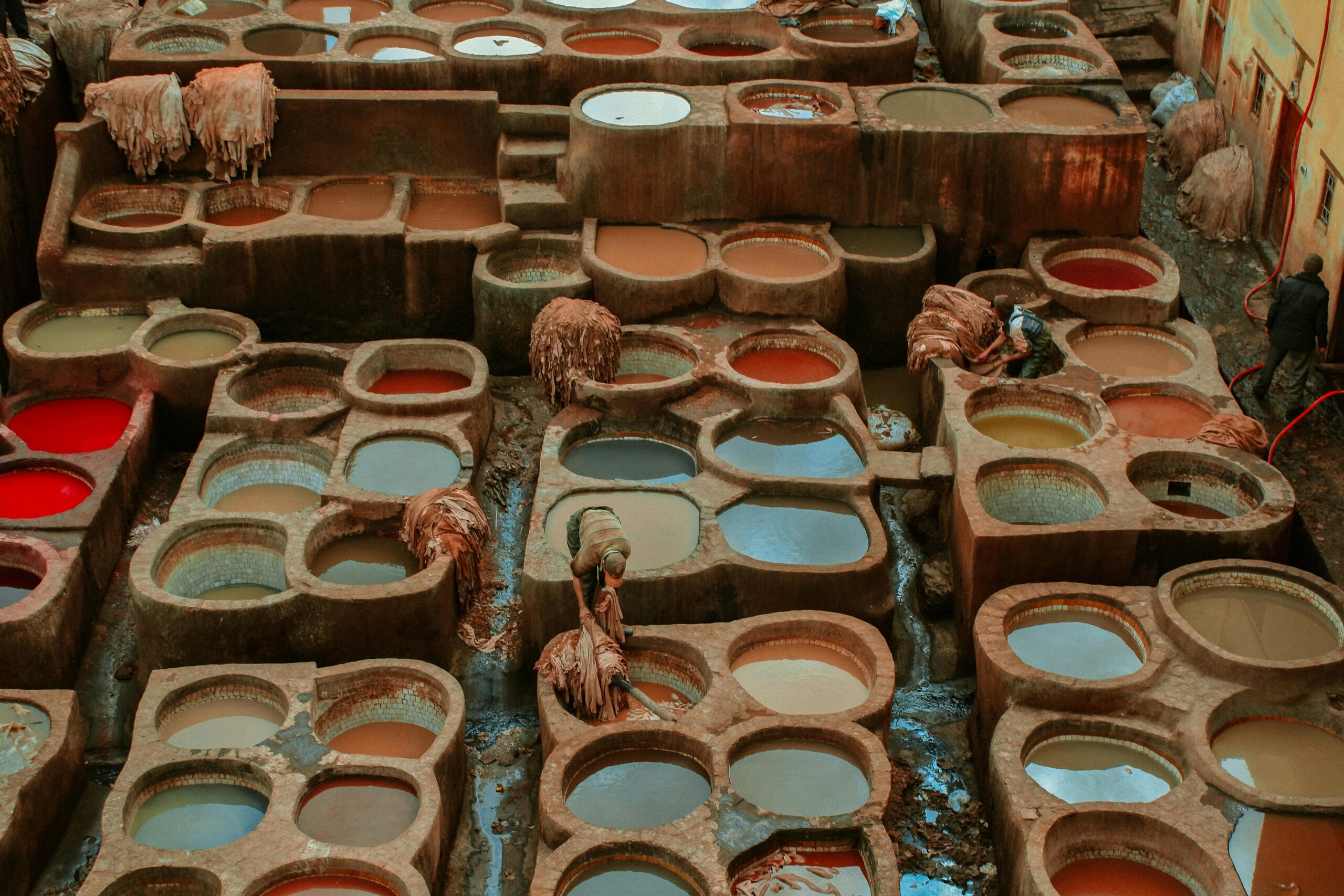
  • Think Leather is Natural? Think Again.

    Think Leather is Natural? Think Again.

    Using social media as a soapbox, advocates for animal leather are trolling alternative materials and ‘vegan’ labelled materials by branding them plastic.

    ‘Leather is a byproduct of the meat industry’ ‘Leather is natural’ or ‘Leather is sustainable’

    Using phrases like the ones above, animal leather champions are on a media blitz. 

    But they are lying to you. None of these declarations fit the reality of how animal-derived leather is made, how it’s sold or how the economic system it plays a key part in actually functions.

    The truth is that leather is valuable and it has a high impact on the planet. Organisations like the advocacy group Is It Leather?, International Leather Maker and COTANCE are just a few names in a large network trying to obscure these facts and reframe their $500 billion industry as an underdog. It is even promoted as a bulwark against plastic pollution where “vegan leather” is the strawman – and leather a force for good, in step with nature.

    “Water consumption of the leather industry is estimated at around 400 billion litres per year, which puts it in the same league as the global tech industry – even with increased demand from AI datacentres.”

    But leather tanneries pollute waterways and soil with chromium, nitrogen and various other damaging organic and inorganic matter. These alter the balance of nature and in some cases even starve wildlife of oxygen.

    Around 80% of wastewater is released without adequate treatment, and reports suggest that untreated wastewater can contain up to 3000mg of chromium per litre. 

    As for working with nature, water consumption of the leather industry is estimated at around 400 billion litres per year, which puts it in the same league as the global tech industry – even with increased demand from AI datacentres. 

    The problem doesn’t end with liquid effluent. In India alone, the second-largest exporter of leather goods behind China, over 50 million metric tonnes of solid matter waste are produced, 10%-15% of which is deemed “highly hazardous.”

    This chemical output alone calls into question any idea that the industrial manufacture of leather is a “natural” process.

    The same goes for the final product, 40% of which is “corrected grain leather” – a material which has been treated to minimise naturally-occurring imperfections, finished with synthetic dyes and polyurethane.

    These are the same chemicals which organisations like Is It Leather? rightly single out as problematic in “vegan leather” alternatives. 

    Even if this were not the case, tanneries cannot reasonably be separated from the more emissions-intensive parts of the process, nor of course from the prescient questions around animal rights facing the meat and dairy industries, which account for 14.5% of global GHG emissions and over 300 million slaughtered cows. 

    The notion that leather is a byproduct because it uses animal hides that would otherwise be destroyed is a convenient fairytale. 

    Not only are between 40–50% of untreated hides and skins reportedly discarded as waste from leather tanneries, these hides are not simply a gift from one distinct market to another.

    With 7.3 million tonnes of animal hide sold to the leather industry at a price of $90 per tonne, these transactions contribute significantly to the meat and dairy industries’ profits and actively encourage continued overproduction. Leather is not a byproduct but a co-product. 

    Stopping short of acknowledging this, animal leather advocate and industry insider Simon Neifer, points to industrial-scale production and consumption as an issue. “If there’s an overproduction issue, then it’s overproduction in the, in the meat industry.” Neifer says. But this is basic supply and demand: as long as the leather industry requires animal hides to create its product at huge volume, the meat industry will continue operating on the same level and scaling up to meet demand. 

    Frequently sharing posts from Is It Leather? to his LinkedIn page, Neifer also helps push the narrative that “vegan leather” alternatives are “just plastic” – an outdated view which wholly ignores plastic-free biomaterials and plant-based leathers – as well as animal leather’s own plastic content.

    Questioned about this, Neifer concedes that the problem isn’t actually the composition of alternative leathers and their effect on the environment, but what he deems to be misuse of the word “leather” at all. The issue, essentially, is branding. 

    Neifer tells Eco Age: “With the term leather itself, the definition is animal based. It cannot co-exist with the word ‘vegan.’ Yes, we accept vegan, we like vegan, we even have people that are vegans in the leather industry, but the terms ‘vegan’ and ‘leather’? They’re completely different.

    “The term ‘leather’ is being used leather because of the luxury and quality it reflects – something that we’ve built up over centuries. A lot of great things are happening with next-gen materials, but how they’re using the word ‘leather’ isn’t fair at all.”

    Despite a modest following of 6,000 users, Is It Leather? boasts a loyal and engaged audience on LinkedIn where it seeks to influence business leaders in vital sectors such as fashion and automotive in favour of what it calls “real leather.” 

    It’s on Instagram, however – with a following of nearly 20,000 – that the organisation pushes its message to the wider public. Here, with a constant flow of data-less infographics, AI-generated imagery and unverifiable anecdotes, Is It Leather? produces content designed to scapegoat alternative materials and evangelise on behalf of the animal-derived leather industry.

    A post from June this year even goes so far as to suggest that “vegan leather” has a higher toll on animal welfare than material made directly from animal skins. 

    It’s easy to see how a campaign like this could convince consumers who want to do the right thing by animals and the planet. With the benefit of knowledge, however, it’s equally easy to see how flimsy these arguments are. Blame is consummately shifted and accountability is nowhere to be found. 


    Karl Smith-Eloise is Features Director for Eco Age. He has worked as the EMEA Editorial Lead for HYPEBEAST and Editorial Director of FUTUREVVORLD, as a contributing editor to Highsnobiety, and for the fashion house FENDI. He now focuses exclusively on Earth-forward and ethical avenues in fashion, footwear and the broader culture.