Football has always understood worship, and like every religion it runs on relics. Strip away the romance and a football shirt is a Shein dress draped in community — the fan farmed for loyalty, harvested every game.
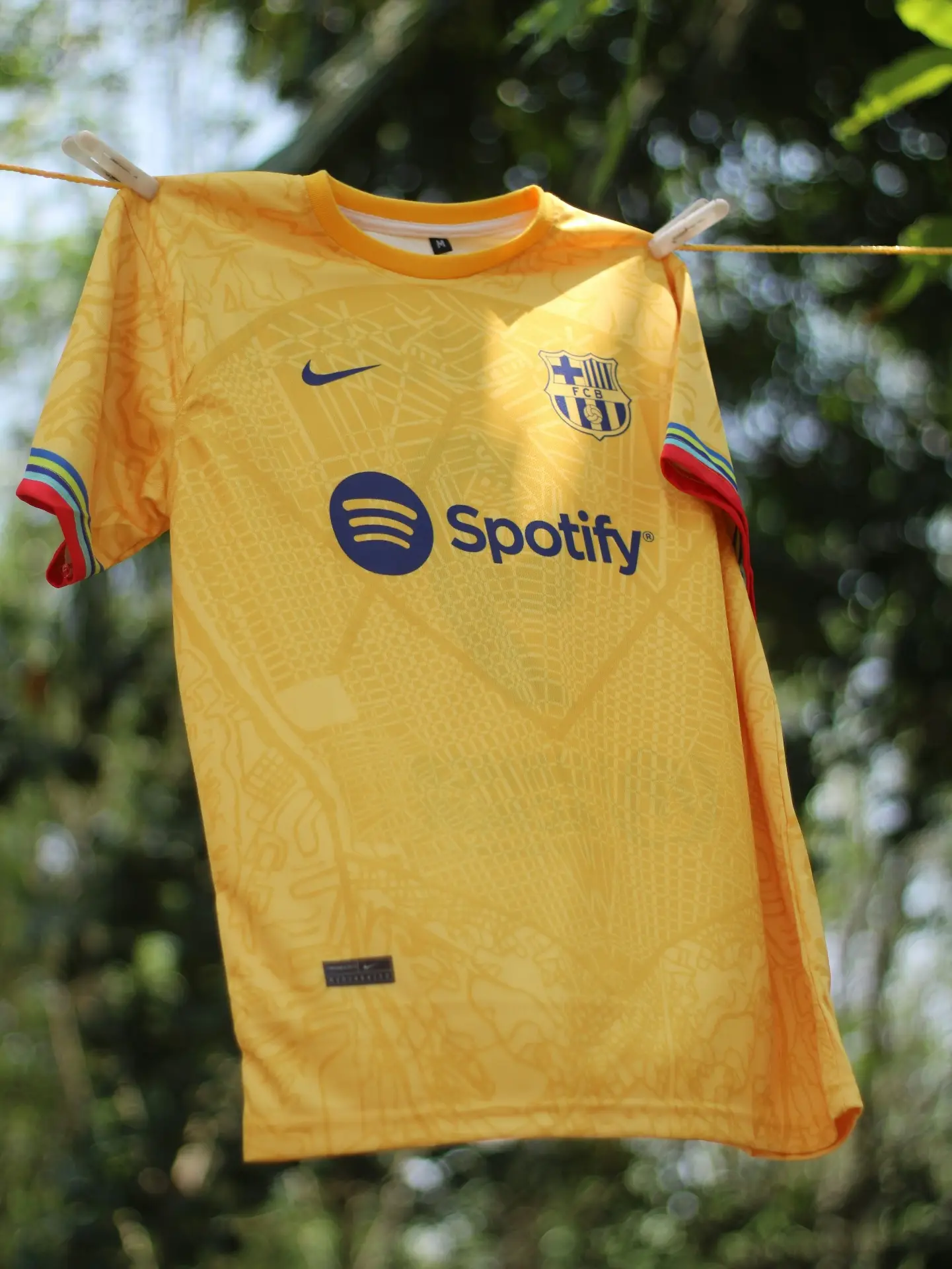
Football has always understood worship, because football is the world’s true secular religion, and like every religion it runs on relics. Marx called commodity fetishism a “religion of sensuous appetites,” a fantasy in which the worshipper is tricked into believing his desire will be satisfied by an object’s natural character. Adorno and Horkheimer named the next stage; the culture industry, manufacturing “false needs” that only consumption can ever sate, so that even leisure becomes an extension of labour and the fan, spent from producing all week, simply switches roles and spends his weekend consuming. The stadium is the shrine of capitalism and the shirt is the altar. An altar redesigned every season to ensure the faithful keep tithing; in three colourways, special-edition collaborations, and retro reissues.
The business model of obsolescence
Strip the romance, the allegiance, the culture, or the history away; a football shirt is a Shein dress draped in community. Almost every shirt is made from virgin polyester; crude oil, spun, stitched and transformed. Designs are churned out on deliberate, ever-shortening cycles to manufacture obsolescence. According to UEFA, up to 60 percent of professional kits are destroyed at the end of each season. As the European Commission’s ecodesign work notes, 80 percent of a product’s environmental damage is influenced by design-stage decisions. This is not an accident; this is a business model working exactly as intended.
Fast fashion is a race to the bottom, constantly optimising its extraction to undercut itself and make clothes cheaper. Sports merchandise runs a different race, a climb to the top, extracting ever-increasing value from worshippers. The scale is ever growing; more kits, record-breaking transfer fees, and ever more bloated tournaments.
The fan as product
The British academic Elizabeth Wilson called sportswear “possibly the most important twentieth-century influence on fashion.” This influence has curdled into a billboard-cum-uniform, a canvas for corporations worn with enthusiasm and gratefulness, at full retail. The fan is the product, farmed for loyalty and harvested every game.
The cultural meaning of these shirts is the most important thing. They hold shared memories with friends, families, cities and countries. This emotional durability is why a football shirt could be the most reused, most repaired garment in your wardrobe; an ideal that does not align with increasing shareholder value. Clubs and sportswear giants have stopped selling cloth and started selling dreams and belonging, using clever marketing ploys to make sure your fanhood is a subscription model that needs renewing with every release. This is the culture industry exactly as Adorno and Horkheimer described it; the false need manufactured, then sold back to you as belonging.
The fan as product
The British academic Elizabeth Wilson called sportswear “possibly the most important twentieth-century influence on fashion.” This influence has curdled into a billboard-cum-uniform, a canvas for corporations worn with enthusiasm and gratefulness, at full retail. The fan is the product, farmed for loyalty and harvested every game.
The cultural meaning of these shirts is the most important thing. They hold shared memories with friends, families, cities and countries. This emotional durability is why a football shirt could be the most reused, most repaired garment in your wardrobe; an ideal that does not align with increasing shareholder value. Clubs and sportswear giants have stopped selling cloth and started selling dreams and belonging, using clever marketing ploys to make sure your fanhood is a subscription model that needs renewing with every release. This is the culture industry exactly as Adorno and Horkheimer described it; the false need manufactured, then sold back to you as belonging.
Only ~1 percent of post-consumer textiles are ever recycled into new clothing.
To absolve this, replicas now arrive with stories claiming that your purchase is giving plastic bottles a second life, one that is not floating in the sea or being gorged on by turtles; laundering your conscience in a wash cycle of microplastics. This is commodity fetishism in Marx’s precise sense, the belief that an object’s natural character, here its recycled thread, can satisfy the very desire it was built to inflame. Textile Exchange research shows that around 98 percent of the recycled polyester in clothing comes not from old clothes but from plastic bottles. The Ellen MacArthur Foundation claims that only about 1 percent of post-consumer textiles are ever recycled into new clothing, and that roughly 73 percent of all fashion items are burned or buried. A recycled shirt incinerated within the year is not a solution; it just sounds nicer in a press release.
This year, for the 2026 World Cup, Nike unveiled kits for the likes of Mbappé and Kane, billed as its first elite-performance apparel made from 100 percent textile waste, via chemical recycling that yields polyester “as good as virgin material.” This is more interesting than using bottles because it is textile-to-textile, rather than the usual downcycling of good clothes into mattress filler and industrial rags.
The World Cup’s entire footprint is the emergency. The tournament has expanded to 48 teams, further driving up emissions, especially considering that one World Cup match is equivalent to 31,500 to 51,500 average UK cars being driven all year according to Scientists for Global Responsibility. In a big win for fossil fuel, Aramco, the largest oil and gas corporation on the planet, is a key sponsor. This makes the special-edition World Cup jerseys, no matter how cool and reference-laden they are, into a macabre joke; spun from recycled thread, engineered with cooling technology for an increasingly sweaty world that its own sport is helping to overheat, worn at a fossil-fuel-sponsored spectacle. The garment is not the emergency, it is the distraction.
This is a sleight of hand, greenwashing in its purest and most defensible form; it drags the conversation into the fabric and away from the impact, which is the volume. It is unfortunate but, as we have learned time and time again, we cannot recycle our way out of overproduction. Making the next hundred million shirts from better material does not address their unnecessary existence, but it does bless it.
Beyond the stadium
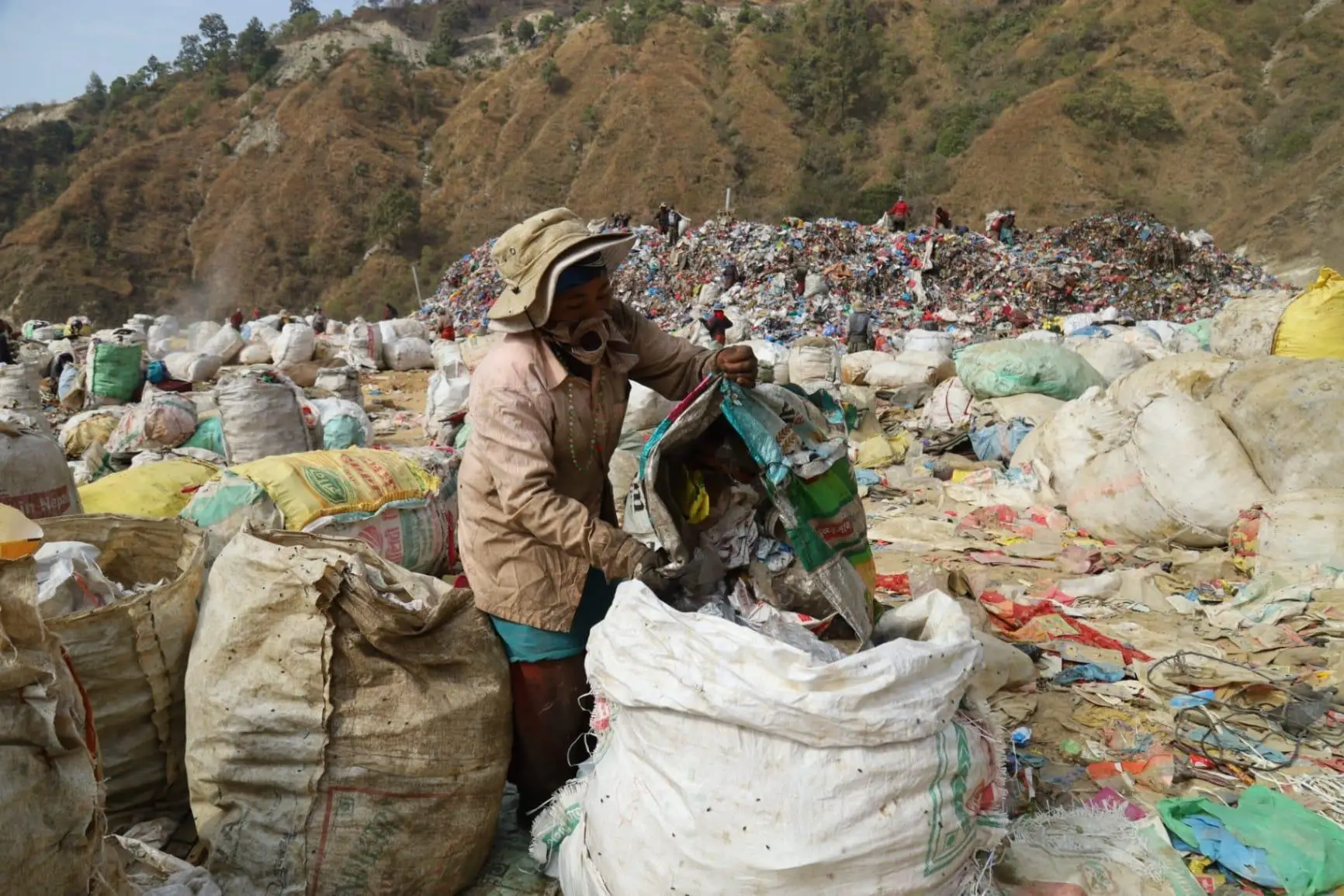
This does not stay in the stadium, nor does it stay in the West, the metropole of merchandise. Those 60 percent of kits are retired each season, and the losing finalist’s pre-printed champions shirts, ‘just in case’, do not vanish. The waste of the West is then discarded, dispersed, and sold across the Global South, assisted by diminished local manufacturing industries, unbalanced trade, and weak purchasing power.
Every week, roughly 15 million second-hand garments land in Ghana, most funnelled into Kantamanto in Accra, one of the largest second-hand markets on earth. 40 percent of this is unusable and rubbish on arrival. It is estimated that 70 tonnes of clothing a day escapes the market, leading to large-scale cleanups, involving hoes and machetes, to un-strangle the Korle Lagoon and Jamestown beach. 89 percent of these garments are synthetic, and their microplastics are seeping into the environment. The shirt that began as crude oil ends as microplastic in the lagoon, the relic outliving the ritual by centuries.
The charity myth
This trade, in the eyes of the West, is draped and adorned in the language of charity. This is an insulting fallacy. It is waste disposal, promoted by the governments of over-developed countries as a tidy, self-financing system, while the receiving nations absorb the environmental cost, the economic cost, and the slow theft of their agency to refuse any of it. When the East African Community moved to ban these imports to protect its own industry, American lobbying in 2016 made the terms plain; keep taking the West’s textile waste, or lose your trade privileges. African textile industries, undercut for decades, have crumbled accordingly. Bales are bought blind, rather than donated by paternal Western charities, and the risk of buying rags rather than ‘fits is shouldered onto the traders at the bottom of the chain, the most impoverished and vulnerable in the hierarchy.
Merchandise, of all types, introduces a cruelty when agency is stripped from it. Imagine taking a shirt designed for a special context; a tournament, a team-bonding experience, a bachelorette to Mallorca, a kid’s summer camp, a failed Republican bid for Minnesota, and inserting it into a foreign space where its meaning is lost and its memories are faded. In my experience working in second-hand markets in Johannesburg, these were the cheapest items, besides shirts from a few select teams, and they found themselves with those who needed clothing as a basic human need. Cue white tourists taking ‘funny’ images of people across the continent wearing shirts outside their context, with inappropriate, bizarre, or uncouth messages, or niche regional replica shirts, because that is what the West dumped and what the stall had at the right price. An aesthetic dictated by an extractive, exploitative, overproducing Global North that prizes enjoying the most of the present (and its associated merch-filled day) over that of the future or excess.
So what is a meaningful act of fandom?
It is time to be aggressive, to embody the ultras and hooligans of myth (the left-wing ones, of course). The most provocative, most impactful, and most internally and externally meaningful display of fandom you can make is to… wear the shirt you already own.
This ‘gentle lifestyle tweak’, which I would place in a consumer lifestyle publication as part of my day job, is not limited to just an advice listicle. It is the single most hostile act available to an ordinary fan, because it withholds the one thing the apparatus is built to extract; the repeat purchase. There is already enough clothing in the world to dress the next six generations. The most sustainable kit in existence is not the recycled one, not the chemical-recycled one, not the one with the leaf, or the one with the made-from-bottles-destined-for-turtles plastic hand-tag. It is the one in your wardrobe right now, out of season, already paid for, already loved (I hope), and owing our planet nothing further.
Make last season’s shirt a flex, upcycle the shirts that remind you of bad games (or exes), make use of what you’ve got. Buy the vintage grail, or last season’s shirt now discarded like Woody for Buzz, off eBay or Vinted. Learn how to mend, repair and repurpose.
To not feed into the system, to make do with your support and how you wear it, is a hostile act filled with the love, hope and fandom that a new shirt could never match.
Back the few clubs that roll kits over seasons; the brand is not the one you are supporting. Greet every 100 percent recycled launch with precisely the suspicion you would extend to a Marlboro-sponsored nail salon.
Reclaim the ritual
The fan, the designs, the culture, and the community are never the problem (for most teams and cities). The ritual and emotions are as authentic as anything within the human experience, and the claws of private equity and late-stage capitalism are wringing out every drop from the molten core of feeling. The question, from Dakar to Dubai or Detroit alike, is whether the racket of merchandise can ever be reclaimed by the many, or whether it stays the mass-produced revenue stream of those in ivory towers, far removed from the pulsing chants of the cathedral of football.
Keep your kit, steal your older sister’s shirt, lowball on Vinted. It’s cheaper, it carries memories and meanings, and it is the only shirt of the season that doesn’t cost the planet more than we’ll ever live to know. Make the relic yours, make your support yours.