Amsterdam-based circular label MARTAN is rethinking textile waste at its source, transforming discarded luxury hotel linens into elevated, design-led garments.

Built on the belief that sustainability should never come at the expense of design, quality or aesthetics, MARTAN has developed a complex supply chain that reclaims an abundant yet overlooked waste stream—bed and table linens from premium hotels—and reimagines it through a luxury lens. Each garment is crafted in family-run ateliers across Poland and Romania, where fit, fabrication and finish take precedence, with sustainability embedded as a natural outcome rather than the individual selling point.
Speaking to Eco Age, co-founder Diek Pothoven shared insights into the brand’s commitment to craftsmanship, longevity and considered design, as well as their broader vision for the fashion industry’s future; one in which waste is reframed as a valuable resource, and garments are produced with circularity from the outset. MARTAN’s ambition is clear: to see its complex, circular fashion model become not the exception, but the standard.
What’s the biggest inspiration or purpose behind MARTAN?
MARTAN started from a fascination with the idea that you can create genuinely new design without using any new material. The fashion industry keeps producing more, while some of the finest textiles in the world already exist and are simply waiting for a second life. Our purpose is to make pieces that people fall in love with first for how they look and feel. The fact that they are made responsibly is the cherry on top, never the reason to buy them.
What first drew you to table linen and hotel textiles as the starting point for MARTAN? And do you see yourselves expanding into other waste streams in the future?
We were looking for a material that exists in enormous quantities and comes in large surface areas, so that we would never be creatively limited. Hotel bed and table linen is exactly that. These textiles are made to last for years, but in a high end hotel you simply cannot present a guest with a made up bed that carries the smallest mark or imperfection. So the moment there is a tiny hole or stain, the linen leaves circulation, even though it still has a long life ahead of it. That gives us an almost endless canvas. We are not restricted by the shapes or scale of vintage pieces, we work with large, clean expanses of material that let us design freely. To give a sense of the volume, around 27 million kilos of bed and table linen are discarded every year in Europe alone, so this is not a niche resource that runs out. It is effectively limitless, which is exactly why it lets us keep innovating.
Can you talk us through how a piece comes to life, from the raw material to the finished garment?
It starts with sourcing, and interestingly we do not collect from the hotels themselves. We work with the linen washers who supply and launder the linen for the hotels. Because they service many hotels at once, and because we have built strong relationships with them, they set aside the pieces that can no longer go back into rotation, the ones with a small hole or a stain. From there the material leads the design. We develop and make every sample in house in our Amsterdam atelier, which means we can execute everything down to the finest detail and show exactly how a piece should be made. Once it is perfected, it goes out as a full, detailed techpack to our manufacturing partners in countries including Romania and Poland, where it is produced in larger runs in family ateliers working at the highest level.
What role do craftsmanship and material choice play in shaping the final piece?
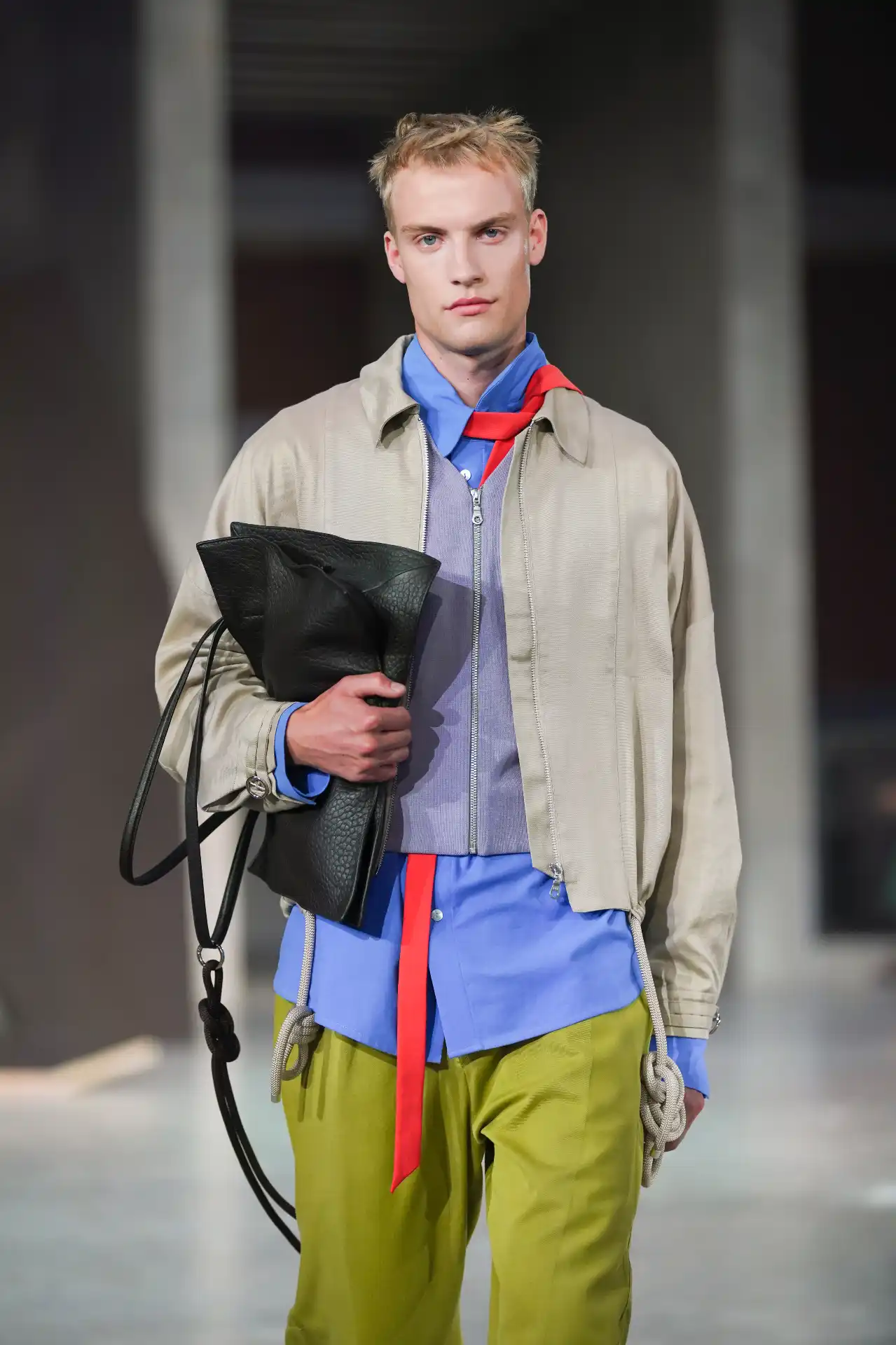
They are everything, and for us craftsmanship carries even more weight than usual. We do not start from a luxurious, shiny silk that already looks precious on its own. We start from a raw, honest base material, which means we have to bring our creativity and our craftsmanship in that much harder to arrive at a truly high end product. That is why our constructions, our pattern cutting and our finishing are consistently more considered and more refined than in a lot of garments that can afford to take an easier route. The material asks more of us, and the result shows it.
How do you strike the balance between creating a garment people love the look of and one that’s sustainable? Have you ever had to compromise on either design or sustainability, or have the two always gone hand in hand?
For us the two have always gone hand in hand, and we have never had to compromise on either. Our rule is simple: a piece has to earn its place in someone’s wardrobe on design, fit and feeling alone. If it only appeals because it is sustainable, we have not done our job. The responsible side sits quietly inside the product as the cherry on top. If anything, working the way we do pushes our design and craftsmanship to a higher level rather than holding it back.
How do you embed mindful production and consumption into the way you work?
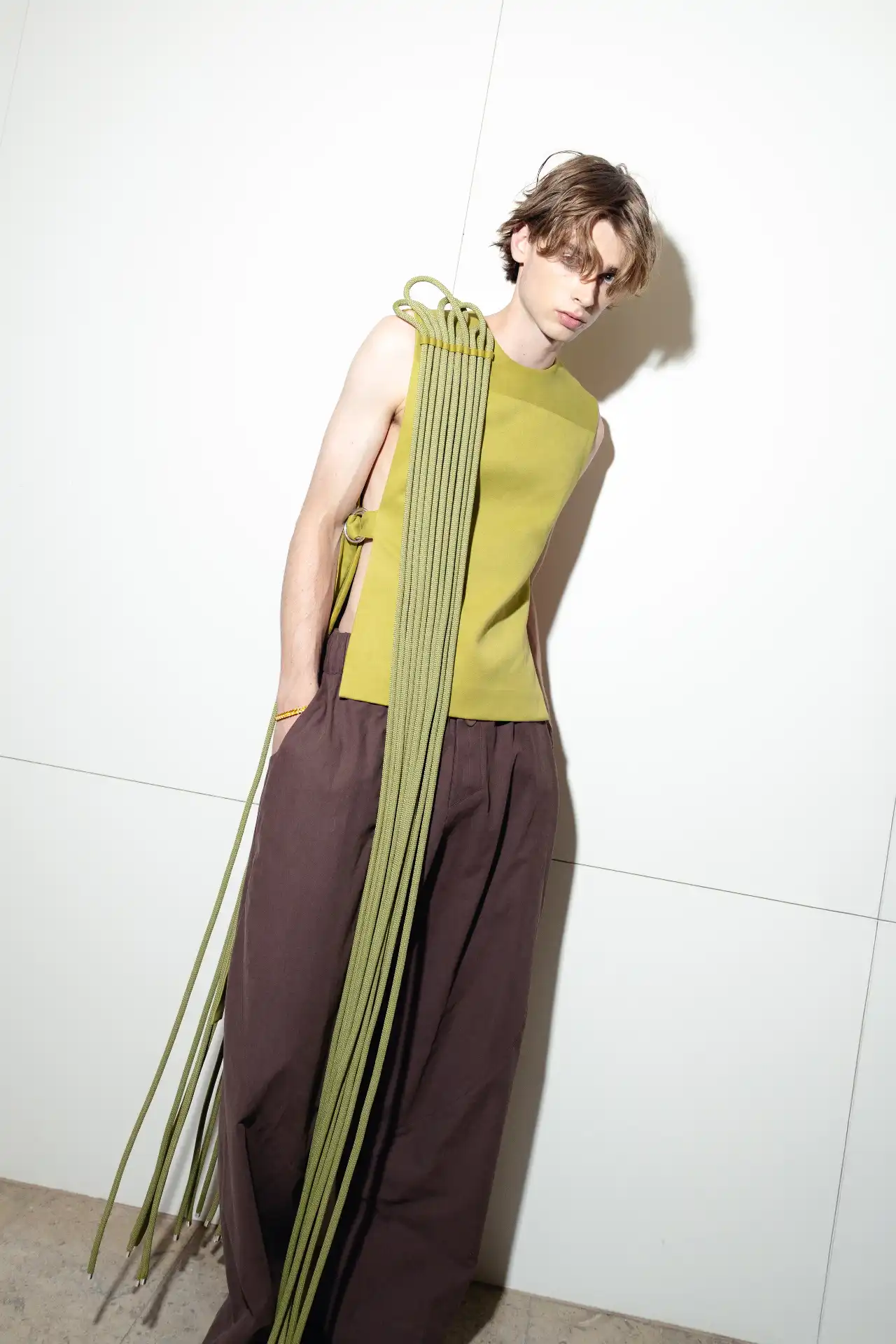
We embed it by making distinctive pieces that are built to last across multiple seasons and are never trend driven. Because our designs are not tied to a passing moment, people keep them, wear them and return to them for years, which is the real opposite of a throwaway cycle. And this is not a small scale, precious exercise. There is an abundance of this material, so mindful production and meaningful scale can absolutely go together.
You describe your pieces as an investigation into where ready-to-wear meets art and a place where sustainability becomes self-evident. How do you see those elements coming together in a single garment?
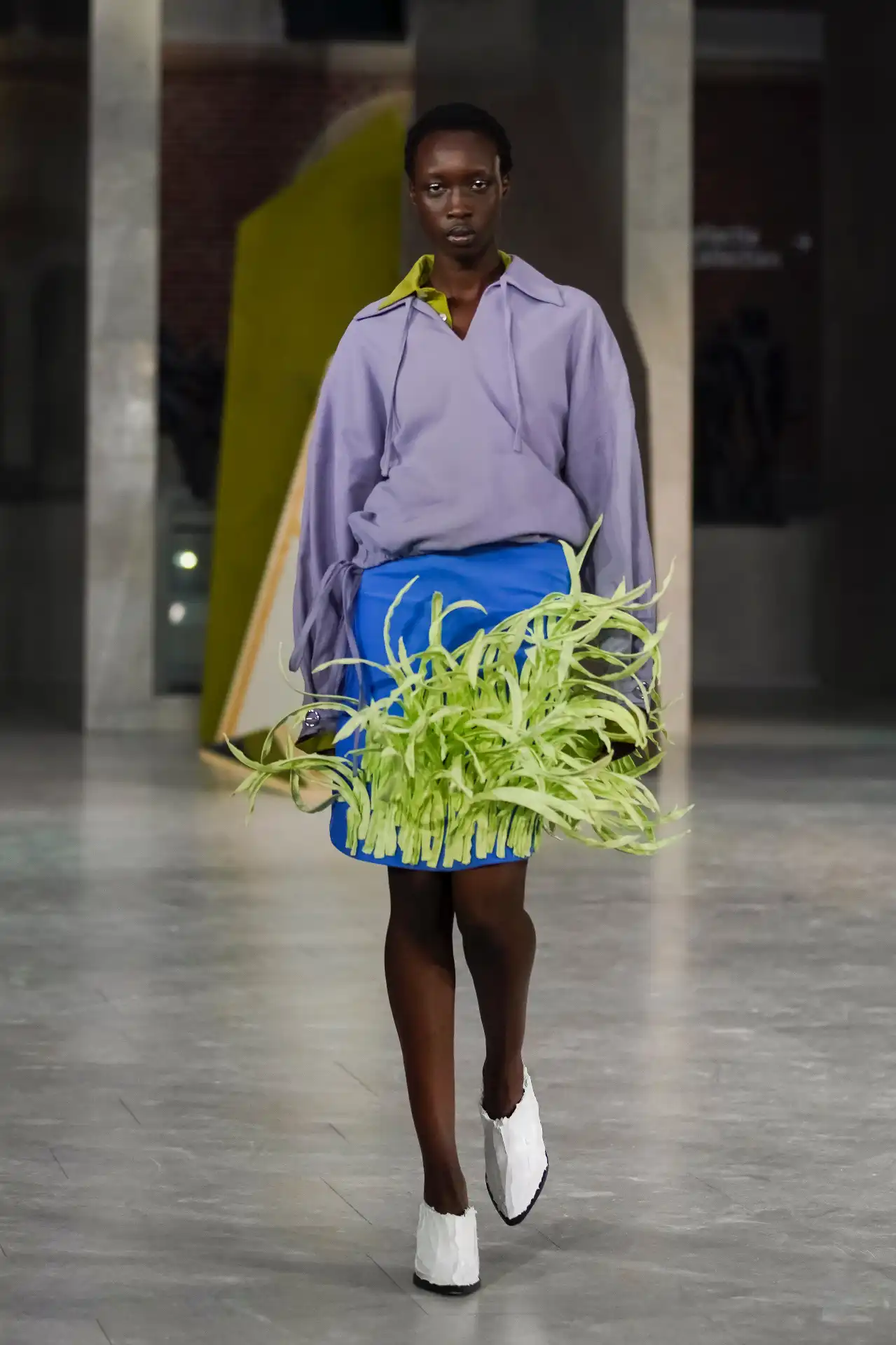
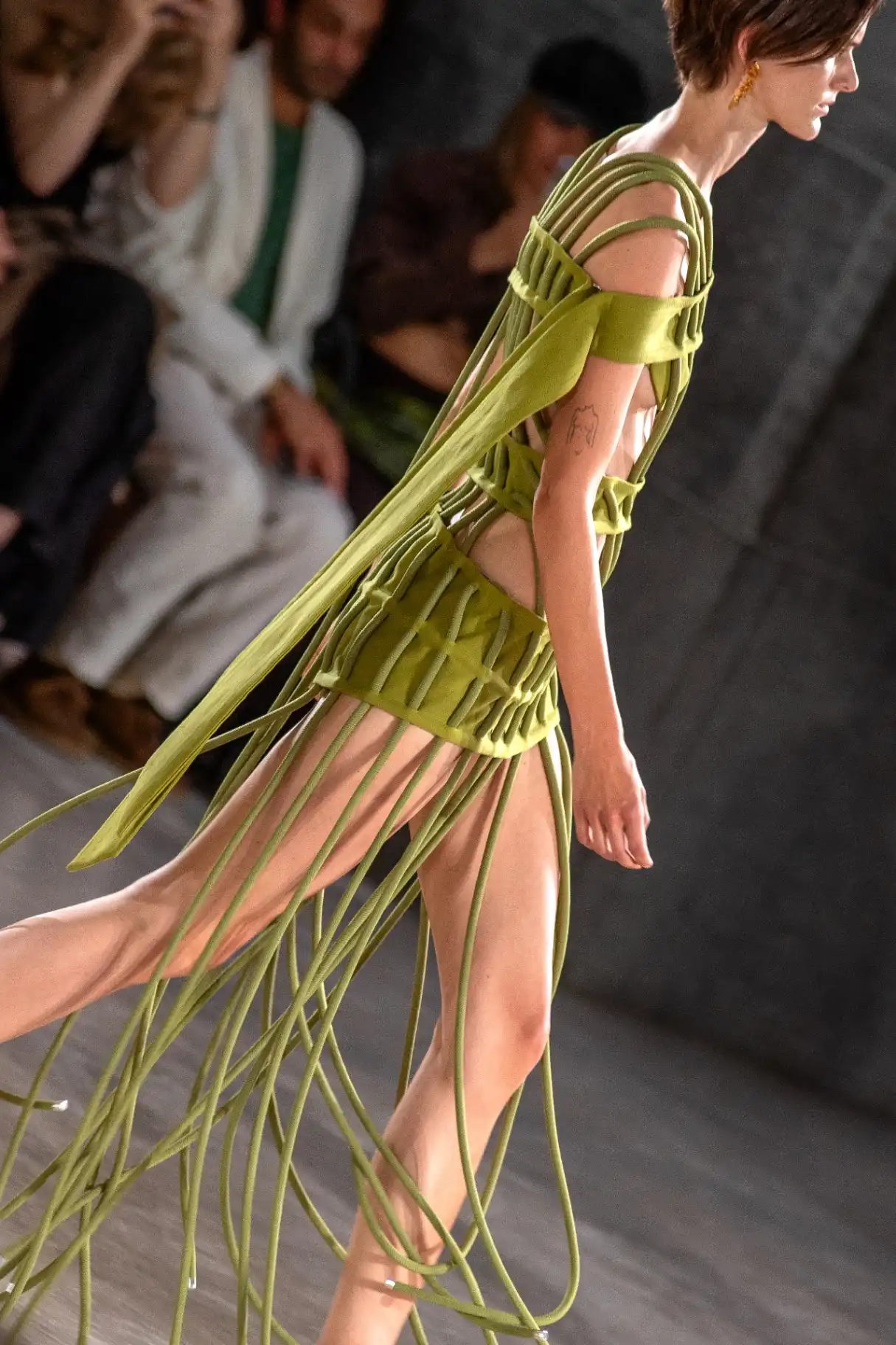
A garment can carry a real idea and still be worn every day, those two things are not in conflict for us. Our SS27 collection, Frozen in Time, is a good example of how it comes together. Showing it inside the Rijksmuseum, surrounded by centuries of craft and history, placed our work in the same conversation as art, while every one of the looks on that runway was still a wearable, ready to wear piece made from reclaimed hotel linen. The artistic concept and the material were completely inseparable. That is exactly the point where ready to wear meets art, and where the responsible origin of the material simply becomes self-evident rather than something you have to explain.
What’s been the greatest challenge or limitation you’ve faced, and overcome, since starting MARTAN?
The greatest challenge was convincing the factories to work in our way. Our process is different from what they are used to, and asking established manufacturers to adapt to it took real persuasion in the beginning. But we got there eventually. Our partners are now fully on board and genuinely enthusiastic about the way we work, which has turned what was once the hardest part into one of our biggest strengths.
As the industry needs to shift toward more responsible and ethical practices, what role do you see MARTAN playing, and what’s your vision for where fashion goes from here?
We do not want to keep our way of working to ourselves. We have built an incredibly complex production process that turns reclaimed linen into genuinely high end products, and our ambition is to open that up to larger players who want to do this on a bigger scale. Because real impact comes with scale. If the process we have developed can help major brands treat waste as a resource rather than a problem, that is where the industry truly shifts. Our vision is a fashion world where working this way is simply the standard, and MARTAN wants to be one of the engines that makes that possible.
All images courtesy of MARTAN.