
Tag: sustainable fashion

  • High intensity shoppers are causing a returns problem.

    High intensity shoppers are causing a returns problem.

    If you are on the sustainability track, chances are you are curbing your consumerism. However for 27% of UK clothing shoppers, over consumption is becoming a chronic problem. A survey commissioned by WEFT identifies ‘high intensity shoppers’ (defined as shoppers who buy at least two items of clothing/shoes per month): this cohort makes up 27% of UK shoppers and they are responsible for half of all clothing purchases. The average number of purchases per month for this cohort is 5.5 (and 7 items for luxury customers).

    What’s more, these shoppers have become problematic for brands and retailers, particularly in the luxury segment. High intensity shoppers are known to frequently engage in “free rental” by wearing and returning items: a third of high-intensity shoppers surveyed admitted to purchasing, wearing once, and returning clothing for a full refund; this behavior is twice as high among luxury brand customers. 

    The ability to resell items efficiently through preloved platforms may also be part of the reason why over-consumptive behaviour is on the rise: the WEFT research found a fall in repair and rental use in line with a rise in second hand sales. The gamification of shopping, either through advertising that encourages purchasing behaviour (‘get it before it goes’, ‘one time only discounts’, countdown timers) or through the addictive nature of resale apps, is creating a form of shopping addiction. In February, the European Union opened an investigation into fast fashion giants Shein and Temu over concerns about their allegedly addictive design. Recently, a jury found Meta and Google liable for harm caused by the addictive qualities of their platforms’ social media platforms. It’s not hard to imagine the same logic applying to retailers. “I know I should just stop, but I can’t,” says Amy, 31. “I worry if I don’t buy it I will regret it later.” Amy admits to buying up to 25 items per month, but sees rental and resale platforms as a way to excuse her behaviour, “even though I know it’s all got a bit out of control.” 

    While Amy says she is not one of the shoppers who engage in ‘free rental’, there is anecdotal evidence that luxury consumers, tired of high prices and labouring under the assumption that big brands can afford it, see buying, wearing without removing the tags, and then returning product under the premise of ‘it didn’t fit’ as fair game. One multi-brand shopping site admitted the behaviour has been on the rise for several years now. For customers looking to create fashion content, this ruse has become increasingly popular. Net-a-Porter have taken to publishing the following statement as a form of discouragement: “We monitor the number of returns made by customers in order to check whether the purchase of products is pursued for consumer purposes and is not, on the contrary, pursued for commercial, entrepreneurial or professional purposes, and/or is otherwise related to fraudulent intent.”

    The rise in online shopping has made the returns problem more acute, as shoppers resort to ‘bracketing’ – buying clothes in multiple sizes, with the intention of returning what does not fit. A report from the British Fashion Council in 2023 which surveyed a wide range of retailers from Jimmy Choo to John Lewis, found 30 per cent of online purchases are returned, versus 10 per cent of those bought in physical stores. Fashion’s returns challenge has been exacerbated by the rise of the Buy Now, Pay Later (BNPL) model, which has enabled consumers to purchase items without the immediate payment – streamlining the ability to purchase, wear and return without ever having to pay a penny.

    Returns are estimated to have cost the UK fashion industry at least £7 billion in 2022, generating approximately 750,000 tonnes of CO2 emissions. Processing returns is costly, as the brand has to pay for reverse shipping (often subsidized), inspection & repackaging, restocking or liquidation, customer service and lost resale value (especially for seasonal fashion). Many brands have shortened the window for returns from a month to 14 days, and begun charging for the process. Two years ago ASOS launched a £3.95 returns fee after it admitted the behaviour of 6% of high intensity shoppers was in part responsible for a £100m hit to profits: shoppers who were frequently ordering, then returning ‘a high proportion’.

    So what happens to all these returned items? The BFC report found that half of all returns are resold at an average discount of 40 per cent; three per cent of returns remain unsold, of which half are sent to landfill, a quarter are recycled and a further quarter incinerated. The EU has now banned the incineration of unsold clothing, but it is still allowed in the UK. For high street brands, the cost of processing returns can be a barrier. “One Spanish retailer is well known for sending returns to a UK warehouse for donation or destruction – the cost of sending it back to Spain to be repackaged and reprocessed is not worth the time and money,” revealed one operations insider. 

    Over 30% of manufactured clothing is never actually sold for wear and needs a circular solution. Separate research by WEFT (undertaken to prepare the UK government for Extended Producer Responsibility regulation) has indicated that a significant number of clothes shoppers would be happy to pay a 50p tax per item on clothing to contribute to circularity initiatives – and some happy to pay up to £5. “We went to nearly 3,000 shoppers and our analysis showed that up to 50p, it makes almost no difference in their choice of what they buy, both with higher and lower priced items,” says Gerrard Fisher. “Once you get over 50p, the purchase level goes down and they start swapping to items that are cheaper or are more expensive but have a lower fee.”

    If the fee is introduced, it would only be charged to the customer the first time that product is placed on the market. “If it’s a reused item the fee isn’t charged, so it will be interesting to see what happens with returns,” says Fisher. “As brands are trying to reprocess [returned] products, we might see a choice for a brand new product, or one that’s been returned that’s cheaper because there’s no fee.”

    If this regulation goes ahead in the UK, and the hope amongst circularity advocates is that it will, the cost will be driven by the high intensity shopping cohort, but born by all of us.


    Tiffanie is an author, activist and founder of the Rule of Five campaign and the sustainable luxury concept @agora-ibiza. You can read more of her work on Substack at It’s Not Sustainable
  • The Forever Label

    The Forever Label

    PFAS (per- and polyfluoroalkyl substances) are a group of synthetic chemicals used across the textile industry for water resistance, stain resistance, and durability.

    They are commonly known as “forever chemicals” for a reason: they do not break down in the environment and accumulate in the human body over time.

    But this information on chemical ingredients does not reach the consumer at point of purchase.

    Our solution is simple.

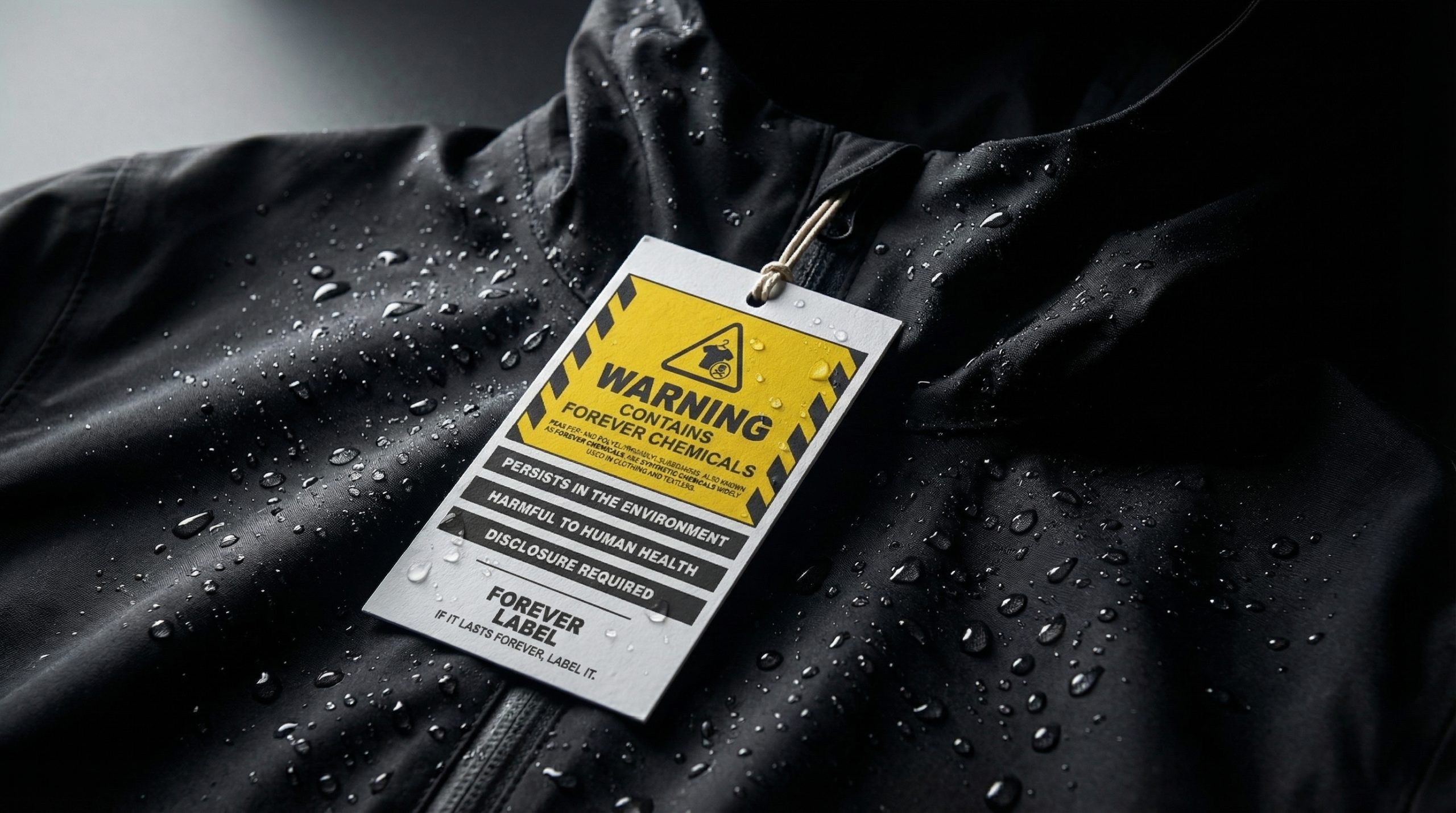
    If it lasts forever, label it.

    Join us as we demand transparency with the Forever Label.

    What is the Forever Label?

    Consumers are unable to make informed choices about the clothing they buy without access to transparent information.

    The Forever Label will provide consumers with the information they need to understand the chemical ingredients in their clothing.

    We are asking for transparency.

    The same basic standard of disclosure that already exists for allergens in food, financial risk in investment products and ingredients in cosmetics.

    We are calling for mandatory disclosure of PFAS on all clothing and textile products sold in the EU.

    • On a physical hang tag.
    • On the website listing.

    Everywhere a consumer encounters a product they should clearly see whether PFAS has been used.

    The label forces brands to take accountability for harmful chemicals while encouraging consumers to consider the environmental impact before purchase.

    Why now?

    France and Denmark are at the forefront of regulating toxic chemicals in the fashion and textile industry with targeted bans on clothing, footwear and cosmetic products.

    In Denmark, from July 1st 2026, the import and sale of clothing, footwear and waterproofing agents containing PFAS are prohibited.

    In February 2026, the UK released its first ever PFAS Plan to protect people and the environment from harmful “forever chemicals”.

    But consumers still cannot identify the presence of these chemicals in their garments because brands do not disclose them.

    While regulation continues to develop, disclosure is still necessary so consumers understand where PFAS is present.

    Consumers deserve to know what’s in their clothes.


  • People First, Planet First at United Repair Centre

    People First, Planet First at United Repair Centre

    Not too long ago, the idea of throwing away a garment simply because it was well-worn or needed a bit of mending was as ludicrous as disposing of a diamond ring because it needed a good polish. Over the last fifty years, however, the rise of throwaway culture and fast fashion have conditioned consumers to forgo mending in favour of binning.

    Globally, 120 million tonnes of clothing were discarded in 2024. The EU alone generates 12.6 million tonnes of textile waste annually, including 5.2 million tonnes of clothing and footwear, and roughly 78% of it winds up in a landfill site or is incinerated.

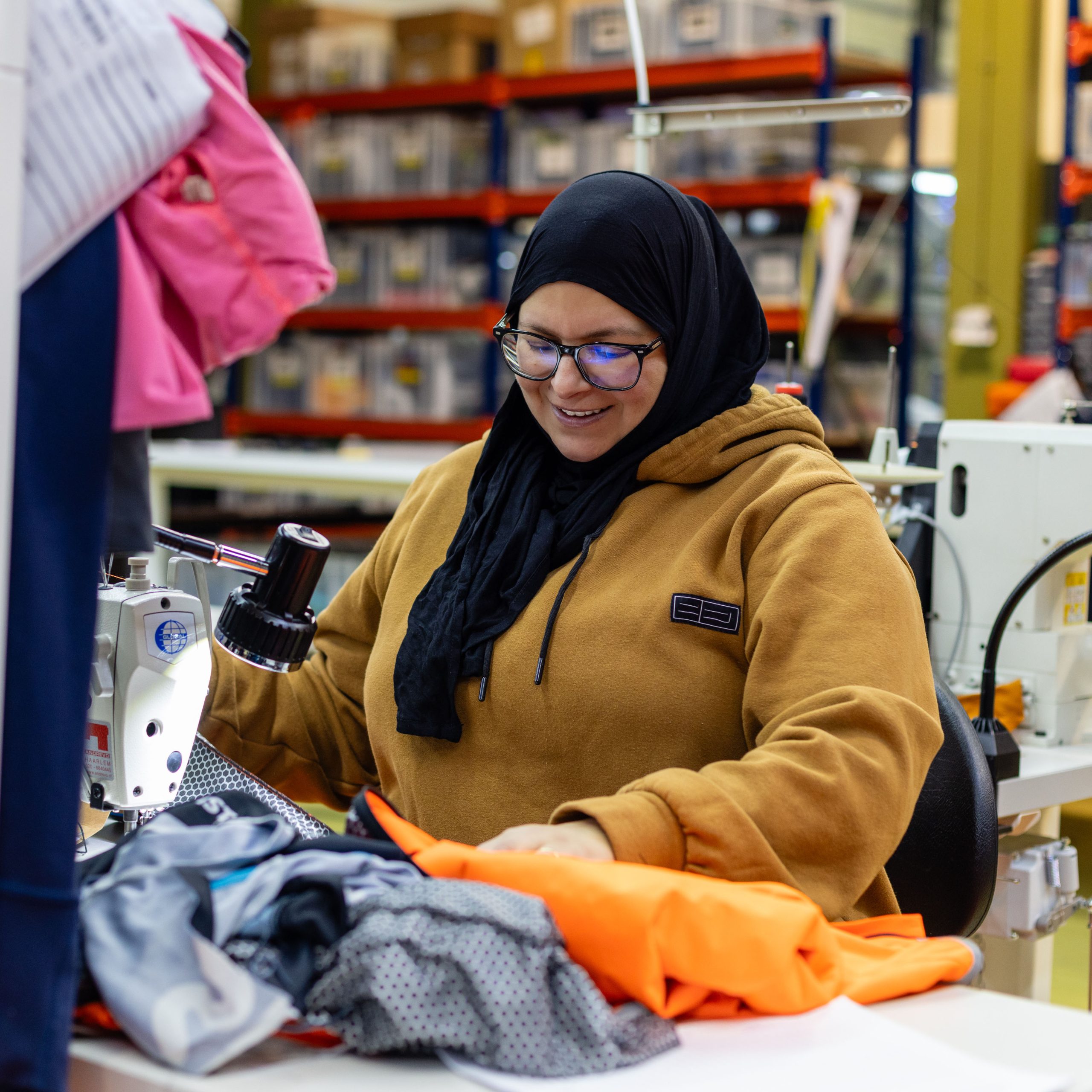
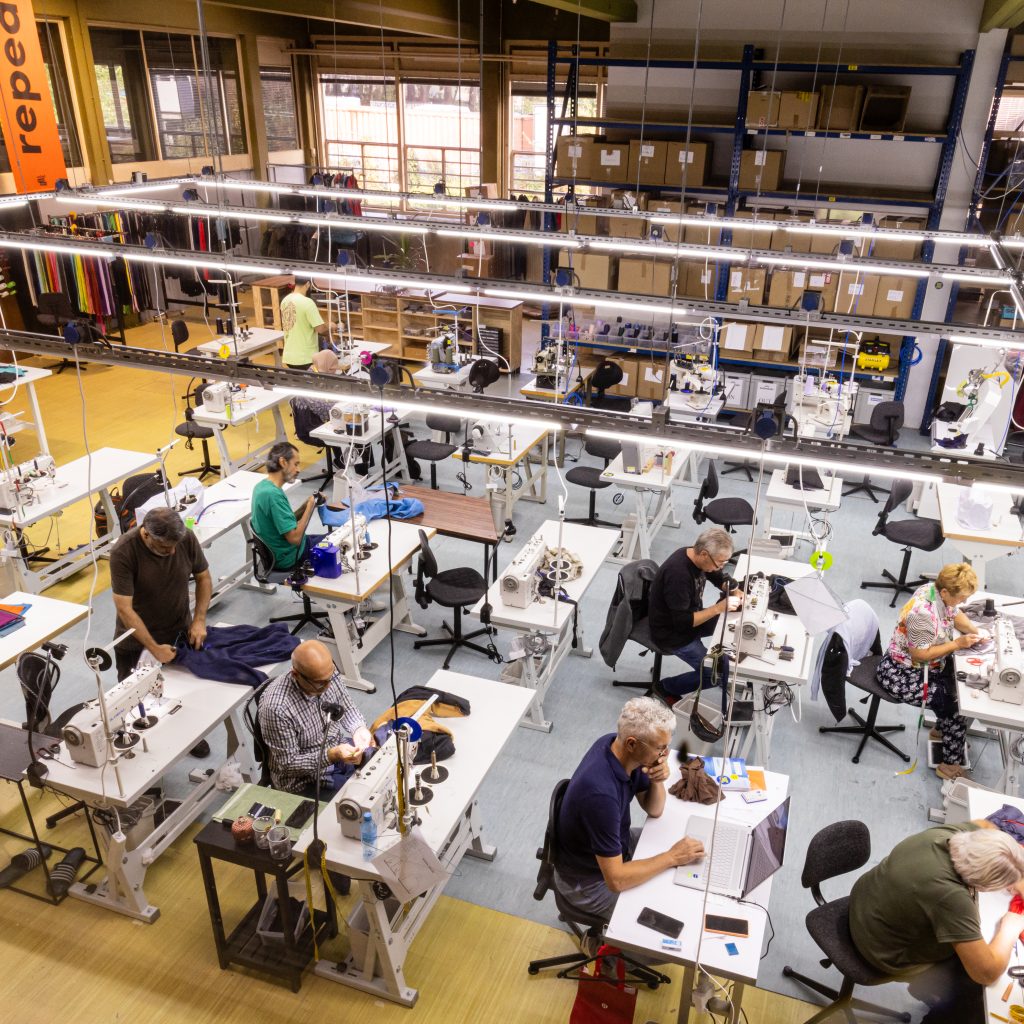
    But on a tree-lined street in Amsterdam, a few dozen men and women are working to reduce the amount of clothing that is tossed – one garment at a time. They are tailors at United Repair Centre (URC), a B2B clothing repair company that is equally dedicated to helping clothing and people reach their full potential “Our mission is to repair the clothing industry by putting people first,” says Thami Schweichler, the founder and CEO of URC.

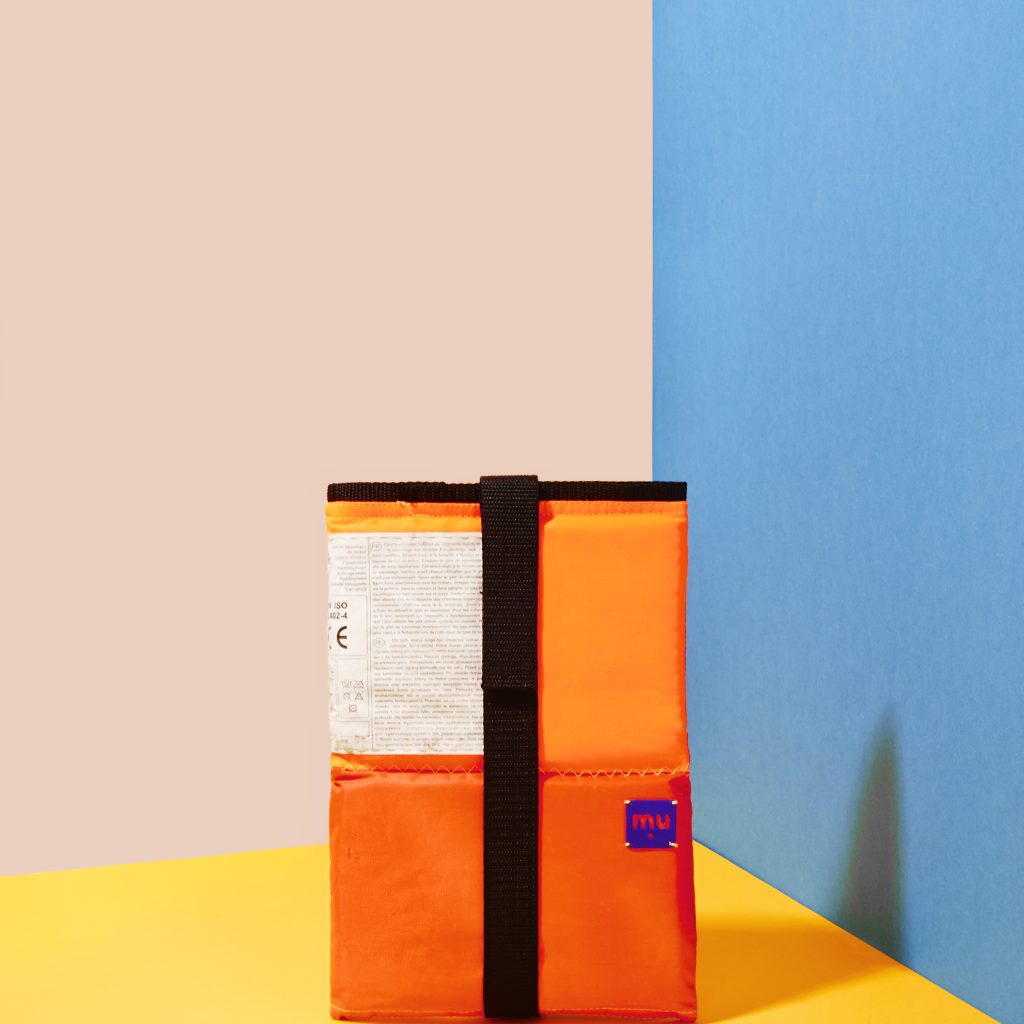
    Though the company was founded in 2022, its ethos and mission can be traced back to 2015, when Schweichler founded Makers Unite. That year, over 800,000 refugees and migrants arrived in Greece via the Aegean Sea, leaving hundreds of thousands of life vests on Greek beaches. Schweichler, together with a collective, gave the bright orange vests and some of those who wore them a second chance by employing refugees in the Netherlands to create upcycled travel products.

    Ultimately, nearly 10,000 vests were turned into tote bags, laptop covers and travel pouches by 71 refugees who went through a coaching programme to help them train for employment in the Netherlands. The products were sold online and in museum shops throughout Europe. By 2017, companies such as Tommy Hilfiger and C&A were asking for bespoke upcycled goods for the European market.

    In 2020, the City of Amsterdam organised a series of working groups to discuss various government initiatives, one of which is for the city to become fully circular by 2050. Representing Makers Unite, Schweichler joined the textile working group, which also included Patagonia, whose European headquarters is in Amsterdam. When the luxury outdoor brand suggested creating a shared repair service to reduce the amount of textile waste, the idea immediately resonated with Schweichler, who says that migration brings deep and diverse skillsets to Europe, particularly in the textile industry, which has declined over the past decades.

    “I realised that there was a lot of possible job creation in the sector and wanted to connect it with the skillset of migrants. It was a gigantic economic opportunity actually,” Schweichler says. 

    Brands needed to provide repair services – for warranty, as part of their business model and in anticipation of EPR legislation – but there was a fragmented, outdated and decreasing repairability sector in Europe.

    Schweichler went back to Patagonia and said he wanted to become a repair provider for them under two conditions: that he could share their group lens with other brands and use their expertise to help repair products at large scale; and that he could connect the repair programme with a social inclusion programme.

    Two years later, URC was launched as a collaborative partnership between the Amsterdam Economic Board, Makers Unite and Patagonia, funded by private investment. 

    Schweichler applied his proven model of training migrants and refugees to the new venture and Patagonia provided its technical expertise and network. Schweichler’s mentor Paul Kerssens became a co-founder, bringing expertise in commercial scalability.

    Today URC works with more than 30 global brands including Patagonia, Lululemon, Levi’s, The North Face, Arc’teryx and Jansport, handling repairs for Europe and the UK. 

    Roughly two-thirds of the brands use URC’s streamlined platform, so customers requesting repairs communicate directly with the repair centre, which has workrooms in Amsterdam and London (with Paris and Germany coming in 2026). URC’s operations in Amsterdam and London are already profitable and to date, have repaired more than 75,000 garments, reducing 404 tonnes of CO2.

    Equally importantly, the Certified B Corporation employs 60 refugees and migrants representing 21 nationalities. Though the majority were already trained tailors in their home countries, many have gone through URC’s training academy. Those who complete the free one year course and achieve the required productivity level are guaranteed a job at URC, but the job is really the beginning.

    Many of the tailors come from terrible backgrounds, having lost their homes and families. United Repair Centre focuses on creating an inclusive community to build a new future together. Schweichler says “It’s amazing. People say, ‘I didn’t know I could do anything. Now I know I can be a tailor and I have value’,” adding that it’s not about integrating people into societies. “It’s making sure that they are included, and I think there’s a big difference. They’re part of something bigger.”


    Jaimie Seaton has been a journalist and writer for more than 20 years.

  • Is London Fashion Week Ready for Mandatory Sustainability?

    Is London Fashion Week Ready for Mandatory Sustainability?

    From Autumn/Winter 2026, London Fashion Week will formally adopt Copenhagen Fashion Week’s Sustainability Requirements, starting with the season running from Thursday 19 to Monday 23 February 2026. 

    The UK capital continues to be a source of experimental and forward-thinking design with initiatives such as the British Fashion Council’s NEWGEN programme, which has launched the likes of Jonathan Anderson and Alexander McQueen, giving young designers resources to scale innovation and tap into new audiences.  

    From this season, participation comes with conditions, not pledges, with NEWGEN designers incorporating the full stipulations of Copenhagen Fashion Week’s (CPHFW) sustainability requirements.  

    The BFC announced the roll-out in January 2025, requiring all NEWGEN brands to meet 18 minimum criteria across six areas of the value chain.  

    Yvie Hutton, Director of Membership & Designer Relations, BFC says: “Together with CPHFW, we are adopting a framework that empowers emerging designer fashion businesses to lead the way and contribute tangibly to a more sustainable and responsible industry.” 

    As part of the requirements brands must have a formally approved sustainability strategy in place, covering both environmental and social factors, and guidelines and structures in place to provide equal opportunities and hiring processes to promote diversity.  

    They must also agree that they do not destroy unsold clothes and samples from previous collections, instead following a process in place for leftovers and waste.  

    According to the Ellen MacArthur Foundation, 73% of collected textile apparel waste is landfilled or incinerated globally. Meanwhile Textile Exchange has uncovered that of the 124 million metric tonnes of textiles produced in 2023, less than 1% consisted of recycled textile fibres.  

    CPHFW’s sustainable requirements most notably state at least 60% of a collection is to be certified, made of preferred materials or deadstock fabric, and for the collection to be free of fur, wild animal skins and feathers. 

    LFW is the first of the ‘big four’ fashion capitals to implement the framework, supported by BFC mentoring and training. 

    Hutton adds: “We (LFW) are the first Fashion Week to ban fur and exotic animal skins.” 

    “Sustainability works best when it grows alongside the brand, not as a marketing layer placed on top of it,” says Liza Keane, a London-based designer showcasing at LFW FW26 as part of the NEWGEN cohort. 

    Keane adopts a multi-level approach to material management. At pattern-cutting stage she “actively designs to minimise waste”. Additionally, her brand up-cycles when possible and treats offcuts as surplus, “often letting the up-cycled pieces inform the shape and logic of the garment”. 

    Keane’s works with predominantly natural and recycled fibres across her whole product range and plastics used are either recycled or are biodegradable.  

    Ruined SS25 LIZA KEANE

    “Most of our range is manufactured locally with technicians we’ve worked with for years and we pay fairly for their high-level expertise. That continuity allows us to invest in quality and longevity at the construction level as well as in materials.” 

    In addition to material requirements CPHFW’s sustainability framework includes: 

    • Consumer education on the critical discussions in the fashion industry around the fast consumption of fashion, clothing, footwear and accessories 

    • Actively working to reduce the environmental impact of packaging  

    • No use of single-use props or plastic packaging used in the production of a showcase 

    LUEDER will also be showcasing at LFW FW26 within the NEWGEN cohort. The London-based label founded by Marie Lueder in 2019 creates garments with organic denim, recycled jersey and regenerated nylon. Lueder also participated in Cambridge University’s accelerator programme for sustainable leadership and has been reported to use fashion design software CLO 3D, which reduces textile waste and fabric consumption throughout the design and production process. 

    Elsewhere, Tolu Coker, also based in London, creates unisex designs focusing on deconstruction and sustainability. Coker is a British-Nigerian fashion and textile designer and uses her work to influence social change. Aware that much textile waste ends up in the global south, pushed by the industry’s desire of “newness”, Coker likewise uses upcycled and recycled materials, for example, she featured reworked Ugg boots and clogs at LFW FW25.  

    Tolu Coker photographed by Ade Coker

    BFC is committed to driving change, through the adoption of not only CPHFW’s sustainability requirements, but also through several other initiatives such as its Institute of Positive Fashion (IPF) and its Low Carbon Transition Programme. However, these initiatives only go so far and the scale of circularity in the UK is far from where it currently needs to be. It is only NEWGEN designers, for example, who must adopt the sustainability requirements in full. 

    Although there is a persuading case for more considered material in the UK’s fashion and textile sector, with some brands focussing on recycling, re-distributing, repairing and renting, there is no tangible incentive for them to do so. With high costs coming from supply chain changes, recycling and next-generation materials, brands must consider the bottom line.  

    Incoming regulation such as Extended Producer Responsibility, which will add environmental costs to the market price of products, plus the introducing of Digital Product Passports (DPP) requiring brands and retailers to display transparent and traceable information on products, incentivises BFC to further support its fashion community and ensure the widespread implication of sustainability initiatives.  

    There is opportunity for BFC to go further in its efforts to educate and provide support for UK designers, brands and retailers. Durability, repairability and recyclability are core aspects of the EU strategy for sustainable and circular textiles, and so brands and businesses need to begin their journey towards compliance now.  

    CPHFW sustainability requirements go somewhere to bringing sustainable practices, reflecting EU regulation, into focus. London has huge opportunity to showcase this to the wider global fashion industry as the first of the fashion capitals to implement the requirements in full.  

    Cecile Thorsmark, CEO of Copenhagen Fashion Week said: “With the British Fashion Council, as an influential player in the global fashion landscape, we see a lot of potential to further amplify the impact of our collective commitment to sustainability.” 

    Hutton adds: “A key part of our ongoing support for designers through the BFC NEWGEN initiative is the Sustainability Standards, which form part of the application process and focus on circular design principles, diversity and inclusion and ESG strategies.” 

    Elsewhere, London Councils One World Living programme, the Greater London Authority, ReLondon and the Ellen MacArthur Foundation announced the launch of ‘London Textiles Action Plan’, in March 2025, supporting the UK’s compliance with sustainability initiatives and like BFC building circular economies by instigating reuse and recycling of textile waste.  


    Abi Turner is a fashion and business journalist. She is Features Editor at World Textile Information Network (WTiN), having previously worked at publications including Reach PLC and Daily Mail. She started her career at fashion and beauty directory, DIARY directory after completing her MA at London College of Fashion. 

  • New Year health kick? Time to ditch your toxic activewear.

    New Year health kick? Time to ditch your toxic activewear.

    January – time to get your sweat on. But if it’s a health kick you’re after, you may want to re-examine your wardrobe. A recent study by the University of Birmingham proved for the first time that PFAS – the forever chemicals building up in our environment with links to cancer, hormone disruption and low infant birth weight – can be absorbed from clothing through the skin. On top of that, the new, shorter chain PFAS the chemicals industry is switching to following bans on longer chain fluorocarbons, are more effective at crossing the skin barrier.

    For sportswear, this raises flags. PFAS are present in many of the dyes and invisible finishes we expect of performance materials. Sportswear is often tight, we sweat in it, creating better conditions for osmosis, and the abrasive nature of workouts means the textiles rub against the skin. But when it comes to performance wear, those great synthetic textile revolutions of the 20th century – waterproof Goretex, stretchy Lycra and Spandex, ‘odour, sweat resistant’ nylons – still win out. No one wants a sports bra without support, or a running vest you can’t sweat in. So what are the options?

    There are twin evils when it comes to synthetic materials – the microplastics that these textiles shed, which we know are building up everywhere from the Arctic ice sheet to your mother’s placenta, and the chemical dyes and finishes that are used to increase their performance. “The cheaper the product, the cheaper the chemistry, and that’s where you have concerns about toxicity,” says Matthias Foessel, of Beyond Surface Technologies. Consumers have two options – going natural and regenerative, or sticking around for cleaner, alternative biomaterials.

    Let’s take the latter first – Nanoloom is one of the great hopes to replace the stretch we expect from Lycra and Spandex. Created out of the Nobel prize winning graphene discovery, Nanoloom claims to have a bonding process that allows a high percentage of graphene to be incorporated into yarn. With exceptional moisture wicking, water resistance, durability and stretch, Nanoloom is a non toxic, biodegradable alternative to Elastene. “Stretch and recovery is 100%” says co-founder Victoria Mataczynski, triumphant from a recent trial with Gymshark. The company begins commercial production next year and presents a PFAs free solution to the industry. But competition is tough: “Elastene was innovated in the 70s, so we’re expected to meet a similar standard of production and performance as something that’s been around for decades – and is super cheap.”

    “Some of the new bio-based materials coming to market now are simply better: they outperform legacy (fossil fuel based) materials, they’re cheaper at scale, they’re non toxic, and they’re carbon-negative,” says Nic Gorini, of venture capital firm, Spin Ventures. “Awareness of toxicity of existing materials is going to be a big driver in their uptake in the next decade.”

    Green chemistry pioneers Beyond Surface Technologies have two 100% plant-based water repellency products coming out this year. They also have two 100% biocarbon based moisture wicking finishes already in market: “They are state of the art,” says Foessel, “with performance and durability equal to petroleum finishes,” name checking Patagonia, Lululemon, adidas, PUMA and Fabletics, as brands trialling their cleaner approach.

    While we wait to see if these materials will reach scale, your current best option is to go natural. Don’t be fooled by the ‘benefits’ of recycled polyester – a recent Changing Markets study found recycled polyester sheds more microplastics than virgin. “We are oversold the benefits of specialist performance wear,” says Ed Brial, founder of regenerative cotton solution, Materra, now used by Mango and Ecoalf. “You can go for a run in t-shirt and joggers.” Cotton absorbs water “and can be quite heavy if not woven in the right way, but it doesn’t pick up smells like plastics do, is durable and biodegradable.” Community Clothing’s Patrick Grant agrees: “The men’s 100m record before synthetics stood at 9.95 seconds. Only very few people have run faster. Synthetic sports clothing gives only a slight performance edge.” Grant has developed Community Clothing Organic, a 100% natural, biodegradable sportswear collection, from waistband to stitching thread. Five years of innovation has produced lightweight, fast-drying cotton fabrics, a woven natural rubber and cotton elastic. What’s more it’s affordable – from £30 for a racer back vest.

    Image courtesy of Community Clothing

    Less affordable is merino sportswear, but undoubtedly wool offers incredible benefits in terms of thermo regulation, as well as superior technical advances in weaving, enabling brands like Icebreaker to achieve a 97% merino wool collection. Even more impressive is Mover, a mountaineering company whose range of Ventile cotton and 100% wool outerwear promise superior performance in extreme conditions.

    Brands like Pangaia and BAM offer semi-synthetics in the form of bamboo and corn, which derive their polymers from natural sources, not petrochemicals. Any polymer-based fibre will shed microfibres through wear and washing, but “the important question is what happens to the particles: if a material is biodegradable or compostable, shed fibres can break down under the right environmental conditions,” say Pangaia, whose 365 Seamless Activewear collection is PFAS-free, and certified under OEKO-TEX® STANDARD 100. If you are looking for a good stretch legging and sports bra, they offer better options than anything petrochemical derived, and what’s more are finished with the brand’s trademark natural PPRMINT™ oil for odour resistance. 

    Image courtesy of PANGAIA

    When it comes to footwear, the matrix gets more complicated. Shoes often contain up to 20 component parts, and durability is the priority. No one wants a mushroom leather running shoe that falls apart in a few months. At barefoot health brand Vivobarefoot, durability is the priority. “With all the effort and resources it takes putting shoes together, they need to last a long time,” says Charlotte Pumford, Vivobarefoot’s sustainability lead. Instead, shoes are designed for disassembly and repair.

    That said, the company is constantly trialling new materials, working with NFW’s natural rubber Pliant and leather alternatives Mirum and Hyphalite, as well as algae derived leather alternative, Algenesis. But until those biomaterials compete on durability, recycled polyester wins. “Everything is tested robustly against European and California specific legislation, which is pretty strict,” says Pumford, “although we go beyond just legal limits.” Prioritising foot health and limiting impact is a constant balance: “Our mission is to reconnect people back to nature: we enable feet to biomechanically do what they are meant to do.” Professional athletes, personal trainers and fitness experts agree, and while there are now over 90 barefoot brands following in Vivo’s wake, “using less certified and cheaper materials, we remain stoic in our mission.”

    “People do not react well to wearing shoddy plastic on our bodies. We should be worried and concerned,” says Brial, “for human health, planetary health, and the health of workers.”

    “Polyester took 50 years to get there, with a really big oil lobby behind them and lots of evil marketing to get people to use it,” says Vivo design consultant Aisha Kuijk. “We have to form a rebellion – our own lobby – to push it through. We have something to fight for!”


    Tiffanie is an author, activist and founder of the Rule of Five campaign and the sustainable luxury concept @agora-ibiza. You can read more of her work on Substack at It’s Not Sustainable